
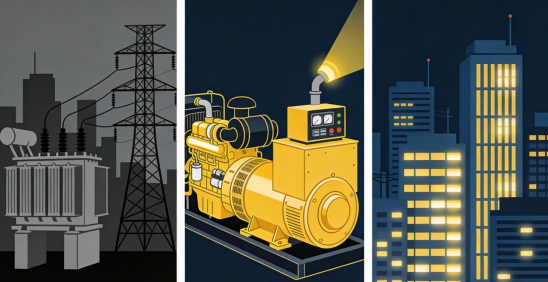
If the power grid is dark, restoring power isn’t as easy as turning on a light. When there is a major outage power plants have to restart without relying on electricity from outside — a process referred to in the field as black start.Traditionally, battery systems have played a role in this recovery. But what is the possibility that a generator can start without batteries? In 2026 spring starters are getting interest as a reliable and low-maintenance alternative for black-start situations.
What Is Black Start — and Why Is It Critical?
Black starts refers to restoration of power stations or generator’s operation without the need for grid power. In a complete blackout there isn’t any incoming power source to ignite the auxiliary systems.Certain generators must therefore start independently and then help rebuild the grid step by step.
Black start capability is essential for:
- Power plants and substations
- Industrial backup systems
- Remote energy facilities
- Emergency infrastructure
If startup systems fail during a blackout, grid restoration can be significantly delayed. That’s why reliability in starting mechanisms is so important.
Spring Starter vs. Electric vs. Air Start
When looking at starting systems for black-start applications, it’s important to compare more than just power output. Reliability, environmental flexibility maintenance requirements, infrastructure dependability all play crucial aspects in determining the most effective solution.
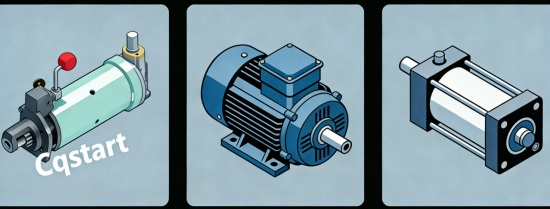
Below is a detailed analysis of three commonly used starting techniques used in generator and industrial system: Spring Starter, Electric (Battery) Starter as well as Air Start System.
| Feature | Spring Starter | Electric (Battery) Starter | Air Start System |
| Primary Energy Source | Stored mechanical spring energy | Battery-stored electrical energy | Compressed air |
| External Power Dependency | None | Requires charged batteries | Requires air compressor system |
| Blackout Readiness | Immediate | Dependent on battery condition | Dependent on air tank pressure |
| Maintenance Level | Low | Moderate to High | Moderate |
| Performance in Cold Weather | Stable | Battery capacity decreases | Generally stable |
| Long-Term Storage Reliability | High | Batteries degrade over time | Air leaks possible |
| System Complexity | Simple mechanical design | Electrical components + charging circuit | Air tanks, valves, compressors |
| Installation Cost | Moderate | Lower initial, higher lifecycle cost | Higher infrastructure cost |
| Ideal Applications | Remote generators, black start backup | Standard industrial generators | Large diesel engines, marine systems |
Spring starters deliver dependable performance and require minimal upkeep while being ready for use in systems that need their basic functions to operate independently during black start situations.
How a Spring Starter Enables True Independence?
A spring starter operates on a beautifully simple principle: Mechanical Potential Energy.
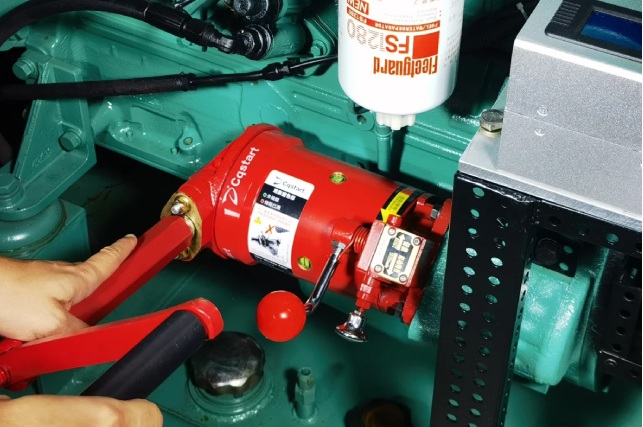
Instead of relying on a chemical reaction to move a piston, a spring starter allows an operator to manually wind a heavy-duty internal spring using a cranking handle. Once the spring is fully compressed, a simple trip of the release lever sends all that stored torque directly into the engine’s flywheel. It is a closed-loop system that requires zero cables, zero sensors, and zero external fuel to initiate the combustion cycle.
5 Key Advantages of Spring Starters in Black Start Scenarios
1. No Batteries Required — True Energy Independence
The most obvious benefit is complete independence from electrical storage systems. During a full blackout, batteries may be depleted or degraded. A spring starter eliminates this dependency entirely. As long as the spring mechanism is properly wound and maintained, it can deliver immediate starting power.
This mechanical independence increases system resilience when conditions are uncertain.
2. High Reliability and Mechanical Simplicity
Spring starters are based on less electronic components. Since there are no batteries as well as control modules or charging circuits to be involved, there are fewer problems.
Mechanical systems, if properly engineered, usually provide longer service lives in harsh industrial environments. In situations of black start that require a lot of attention simpleness often translates into reliability.
3. Strong Performance in Extreme Temperatures
Battery performance suffers a lot when it is cold. In cold temperatures the battery’s capacity may decrease dramatically, making starting difficult or even impossible.
Spring starters, however aren’t subject to electrical limitations due to temperature. So long as the their mechanical integrity and lubrication are maintained, they will perform in a variety of conditions.
In the case of high-altitude or remote power sources, this advantage is crucial.
4. Lower Maintenance and Operating Costs
Battery systems require:
- Regular voltage checks
- Charging system monitoring
- Periodic battery replacement
- Proper disposal procedures
Over time, these tasks add cost and operational complexity.
Spring starters, on the other hand need minimal maintenance. They don’t require batteries replacement, and there is no charging infrastructure to maintain. For industrial facilities that are focused on cost-effectiveness over the long term This simplicity is a major advantage.
5. Immediate Response Capability
In black start scenarios, response time matters. Delays in generator startup can slow grid recovery and extend outages.
Spring starters provide near-instant mechanical release. There is no waiting for battery diagnostics, charging cycles, or electrical stabilization. Once activated, stored energy is delivered directly to the engine.
This fast response improves the overall efficiency of emergency power restoration.
Where Spring Starters Save the Day?
Maritime and Offshore
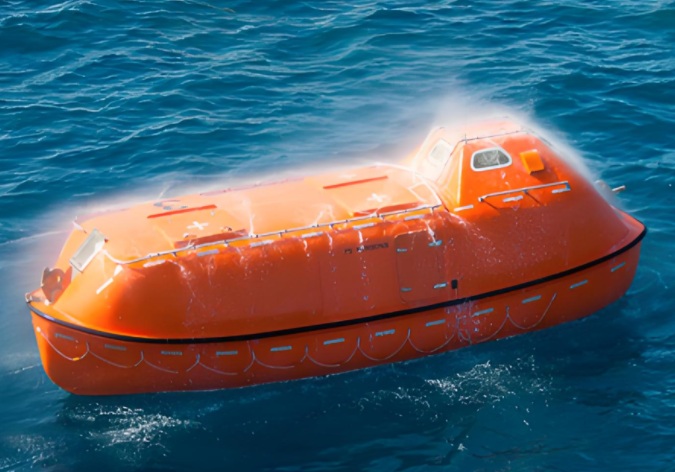
Under “Dead Ship” conditions, the law (SOLAS) requires that emergency equipment must be startable without the main power grid. Spring starters are the standard for emergency lifeboats and emergency generators on cargo ships and tankers.
Data Centers and Hospitals
While these facilities use massive UPS systems, those systems eventually run out of juice. The spring starter functions as the emergency backup to restore power for essential cooling and life-support systems when the main diesel generator batteries fail.
Remote Infrastructure
The remote telecommunications towers and water pumping stations become operational through their single battery system which technicians only check every six months. The spring starter guarantees engine starting capabilities after all site operations cease for an extended period.
In 2026, the question is no longer whether battery-free starting is possible — it’s whether relying solely on batteries is still the smartest choice. For facilities seeking reliability, efficiency, and long-term durability, spring starters offer a compelling answer.