
Imagine a vital diesel generator that fails to start during a power interruption. In the fields of construction, healthcare or marine operations, even a short amount of interruption can result in significant safety concerns and financial loss. However, one of the main reasons for engine failure is: a weak start-up system. Batteries break, electrical systems deteriorate and harsh conditions cause equipment to exceed its capabilities. This is why more and more engineers and operators are switching to backup starter solutions to ensure engine reliability, regardless of the environment.
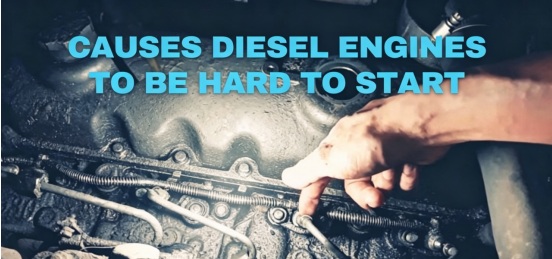
Why Diesel Engines Fail to Start (Common Problems)
Diesel engines demonstrate long-lasting performance, yet their starting systems fail to meet expectations in high-demand situations. Knowing the causes behind failure is the reason why the need for a backup starter.
Battery Failure
Batteries-related problems are the primary cause of failures that start. As time passes batteries begin to lose capacity especially when standby systems sit inactive for long periods of time. In cold climates the efficiency of batteries can decrease by as much as 50%, which makes it challenging to generate enough energy to crank the system.
Low Temperature Conditions
The cold weather can seriously affect diesel engines. A thicker engine oil as well as a lower battery output make it extremely difficult to start. In areas where temperatures drop below -20°C, traditional electric starters are often unable to function or stop completely.
Electrical System Faults
Modern engines are heavily dependent on electrical components like relays, wiring and even control unit. Any failure in this system could disrupt the start-up process. The effects of corrosion, moisture and vibration also make it more likely for failure in industrial settings.
Long Idle Periods
Emergency engines and backup generators often remain not used for long periods of time. Inactivity causes degrading components, such as battery and electric connections which increases the risk of failure if the engine eventually is required.
These challenges highlight a critical truth:
Mission-critical applications require backup starting systems because a single system creates operational risks.
What Is a Backup Starter System
A backup starter is designed to offer another method for starting a diesel engine in the event that the main system is not working. Instead of relying on electricity backup systems incorporate alternative power sources, and mechanical methods to assure the reliability.
In real life the system acts as a fail-safe device:
- The primary starter (usually electric) attempts to start the engine
- If it fails, the backup system is activated
- The engine starts using an independent method
The critical industries field recommends this redundancy practice as its standard. The operational system needs two separate pathways to maintain its functions because engineering best practices require essential systems to avoid all single points of failure.
Types of Backup Starters for Diesel Engines
There are many types of backup starters that are available each with their distinct advantages and disadvantages. The best type to choose is dependent on the operational needs as well as the environment and maintenance capacity.
Air Starter
Air starters utilize compressed air to spin the engine, causing it to start burning. They are typically employed in marine or large industrial engines.
Advantages:
- High-starting torque
- Dependable in some heavy-duty applications
Limitations:
- Requires a compressed-air system
- Complexity of installation higher
- Additional maintenance requirements
Air starters are efficient, however they may not be suitable for small systems or remote areas.
Hydraulic Starter
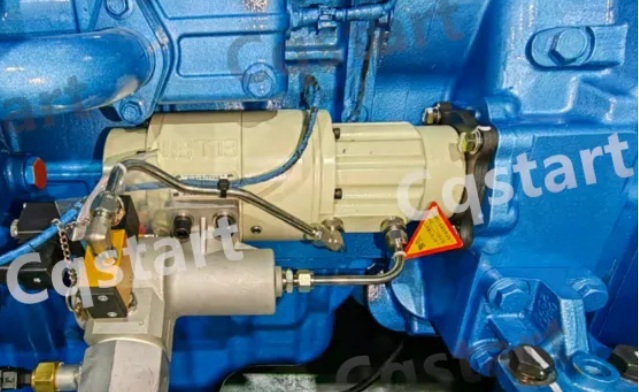
Hydraulic starters utilize pressured fluid to turn the engine and start combustion. They are typically used in industrial applications where sturdy and explosion-proof systems are needed.
Advantages:
- High-starting torque
- Reliable in explosive or hazardous environments.
- Not dependent on electricity
Limitations:
- Requires a power unit hydraulic or an accumulator
- More complex installation
- Costs for higher system and maintenance
Although they are highly efficient in difficult conditions, the hydraulic starter may not be appropriate for small systems or price-sensitive applications.
Spring Starter (Mechanical Starter)
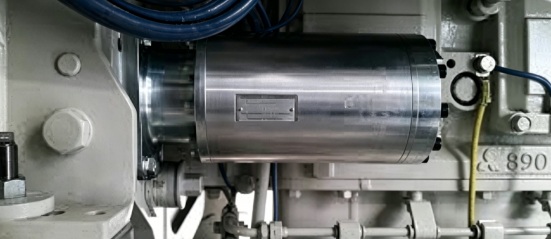
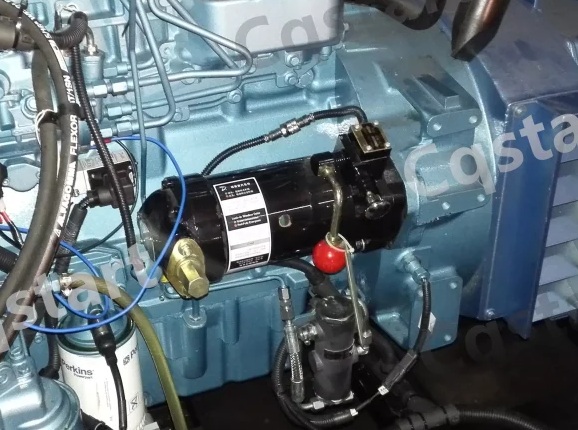
Spring starters are a completely mechanical method to start engines. They store energy by using a spring mechanism which then releases to start the engine.
Advantages:
- Absolutely unaffected by electricity
- Reliable in extreme temperatures
- Minimum requirements for maintenance
- Long service life
Limitations:
- Manual operation is required
- Only limited to certain engine dimensions
These spring-starters are especially useful in emergency or off-grid scenarios.
| Feature | Air Starters | Hydraulic Starters | Spring Starters |
| Energy Source | Compressed Air | High-Pressure Fluid | Stored Kinetic Energy (Spring) |
| Complexity | High (Tanks/Valves) | High (Pumps/Hoses) | Low (Single Unit) |
| Maintenance | Frequent (Leaks/Filters) | Moderate (Fluid levels) | Zero (Self-contained) |
| Safety | Air pressure hazards | Leaks from high pressure | Intrinsically Safe |
Why Spring Starter Is Ideal as a Backup Starter
In the context of reliability being unassailable, mechanical solutions usually surpass electronic solutions. Spring starters are specifically designed for this kind of environment.
Cqstart have created spring starter systems that target the fundamental issues with traditional methods of starting.
- Works Without Electricity
Spring starters function completely independently of electrical or battery systems. This eliminates the primary issue with diesel engine start-up.
2. Reliable in Extreme Environments
Whether in freezing temperatures or high-humidity conditions, mechanical systems are far less sensitive to environmental changes. This makes them ideal for:
- Arctic or cold regions
- Offshore platforms
- Remote construction sites
3. Long-Term Durability
With fewer electronic components, spring starters experience less wear and require minimal maintenance. This translates into lower lifecycle costs.
4. Immediate Readiness
Contrary to batteries that diminish with time, spring starters remain in use after prolonged periods of inactivity.
In critical backup scenarios this makes spring starters among the most reliable options readily available.
Ensure Reliable Starting in Any Situation
In the most critical situations the reliability of engine start-up isn’t an option, it’s a necessity. Diesel engines can be durable however, the dependence of electrical system can create weaknesses that can’t be ignored. Backup starter systems offer the redundant system needed to tackle these problems, and ensure that engines are running at the time they’re most needed.
Of all the options available, mechanical options like spring starters are notable for their durability, independence and dependability in harsh conditions. If you are aware of the dangers, evaluating different options and avoiding common blunders it is possible to create an initial system that will deliver reliable performance regardless of the setting.