
In the realm of industrial processes, marine engineering, as well as emergency backup systems, “starting the engine” is generally a routine button-driven task. But in the event of a crisis, be the result of a middle-ocean power loss or isolated mining facility blackout and even a category 5 hurricane — that simple task is the fine boundary between disaster and safety.
If the power grid goes down the backup generators and other engines. What happens if the backup generator itself isn’t able to start? An emergency engine start is not merely an technical requirement. It is a vital safety measure that requires 100% assurance.
The High Stakes of a Failed Emergency Engine Start
Imagine a lifeboat navigating heavy seas, or an urgent fire alarm at an industrial chemical plant. In these situations the engine has to start up the first time. Traditional starters, such as electric ones, rely on a complicated chain of components: lead acid batteries, wiring, solenoids and control programs.
According to data from industry organizations such as NFPA (National Fire Protection Association), the failure of batteries is the main reason behind generators that fail to begin. This could be due to sulfation or extremely cold temperatures, or just plain maintenance lapses, a dead battery makes an expensive piece of equipment ineffective precisely when it is required the most.
This is the reason why engineers are looking more and more for an “last option of defense”–a start-up solution that works without the grid.

Common Barriers to a Quick Emergency Engine Start
To resolve the issue of starting problems we need to investigate the reasons which cause systems to malfunction during operation.
Environmental Extremes
At 0°F (-18°C) temperatures lead-acid batteries to lose approximately 50% of their cranking capacity. High-heat environments create conditions which speed up chemical degradation. Offshore environments experience rapid corrosion of electrical terminals because salt spray creates high-resistance connections which stop the starter motor from receiving sufficient current.
The Maintenance Vacuum
Emergency equipment exists in a state of infrequent use according to its operational definition. This creates a “maintenance vacuum.” Batteries require regular trickle charging together with scheduled battery replacements. Remote locations such as telecommunication towers and rural water pumps face difficulties with battery maintenance because it requires expensive logistically challenging operations.
Energy Dependency Loops
Your engine starting system has a single point of failure if it needs electricity to operate and you start the engine but electricity is unavailable. The true emergency solution requires the dependency loop to be broken.
Criteria for a True Backup Starting Solution
Before evaluating specific hardware, we must establish the benchmarks for what constitutes a robust emergency starting system:
- Zero External Dependency: It must not require batteries, cables, air compressors, or external fuel pumps.
- Indefinite Shelf Life: It must be ready to perform after months or even years of standing idle.
- Mechanical Simplicity: The fewer moving parts and “invisible” components (like software or chemicals), the better.
- Environmental Immunity: It should perform identically at -40°C as it does at +50°C.
Comparison of Common Emergency Engine Start Solutions
| Solution | Power Source | Maintenance | Performance in Extreme Temp | Hazardous Area Safe |
| Electric Starter | Battery / Grid | High (battery replacement) | Poor | No (sparks risk) |
| Hydraulic Starter | Hydraulic pump | Medium | Medium | Limited |
| Pneumatic Starter | Air compressor | Medium | Medium | Limited |
| Spring Starter | Mechanical energy (manual) | Low / Maintenance-free | Excellent (-40°C to +50°C) | Yes (ATEX compliant) |
Spring Starters: The Physics of Resilience
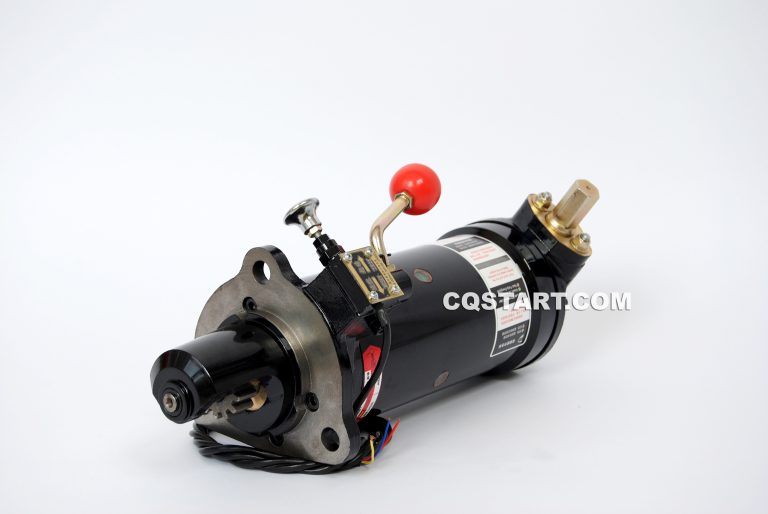
The Spring Starter (often called the mechanical starter) is introduced into the discussion. Instead of relying on the chemical process (batteries) or pressure of fluid (hydraulics) The spring starter relies on the most fundamental physical principle, which is called Potential energy.
How it Works
A spring starter is a self-contained mechanical device. A technician uses a manual crank handle to compress a heavy-duty disc spring stack inside the unit. This process “stores” the mechanical energy. When the trip lever is pulled, that stored energy is released instantaneously, rotating the engine’s flywheel at high RPMs to trigger internal combustion.
Why It’s the “Gold Standard” for Emergency Start
- Total Independence: It is powered by human effort. As long as a person can turn a handle, the engine can be started.
- Maintenance-Free: Unlike batteries that expire, a high-quality mechanical starter like those from Cqstart is sealed and lubricated for life.
- ATEX and Flameproof Compliance: As there aren’t any electrical parts, and there aren’t any sparks. This means that spring starters are the only feasible option to use in “Zone 0” hazardous areas for underground mines and oil tankers.
Where “Maybe” Isn’t an Option
Marine and Lifeboat Safety
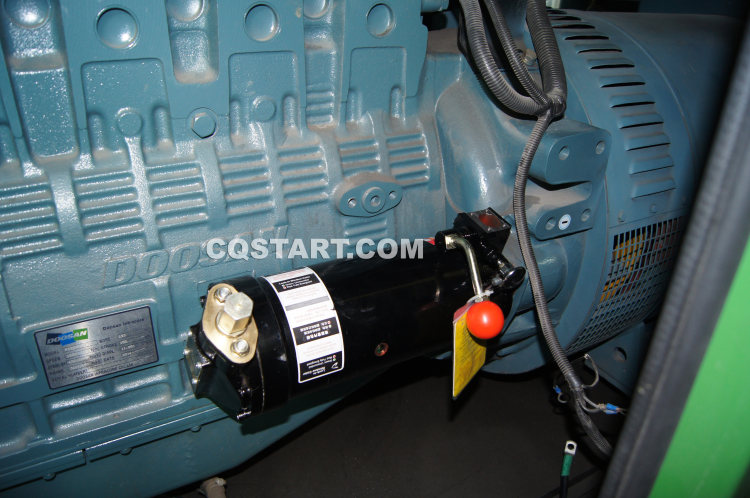
The International Maritime Organization (IMO) and the Safety of Life at Sea (SOLAS) regulations require lifeboat engines to have a second operational system which functions independently from the main engine starting system. A shipwreck situation prevents you from confirming whether the electrical system will function properly. The spring starter system enables the engine to start under conditions when the boat has sat submerged or in freezing temperatures for an extended time.
Remote Infrastructure
For off-grid mining operations in the Australian Outback or the Arctic Circle, the cost of flying in a technician to replace a dead battery is astronomical. Installing a spring starter as a secondary unit (Dual Starter Configuration) provides a fail-safe that pays for itself in a single avoided downtime incident.
Fire Protection Systems
In many jurisdictions, fire pumps are required to have two independent starting methods. Pairing an electric starter with a spring starter ensures that even if the building’s electrical room is compromised by fire or water, the pumps will still engage to suppress the flames.
In the context of an emergency engine start, “hope” is not a strategy. While technology continues to advance in the realm of lithium-ion and digital monitoring, the most reliable solutions remain those grounded in robust mechanical engineering.
Spring starters represent a “fit and forget” investment. They are the silent sentinels of your engine room—waiting, ready, and immune to the failures of the modern grid. Whether you are managing a fleet of vessels or a critical data center, ensuring you have a purely mechanical path to power is the hallmark of professional risk management.
Would you like to analyze the compatibility of your current engine models with mechanical starting solutions? Consult with Cqstart to find the specific torque requirements for your fail-safe backup.