
Diesel engines are known for their durable operation and efficient performance but their reliable starting process presents a different challenge. A failed engine start during critical moments like power outages or emergency operations will result in both expensive downtime and hazardous situations.Traditional electric starters depend heavily on batteries, which fail to operate when exposed to extreme environmental conditions.
Mechanical energy storage provides a reliable solution at this point. The systems use mechanical energy storage to start diesel engines without batteries, which proves effective in industrial environments that require high performance.
Why Diesel Engines Need Reliable Starting Solutions
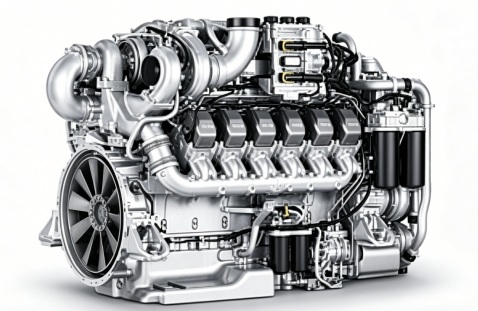
Diesel engines serve as the primary engines for global infrastructure but require more effort to start than gasoline engines do. Their design uses high compression ratios which make their system difficult to operate. The engine requires sufficient rotation speed and power to create critical temperatures through air compression so it can burn diesel fuel without using a spark plug. The engine will not operate when the starting system fails to deliver the necessary initial “kick” force.
The Vulnerability of Traditional Systems
Electrical starting systems pose the main operational challenge because they break down too often for most operators. The data shows that almost 80% of emergency generator breakdowns occur because batteries stop functioning.
Common issues include:
- Chemical Sensitivity: Batteries experience a 50% reduction in their cranking power when temperatures fall to 0°C because this temperature range coincides with the engine oil’s maximum viscosity level.
- Maintenance Neglect: The battery system experiences permanent failure because of “sulfation” which occurs when batteries remain unused for months in remote locations.
- The “Black Start” Dilemma: Your battery-powered engine becomes useless when both your charger and total power supply fail.
How Mechanical Energy Storage Works in Diesel Engine Starting
Mechanical energy storage (MES) bypasses the volatile world of electrochemistry by relying on the predictable laws of physics. Instead of storing energy in lead plates and acid, it stores potential energy in a high-tensile spring or a compressed air chamber.
Step 1 – Energy Storage (Charging the System)
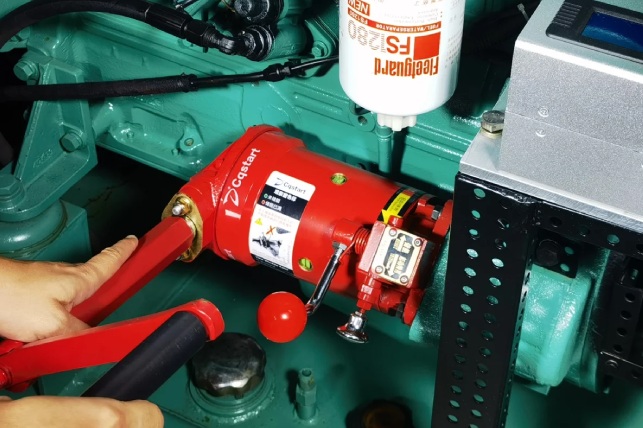
The process begins by “charging” the mechanical device. In a manual spring starter, a technician uses a winding handle to compress a heavy-duty disc spring stack. Alternatively, some systems utilize a small electric motor to pre-load the spring during normal operation. This transforms human or electrical work into stored potential energy.
Step 2 – Energy Retention
Unlike batteries, which “leak” energy over time through self-discharge, a compressed mechanical spring is a stable storage medium. It can hold its full starting potential for years without any degradation in power. There are no chemicals to dry up and no terminals to corrode.
Step 3 – Instant Energy Release
The stored energy will be released within one second after the trip lever is activated. The mechanical surge enters a process that transforms it into fast rotational movement through a pinion gear that connects to the engine’s flywheel.The result is an instant, high-torque burst that is often more powerful than what a standard electric motor can provide.
Mechanical Energy Storage vs Electric Starters: Which Is Better?
When comparing starting systems, the differences between mechanical and electric solutions become apparent:
| Feature | Mechanical Energy Storage | Electric Starter |
| Energy Dependency | No electricity required | Relies on batteries |
| Reliability | High in extreme conditions | Affected by temperature and battery health |
| Maintenance | Low | Battery replacement needed |
| Application | Industrial, emergency | Standard vehicles |
Electric starters function effectively under typical operating conditions, yet their performance fails during critical reliability requirements. The design of mechanical systems provides dependable operation, which makes them suitable for important use cases.
This is why comparisons like “spring starter vs electric starter” are increasingly common in industrial search queries.
Advantages of Mechanical Energy Storage for Diesel Engines
Several unique characteristics of mechanical energy storage systems include:
- Autonomous of electricity: Most useful for remote sites or in situations of power supply breakdown
- Optimal performance: under extreme weather conditions. Mechanical energy storage is reliable under high or low temperature
- High reliability offers support for duty tools where a fault is intolerable, which makes a clutch of otherwise similar technologies.
- Almost zero maintenance costs: The only time repair is required is when the clutch is already in utility for about ten years for typical industrial use, and if that is the case, it’s only a repair and not a maintenance issue.
These advantages make mechanical systems particularly valuable in industries where uptime and safety are top priorities.
Typical Applications of Mechanical Energy Storage Starting
Mechanical energy storage is widely used across industries that require dependable engine starting:
- Generator sets: Backup power systems must start instantly during outages
- Marine engines: Ships rely on reliable starting systems in isolated environments
- Oil and gas operations: Equipment often operates in remote, harsh conditions
- Emergency firefighting systems: Immediate engine response is critical
- Remote infrastructure: lacking stable power grids benefit from independent systems
The need for operational resilience has made mechanical starting solutions essential for modern infrastructure development in industrial sectors.
When Choose a Mechanical Energy Storage Solution?
Mechanical energy storage systems provide their best results for specific application needs.
Best suited for:
- Locations with no reliable power supply
- Industries with high safety and reliability requirements
- Environments with extreme temperatures or conditions
Less suitable for:
- Small, everyday vehicles with consistent power access
- Applications where initial cost is the only consideration
In essence, if reliability outweighs convenience, mechanical energy storage is the better choice.