
In marine environments, water pumps are not an option; they are essential to the mission. From cooling systems for engines to ballast control, as well as onboard firefighting, the pumps guarantee the safety and operation of vessels.
Yet, one often overlooked component is the water pump starter. When a pump fails to start—especially in emergencies—the consequences extend from system downtime to safety risks.
The right starter for the water pump system in marine applications isn’t just about performance. It’s about dependability under harsh conditions, minimal maintenance and an assured performance when it is most important.
It’s time to look at mechanical spring starters for the best starter for water pump applications.
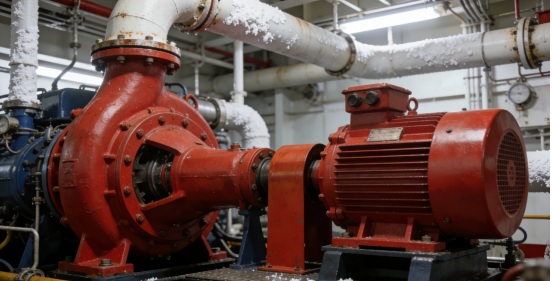
Challenges of Marine Environments
In contrast to land-based systems, marine systems expose equipment to the harshest operating conditions found on Earth. These conditions directly affect the lifespan and performance of every water pump’s starter.
| Challenge | Impact on Water Pump Starter |
| Salt and high humidity | Accelerates corrosion and raises failure risk |
| Power instability | May cause electrical starters to malfunction or fail |
| Hazardous environments | Requires explosion proof design and compliance |
| Limited maintenance | Demands long term reliability without frequent service |
| Temperature changes and vibration | Increases wear, fatigue and component damage |
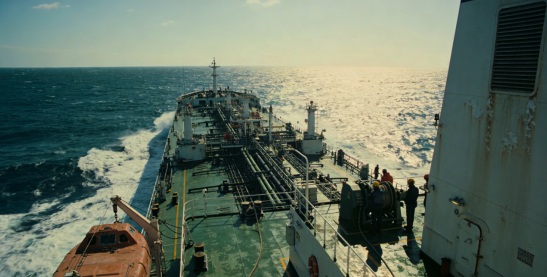
High Humidity and Salt Corrosion
Seawater creates a highly corrosive environment. The presence of salt particles causes immediate oxidation which results in fast deterioration of electrical components and metal surfaces.
Power Instability or Failure
Marine vessels might face power supply problems which become especially severe during emergency situations. The electrical starters which need complete power supply for operation will break down during their most important operational times.
Safety and Explosion Risks
Explosive gases exist on oil tankers chemical vessels and offshore platforms. Equipment must meet specific safety regulations which exist to protect against ignition hazards.
Limited Maintenance Access
The sea environment restricts maintenance work to a small number of available times. The equipment needs to provide dependable performance throughout extended periods without any need for maintenance work.
Extreme Operating Conditions
The systems must withstand three types of forces which include vibration and temperature changes and mechanical stress.
The evaluation shows that not all water pump starters can operate effectively in marine environments.
Key Factors When Choosing a Water Pump Starter for Marine Use
Engineers and procurement teams must assess specific factors when selecting their optimal solution.
| Factor | Why It Matters in Marine Use | What to Look For |
| Reliability | Critical to emergency systems. | Fail-safe operation |
| Corrosion Resistance | Exposed saltwater | Materials that are sealed, anti-corrosion and resistant to rust. |
| Maintenance | Access to limited service | Low-maintenance design |
| Safety | Hazardous environments | Explosion-proof capabilities |
| Installation | Space onboard is not as large | Simple and compact |
Reliability and Emergency Readiness
A marine starter must function correctly during all situations but especially during emergency situations. Systems such as firefighting pumps need to operate through their entire system because they must keep working when main power sources fail.
Corrosion Resistance
The materials and design need to protect against saltwater environment exposure throughout their entire operational life. The system requires sealed systems together with components that can resist corrosion.
Low Maintenance Requirements
According to studies on maintenance in the industry cutting down on mechanical complexity could reduce failure rates by 30% to 40% in extreme conditions. Simpler systems usually have fewer failure points.
Safety Compliance
Based on the type of vessel and the type of vessel, starters will be required to meet the standards for marine safety or explosion proof. This is crucial in dangerous areas.
Installation Flexibility
There is space on ship a finite resource. Easy-to-install, compact starters minimize the time to fail and make it easier to integrate systems.
Spring Starters Are Ideal for Marine Water Pumps
| Feature | Electric | Hydraulic | Spring Starter |
| Works without power | ❌ | ❌ | ✅ |
| Corrosion resistance | Medium | High | High |
| Maintenance required | High | Medium | Low |
| Emergency readiness | Medium | High | ⭐ Very High |
Among the available technologies, spring starters have become a preferred solution in marine applications—especially for critical systems.
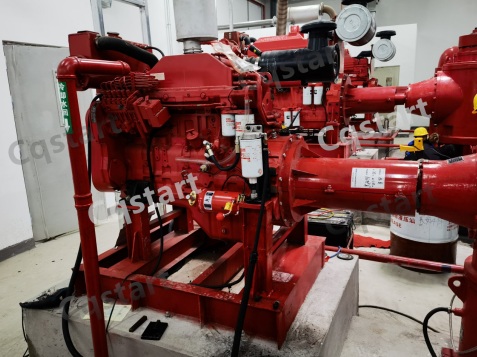
No Dependency on Electricity
The spring starters store mechanical power which they use to initiate pump operation. The system operates during complete power outages which provides essential support for emergency operations.
High Reliability with Simple Design
The system has fewer failure points because it contains fewer components. The system achieves higher operational reliability because its design remains straightforward for use in challenging marine environments.
Suitable for Hazardous Environments
Because they don’t rely on sparks from electrical sources they are safer in explosive environments and are therefore ideal for offshore platforms and tankers.
Minimal Maintenance
The system requires fewer maintenance tasks because it operates without batteries or wiring or advanced electronic components which decreases both time requirements and operational expenses.
Long-Term Storage Capability
Spring starters maintain their operational capacity after extended periods without use which makes them ideal for systems that provide water pumping during emergency situations.
The spring technology which engineers use for their underwater work proves to be the most reliable system which exists today for water pump operations.
Recommended Solution: Cqstart Spring Starter
For marine applications requiring reliability and safety, the Cqstart Spring Starter offers a practical and proven solution.
Key Advantages
- Power-independent operation – works without electricity
- Corrosion-resistant design – built for harsh marine conditions
- High reliability – ideal for critical systems like firefighting pumps
- Low maintenance – reduces operational costs over time
- Safe for hazardous environments – suitable for explosion-risk areas
Application Scenarios in Marine Systems
Understanding where these starters are used helps highlight their importance:
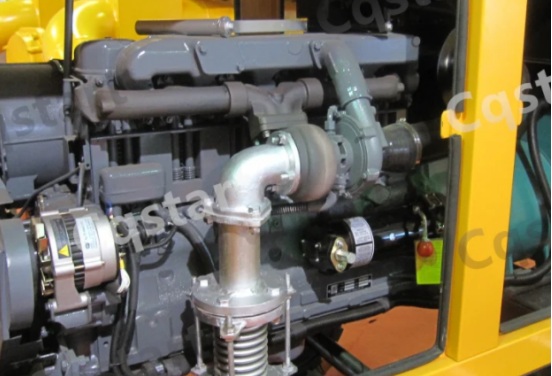
Firefighting Systems
Emergency situations require pumps to start immediately because any delay results in dangerous outcomes.
Ballast Water Management
Ballast systems require exact control to maintain vessel stability whereas pump systems need to function reliably.
Engine Cooling Systems
Engines require continuous cooling to stop overheating which leads to engine failure during extended trips.
Emergency Backup Systems
Backup systems need to start immediately because primary systems break down which requires independent starters to function.
Reliability First in Marine Environments
For marine use, failure of equipment is not only annoying, it can also be costly and risky.
The best water pump starts by prioritizing:
- Reliability even in the most extreme conditions
- Uncertainty from power source instability
- Low maintenance and longer service life
Spring starters, especially solutions such as those from the Cqstart Spring Starter, provide the most reliable solution to these problems. Their durability, simplicity and safe operation make them a great choice in modern systems for marine use.
FAQ
Q1: What is the best water pump starter for marine use?
A1: The spring starter system provides the most dependable solution because it operates without needing electrical power for its emergency functions.
Q2: Can a water pump starter work without electricity?
A2: Yes. Spring starters function during power outages because they use stored mechanical energy to operate.
Q3: How do you maintain a marine water pump starter?
A3:The maintenance requirements for a system depend on its specific type. Spring starters need less maintenance work than electric and hydraulic systems do.