
In the industrial sector, diesel engines are widely used in ships, power generation systems, and heavy-duty machinery. However, starting reliability remains a critical factor affecting overall equipment performance. In many real-world applications, starting failures are often caused by external conditions such as battery failure, insufficient air supply, or extreme environments, rather than issues with the engine itself.
A mechanical spring starter, as a fully independent mechanical starting system, does not rely on electricity or compressed air. It can reliably start engines under complex operating conditions, which is why it is gaining increasing attention in high-reliability industrial applications.
In this post, we will analyze from multiple perspectives why the mechanical spring starter has become an important starting solution for diesel engines.
Industry Pain Point: Why Do Diesel Engines Often Fail to Start?
In industrial applications, diesel engines are widely used in ships, mining equipment, generator sets, and the oil and gas industry. However, starting failure remains a common and costly issue.
Typical problems include:
- Battery failure due to low temperatures or long periods of inactivity
- Lack of electrical power in remote or off-grid environments
- Wear or malfunction of the starter motor
- Inability to restart equipment quickly in emergency situations
These issues not only reduce operational efficiency but can also lead to downtime losses and even safety risks.
As a result, there is an increasing demand across industries for a highly reliable, self-contained starting system that can operate independently of external power sources.
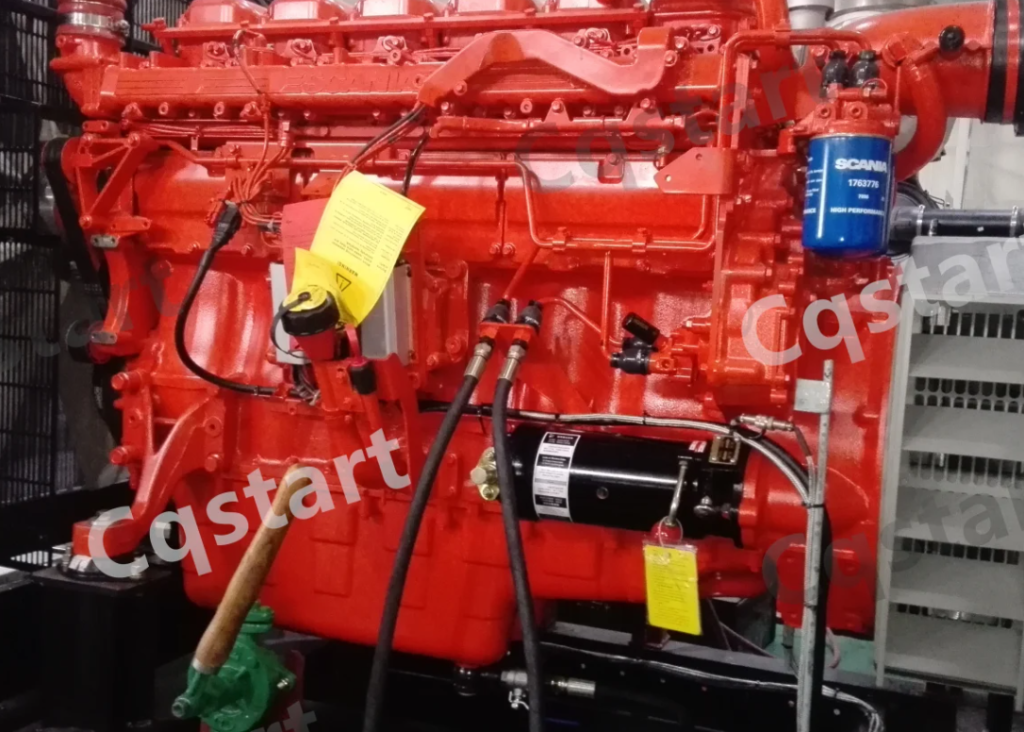
Limitations of Traditional Starting Systems
From an engineering perspective, diesel engine starting systems are generally divided into three main types: electric starting, air starting, and hydraulic starting. Although each system has its own applications, they all present certain limitations in high-reliability, extreme, or infrastructure-limited environments.
1. Electric Starter System
The electric starting system is the most widely used method. It relies on a battery, an electric starter motor, and an electrical control circuit to crank the engine.
From an engineering standpoint, its key limitation is its heavy dependence on electrical power:
Reduced performance in low-temperature conditions: In cold environments, battery chemical reactions slow down, resulting in reduced output current and weaker starting capability.
Power loss during long-term storage: Batteries naturally discharge over time, which may lead to insufficient power for starting after long idle periods.
Mechanical wear issues: Components such as carbon brushes and gears in the starter motor wear out over time, reducing long-term reliability.
Risk of electrical system failure: Failures in the battery, wiring, or control module can directly cause complete starting failure.
Therefore, in high-reliability industrial applications such as mining, marine, or remote operations, electric starting is generally not sufficient as the sole starting solution.
2. Air Starter System
The air starting system uses compressed air to drive a turbine or piston mechanism, which in turn rotates the engine crankshaft.
It offers high power and fast response, but relies heavily on supporting infrastructure:
Requires a compressed air source: Typically depends on an independent air compressor or storage tank system.
Complex piping system: Air line design, valve control, and sealing requirements increase overall system complexity.
Sensitive to pressure stability: Insufficient or leaking air pressure can directly lead to starting failure.
Higher maintenance cost: Regular inspection of air lines and valves is required for reliable operation.
In essence, the air starting system is a “system-dependent starting method” that relies heavily on external infrastructure.
3. Hydraulic Starter System
The hydraulic starting system uses high-pressure fluid to drive a hydraulic motor, enabling engine start-up. It is generally considered highly reliable.
However, in practical applications, it still has several limitations:
High system cost: Hydraulic pumps, accumulators, and control systems are expensive.
Complex system structure: High-pressure hydraulic circuits increase integration difficulty.
Strict maintenance requirements: Requires high standards for sealing, fluid cleanliness, and pressure control.
Limited application scope: Mainly used in military, specialized marine, or high-end industrial equipment.
As a result, although highly reliable, hydraulic starting systems are typically reserved for specialized applications where extreme reliability is required.
Mechanical Spring Starter: A Truly Independent Mechanical Energy System
The mechanical spring starter is an engine starting system based on the principle of mechanical energy storage and release. It works by storing mechanical energy in advance and then releasing it instantly when starting is required, which drives the engine crankshaft to achieve ignition.
Compared with traditional starting methods, its key advantage is complete independence. It does not rely on batteries, compressed air, or any external power source, allowing it to operate reliably in situations such as power loss, air supply failure, or extreme environments.
From an engineering design perspective, it is a typical “Fail-safe mechanical energy starting system,” emphasizing the ability to start independently even when external support systems fail. This makes it highly valuable in applications such as marine engines, mining equipment, and remote industrial operations.
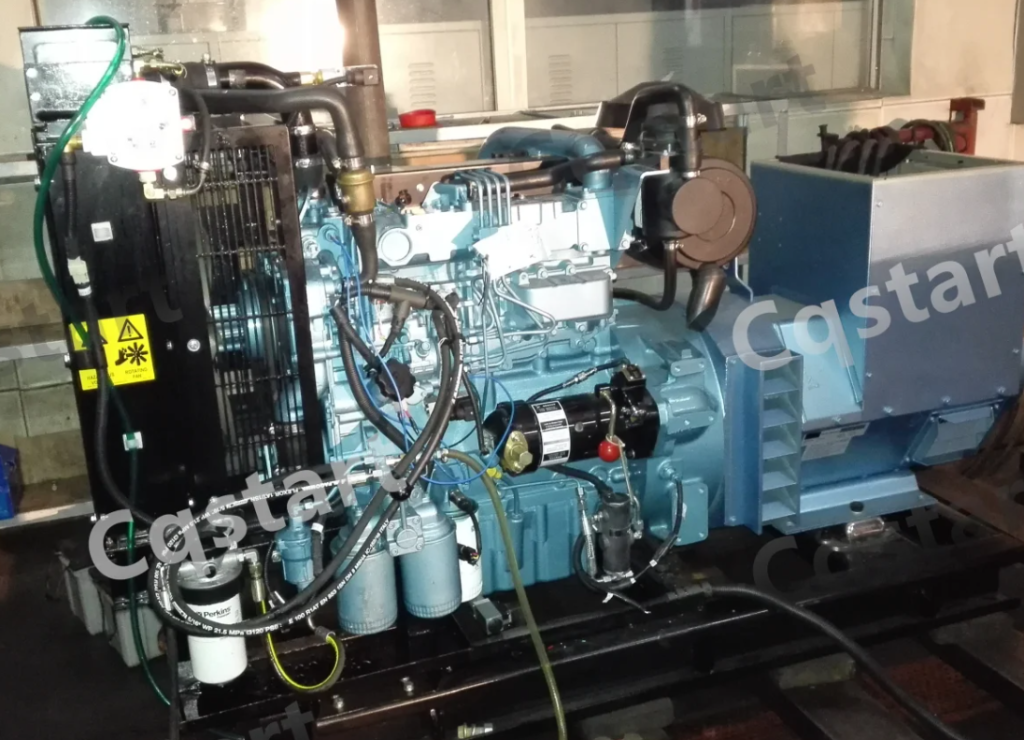
Working Principle of Mechanical Spring Starter
The operation of a mechanical spring starter is based on three key stages:
1. Energy Storage Stage
Mechanical energy is stored inside the system by preloading a high-strength spring through manual or mechanical means, converting it into elastic potential energy.
2. Trigger Release Stage
When the start command is activated, the locking mechanism is disengaged, allowing the spring to release its stored energy instantly.
3. Torque Output Stage
Through a gear transmission system, the released mechanical energy is converted into high torque output, which drives the diesel engine flywheel to rotate and complete the starting process.
The amount of stored energy depends on the spring stiffness k and the pre-compression distance x, which are key engineering parameters determining the starting torque capability.
The core advantage of this structure is that the energy is fully controllable and does not depend on any external power input system.
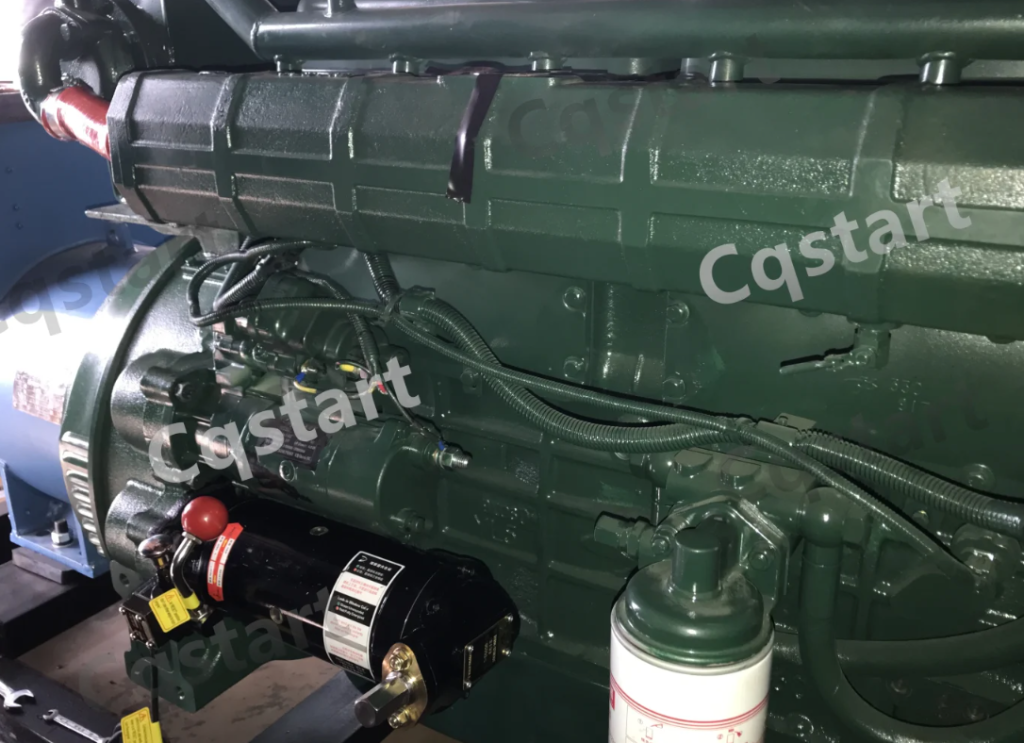
Why Diesel Engines Especially Need This Starting System
High compression ratio and high torque demand
Diesel engines have a high compression ratio, which requires much greater torque to overcome cylinder resistance during startup. Their large inertia also makes them harder to crank compared to gasoline engines.
Harsh and unstable operating environments
They are often used in ships, mining equipment, and power systems where conditions can be extreme, power supply may be unstable, and long idle periods are common. In such environments, traditional electric or air starting systems are more likely to fail.
Core requirements for reliable starting
A diesel engine starting system must therefore provide sufficient torque, operate with an independent energy source, and remain reliable in extreme conditions.
Why mechanical spring starter fit
The mechanical spring starter meets these requirements by delivering high torque through stored mechanical energy, while operating completely independently of electricity or compressed air.
Typical Industrial Application Scenarios of Mechanical Spring Starter
Based on real-world engineering applications, mechanical spring starters are widely used in industries where high reliability and independent operation are critical.
Marine Diesel Engine Systems
In marine power systems, mechanical spring starters are often used for emergency starting of main or auxiliary engines. When onboard electrical systems fail or batteries are depleted, they serve as an independent backup starting method, ensuring the engine can still be started and preventing loss of vessel power.
Mining and Heavy Construction Equipment
In mining sites, tunnels, or remote construction environments, power supply is often unstable or completely unavailable. Mechanical spring starters provide reliable starting capability without external electricity, improving equipment availability under extreme conditions.
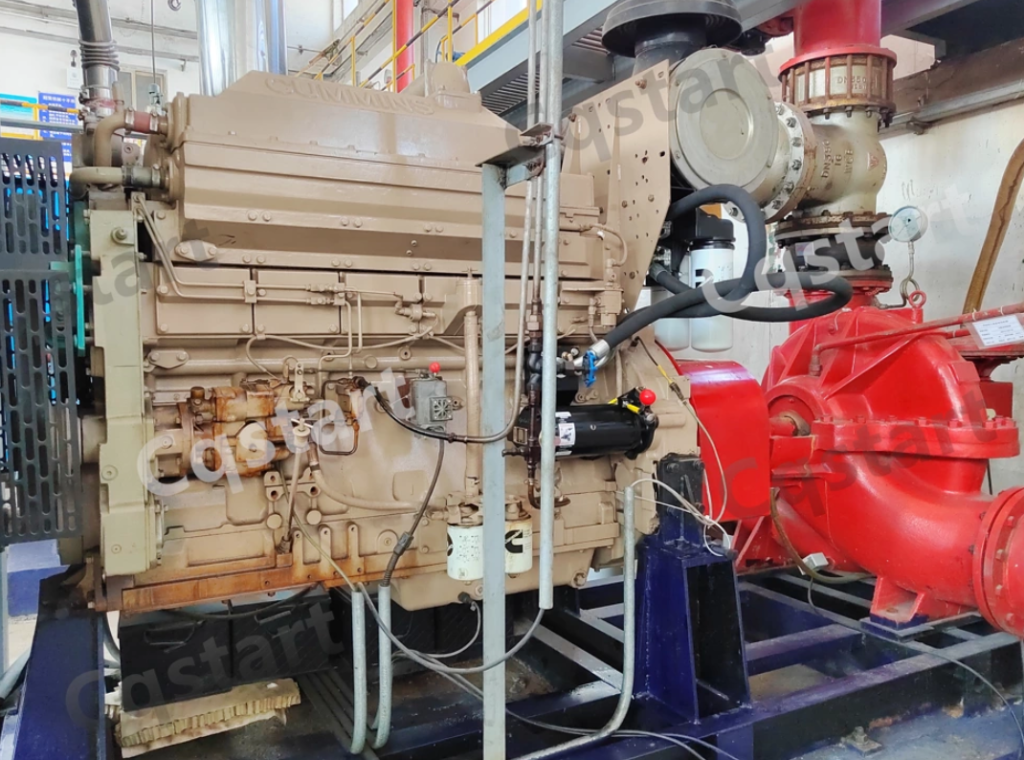
Oil & Gas and Explosion-Proof Areas
In oil platforms and chemical plants where explosion risks must be strictly controlled, mechanical spring starters help reduce electrical ignition risks by eliminating dependence on electrical starting systems, thereby improving overall operational safety.
Backup Starting for Generator Sets
In backup power systems, mechanical spring starters can act as an independent emergency starting solution after a power outage, ensuring that generators can be quickly restarted when the main power supply fails.
Engineering Comparison with Other Starting Systems
In industrial engineering design, different types of engine starting systems vary significantly in terms of energy dependence, system complexity, and environmental adaptability. A side-by-side comparison provides a cltimeearer understanding of their applicable scenarios and reliability levels.
| Item | Electric Start | Air Start | Spring Starter |
| Energy Dependence | Battery | Compressed air | None |
| System Complexity | Medium | High | Low |
| Extreme Environment Reliability | General | High | Very high |
| Maintenance Cost | Medium | High | Low |
| Emergency Capability | Weak | Medium | Strong |
The engineering conclusion is clear: the mechanical spring starter offers a significant advantage in terms of reliability and system independence.
Selection Guidelines of Mechanical Spring Starter
In engineering practice, selecting a suitable starting system requires considering several key factors to ensure reliability and compatibility.
First is engine displacement and required starting torque. Large diesel engines (e.g., up to 50L) demand very high instantaneous torque, so the starting system must have sufficient energy output capability.
Second is installation space and interface design, as different equipment structures require proper mechanical matching for reliable integration.
Third is the operating environment, such as marine, mining, or explosion-proof applications, which place higher demands on safety and environmental resistance.
Finally, starting frequency and service life should also be evaluated, especially in high-duty-cycle applications where durability is critical.
In some high-reliability scenarios, solutions like Cqstart Spring Starter can be considered, as it is a mechanical spring starter manufacturer supporting applications up to 50L diesel engines.
Overall, proper selection directly affects both starting success rate and long-term system reliability.