
In industrial engine starting systems, air starters have long been widely used in diesel engines, marine equipment, and the oil and gas industry. However, as application scenarios evolve, more and more users are beginning to look for air starter alternatives.
So, if there is no compressed air system available, or if you want to reduce maintenance costs, what better options are there? This article will provide you with a comprehensive analysis.
Why Look for Air Starter Alternatives?
More and more companies are re-evaluating air starting systems and considering more efficient and flexible alternatives. The reasons go beyond cost—they also involve system reliability, adaptability, and overall operational efficiency.
Dependence on Compressed Air Systems
Air starters require supporting equipment such as air compressors, air tanks, and piping systems, which makes the overall setup more complex. If any part of the air system fails (e.g., insufficient pressure or leakage), it can directly affect the reliability of engine starting.
High Maintenance Costs
Air systems require ongoing maintenance, including checking for leaks, cleaning pipelines, monitoring pressure levels, and replacing components regularly. Over time, this increases labor costs and may lead to unexpected downtime.
Not Suitable for Remote or Special Environments
In locations such as mining sites, remote construction areas, or emergency scenarios, a stable compressed air supply is often unavailable. In such cases, air starter systems become difficult to implement, limiting operational flexibility.
Complex Installation and Space Requirements
A complete air starting system typically occupies significant space and requires additional room for compressors and air storage units. This can be a disadvantage for equipment or projects with limited space.
Therefore, finding a simpler, more reliable, and more adaptable air starter replacement is becoming an increasingly important trend in industrial applications.
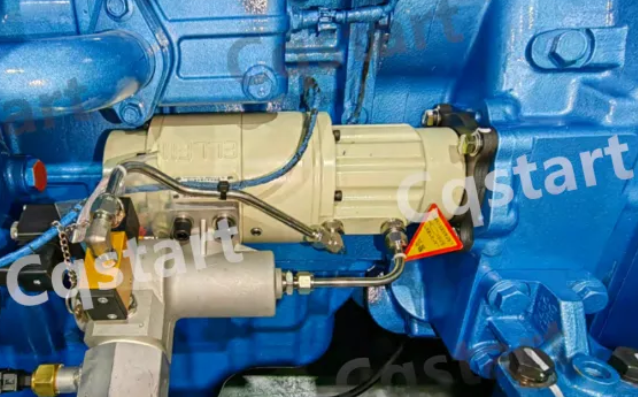
What are Air Starter Alternatives? – 4 Types
Below are some of the most common and widely used air starter alternatives available on the market:
1. Mechanical Spring Starter
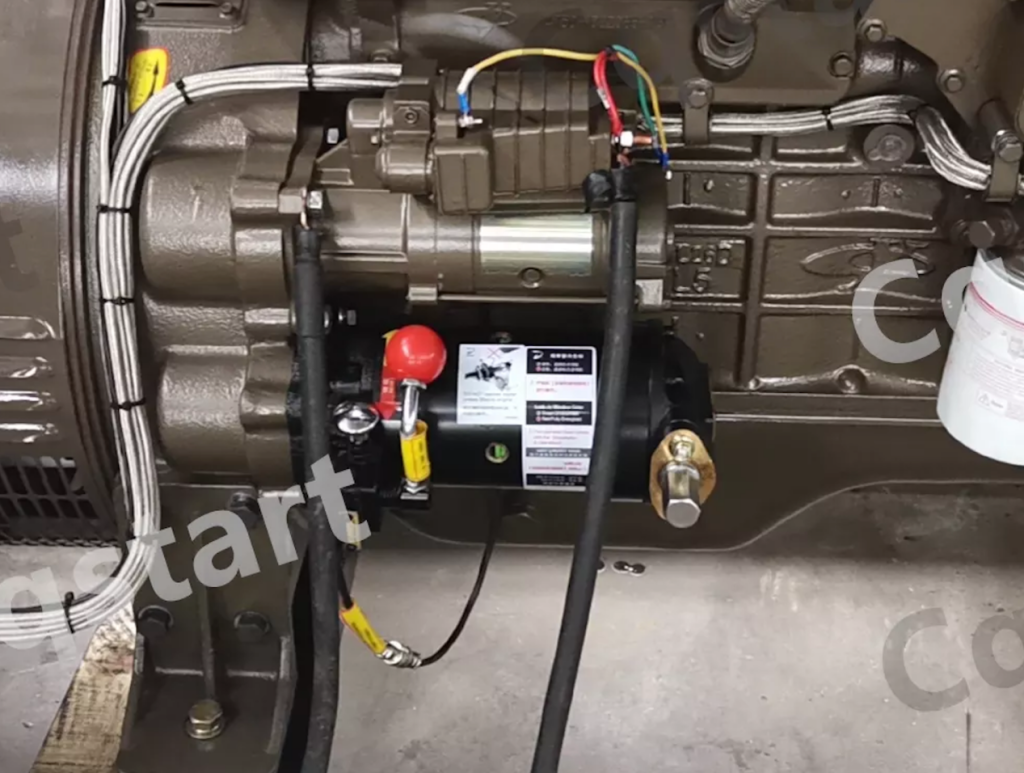
A mechanical spring starter is a device that starts an engine by storing and releasing mechanical energy. In recent years, it has become increasingly popular in environments where neither electricity nor compressed air is available.
Working Principle:
Energy is stored by preloading a high-strength spring, either manually or באמצעות a motor. When starting is required, the stored energy is released and transferred through a transmission mechanism to rotate the engine’s crankshaft, completing the starting process. The entire operation does not rely on any external power source.
Advantages:
- No need for batteries or compressed air systems, resulting in a simpler structure
- High reliability, even in extreme temperatures and harsh environments
- Low maintenance requirements, reducing long-term operating costs
- Strong independence, not affected by external energy conditions
Applications:
- Diesel engines
- Field equipment (such as mining and oilfield machinery)
- Emergency or backup starting systems
For environments without access to electricity or compressed air, a mechanical spring starter is an ideal and reliable air starter alternative.
2. Electric Starter Motor
The electric starter system is one of the most widely used engine starting methods today, especially in various vehicles and small industrial equipment. It uses electrical energy to drive the starter motor, which then cranks the engine to complete the ignition process.
Advantages:
The electric starter system is very easy to operate—starting the engine usually only requires pressing a button or turning a key, with almost no technical skill required. It also offers fast starting speed, providing sufficient initial engine rotation in a short time, making it convenient and efficient for everyday use.
Disadvantages:
This system relies heavily on battery power. If the battery is weak or damaged, the engine may fail to start. In addition, in low-temperature environments, battery performance significantly decreases, which can weaken starting capability or even prevent the engine from starting.
Applications:
Electric starter systems are widely used in passenger vehicles, light trucks, and various small industrial machines. They are best suited for environments with stable power supply and relatively mild operating conditions.
3. Hydraulic Starter
A hydraulic starter uses hydraulic energy to drive the engine, and it is usually operated in combination with a hydraulic power unit.
Advantages:
The hydraulic starter provides a very high starting torque, making it especially suitable for large and heavy-duty engines. It performs reliably under high-load conditions and can deliver consistent power even in demanding environments where other starting methods may struggle.
Disadvantages:
The system is relatively complex, requiring multiple components such as pumps, valves, and hydraulic lines. This complexity also leads to higher initial investment and maintenance costs compared to simpler starting systems.
It is commonly used in high-load applications such as oil and gas operations, mining equipment, and other heavy industrial machinery where strong and reliable starting power is essential.
4. Manual Starter
A manual starter is the most basic engine starting method, typically relying on human effort to start the engine. Common types include hand-crank starting and inertia starting.
In a hand-crank system, the operator uses a crank handle to directly rotate the engine’s crankshaft, bringing it up to the required initial speed for ignition. In an inertia starting system, mechanical energy is pre-stored and then released to drive the engine and complete the starting process.
Advantages:
This system has a very simple structure and does not require complex electrical or pneumatic components, resulting in fewer potential failure points. It also does not rely on any external energy source, making it useful in resource-limited or emergency situations.
Disadvantages:
Because it relies entirely on manual effort or mechanical inertia, the starting process can be physically demanding. In addition, its power output is limited, so it is generally only suitable for small engines and not appropriate for medium or large high-compression engines.
Overall, manual starter systems are mainly used for small equipment or as backup starting solutions, and their application in modern industrial systems is relatively limited.
Comparison of Different Starting Methods
Different engine starting systems vary in terms of energy source, reliability, maintenance cost, and application scenarios, making them suitable for different industrial
| Starting Method | Energy Source | Reliability | Maintenance Cost | Application Scenarios |
| Air Starter | Compressed air | Medium | High | Industrial equipment |
| Spring Starter | Mechanical energy | High | Low | Field / Emergency use |
| Electric Starter | Battery power | Medium | Medium | General equipment |
| Hydraulic Starter | Hydraulic system | High | High | Heavy-duty equipment |
How to Choose the Right Air Starter Alternative?
When selecting an air starter alternative, it is important to evaluate real operating conditions and equipment requirements. Different applications demand different levels of reliability, power availability, and system complexity.
1. Is there a power source available?
First, check whether there is a stable electrical power supply on site. If power is unavailable or battery maintenance is difficult, a mechanical spring starter is often the best option because it relies entirely on stored mechanical energy and does not require any external power source.
2. Is a compressed air system available?
If there is no air compressor or it is impractical to install one, traditional air starting systems should be avoided. In such cases, electric, hydraulic, or spring-based starters are more suitable since they operate independently of compressed air infrastructure.
3. Operating environment conditions
Environmental factors such as extreme heat, low temperatures, or explosive atmospheres must also be considered. In remote or harsh field conditions, priority should be given to starting systems that are simple, robust, and highly reliable with minimal external dependencies.
4. Starting frequency requirements
If the engine requires frequent start-stop cycles, such as in industrial production or construction machinery, electric or hydraulic starters are generally more suitable due to their fast response and ease of operation.
Overall, choosing the right air starter alternative depends on matching the energy availability, environmental conditions, and operating frequency, in order to achieve the best balance between reliability, cost, and practicality.
What Is the Best Air Starter Alternative for Diesel Engines?
For diesel engines, the mechanical spring starter is widely considered one of the best air starter alternatives, especially in applications where neither electricity nor compressed air is available.
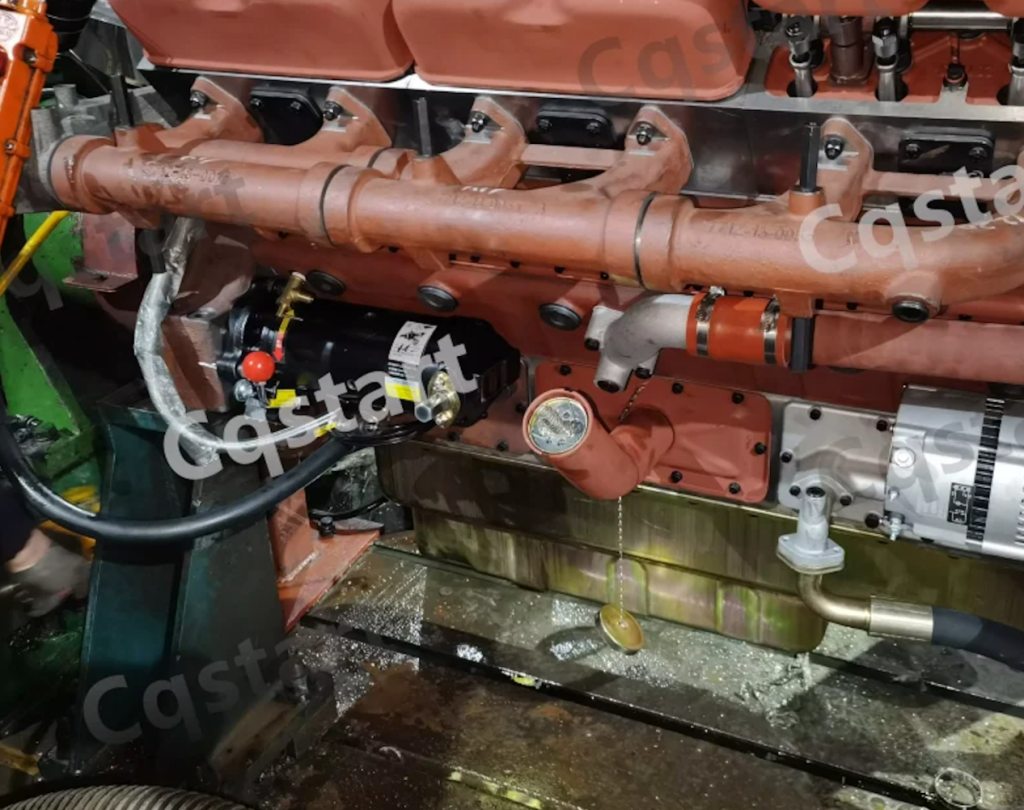
Among the available solutions, Cqstart mechanical spring starters are a well-recognized example in the industry and are widely used in various demanding applications.
Why Mechanical Spring Starters Are Ideal for Diesel Engines
A mechanical spring starter stores mechanical energy and releases it instantly to crank the engine, offering several key advantages:
- No dependence on electricity or compressed air, enabling true “black start” capability
- Simple structure with extremely high reliability, suitable for long-term stable operation
- Excellent performance in harsh environments, including extreme heat, cold, humidity, and explosive atmospheres
- Highly effective for emergency starting scenarios, reducing reliance on external systems
According to Cqstart product information, their spring starters are specifically designed for diesel engines and can operate in complex working conditions, including military, marine, and oil & gas applications, providing true independent mechanical starting capability.
Typical Application Scenarios
Mechanical spring starters perform especially well in diesel engine applications such as:
- Construction machinery (e.g., excavators, generators)
- Marine propulsion systems
- Oil and gas industry equipment
- Remote or off-grid installations without reliable power supply
Among various air starter alternatives, if the priority is:
Independence + High reliability + Emergency capability
The mechanical spring starter (such as Cqstart spring starters) is one of the most ideal solutions for diesel engines.
It is particularly suitable for critical equipment where neither batteries nor compressed air systems can be relied upon.
Summary
As industrial application needs continue to evolve, choosing the right air starter alternative has become increasingly important, with different solutions suited to different working conditions.
If reliability and independence are the top priorities, especially in environments without electricity or compressed air, a mechanical spring starter is often the best choice. When a stable power supply is available, an electric starter offers greater convenience. For heavy-duty equipment and high-load applications, hydraulic starters provide stronger performance advantages.
Overall, in harsh environments or situations without external energy sources, mechanical spring starters are generally the more reliable and cost-effective solution.