
In the industrial-power world, the word Caterpillar (CAT) goes with “indestructible.” The engines that set the standard, from the legendary CAT 3306 in remote mining to the modern C6.6 for hospital emergency generators–built to last for decades. But an engine is only as good as its ability to start.
Ask any field engineer from an oil derrick in the middle of nowhere or from an embitter construction site: “No, the engine was fine; the electric starter failed.” A battery worth $500 or an oxidised wire may delay a multi-million-dollar industry. So, electric plug-ins need to get out of the way.
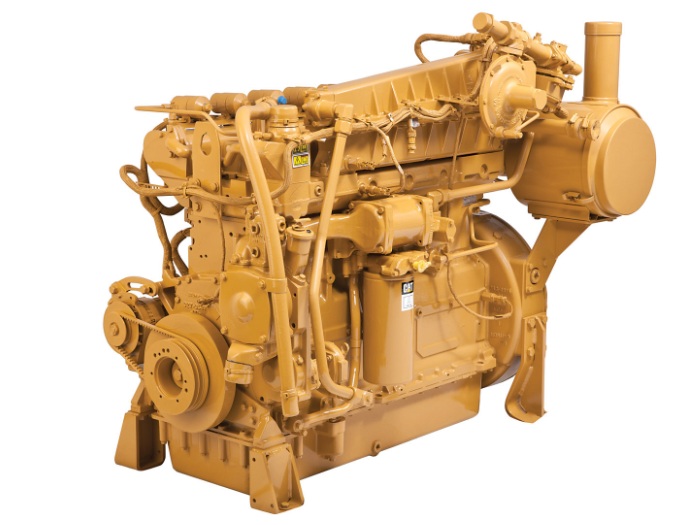
How a Caterpillar Engine Starter Works
To understand engine starter failures, it is necessary to study engine starter operation first. The starter system starts engine rotation and continues until combustion takes over. Heavy equipment commonly uses three different starter systems which include:
- Electric starters: Powered by batteries, widely used but dependent on electrical systems
- Air starters: Use compressed air to crank the engine
- Hydraulic starters: Use fluid pressure for starting
All systems provide specific advantages, yet they face a shared problem because their operation depends on outside power sources, which experience failure during particular times.
Common Reasons Why Caterpillar Engine Starters Fail
Caterpillar designs high-quality engines, but their electric starting systems demonstrate sensitivity to both environmental conditions and maintenance procedures. The first step to building a more durable system requires understanding the reasons for their failures.
The “Lead-Acid” Liability
The number one cause of starter failure isn’t the motor itself—it’s the battery. The Council of Scientific and Industrial Research (CSIR) reports that standard lead-acid batteries experience a loss of up to 50% cranking capacity at 0°C (32°F) temperatures. The use of electric starting systems becomes uncertain for CAT engines which operate in Arctic environments and high-altitude mining situations.
Corrosion in Harsh Environments
Caterpillar engines often work in the world’s most “hostile” environments. In marine applications or offshore platforms, salt spray penetrates electrical housings. In mining, fine conductive dust can cause short circuits in the solenoid. Over time, resistance builds up in the cables, leading to “click-no-start” scenarios that are difficult to diagnose under pressure.
The Cost of Dormancy
Emergency standby generators (like those using the CAT C15 or C18) often sit idle for months. During this time, batteries naturally discharge (sulfation). If the automated charging system fails—even slightly—the engine won’t start when the power grid goes down. This “dormancy risk” is a leading cause of backup power failure in critical infrastructure.
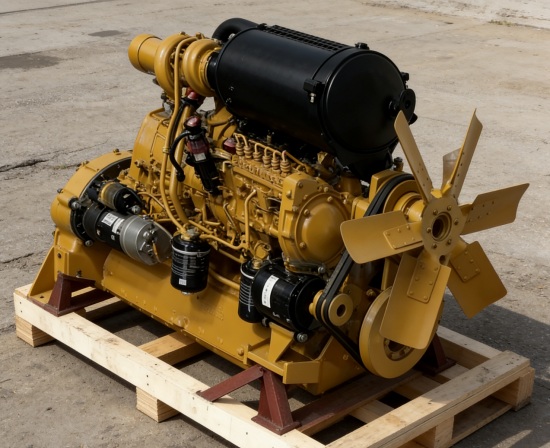
Spring Starter: A Reliable Alternative for Critical Applications
Not all spring starter units are created equal—and Cqstart’s engineered solutions are purpose-built to match the exact specifications of Caterpillar diesel engines, from compact C3.6 models (3.6L) to the massive 3516 (50L) used in marine and power generation applications. With nearly 20 years of experience in mechanical starting systems, Cqstart has developed a full lineup of spring starter models that align with Caterpillar’s displacement and torque requirements, featuring SAE standard mounting flanges (SAE #1, 2, 3) for direct, bolt-on replacement of OEM Caterpillar starters—no modifications required.
Key Cqstart Spring Starter Advantages for Caterpillar Engines
Full Displacement Coverage
Cqstart’s range spans 7 Series (≤2L) for small CAT engines, up to the 0 Group System (max 50L) for the largest Cat industrial and marine engines. Each model is calibrated to deliver the exact torque needed for CAT engines—e.g., 126Nm max pinion torque for small-displacement models, scaling to meet the high-torque demands of CAT’s C18, C32, and 3516 engines.
Extreme Environment Engineering
Cqstart spring starter units feature eco-friendly special surface coatings for waterproof, oil-proof, and salt spray resistance—tested to withstand 1000+ hours of salt spray exposure without corrosion. The system maintains operational capability because its mechanical design withstands extreme temperature variations from -40°C to 60°C.
Quick Installation & Operation
Standard SAE flange mounting means a Cqstart spring starter can replace a Caterpillar electric starter in under an hour with basic hand tools. Operation is equally simple: manual cranking stores energy in 10–30 seconds (depending on model), and a single release delivers enough power to start even the largest CAT engines on the first try.
Unbeatable Cost-Efficiency
Cqstart’s spring starter has a total system cost 60% lower than hydraulic start systems and 50% lower than OEM Caterpillar electric starters. With a lifetime maintenance-free design (internal maintenance-free grease ensures permanent lubrication) and 5000-cycle durability testing showing just 8% energy attenuation—an industry top rating—long-term operational costs are virtually eliminated.
Proven Application Reliability
Cqstart spring starter units are deployed on Caterpillar engines in marine emergency generators, mining equipment, offshore oilfield rigs, and military mobile power stations—all environments where CAT engines are the workhorse, and starting reliability is non-negotiable.
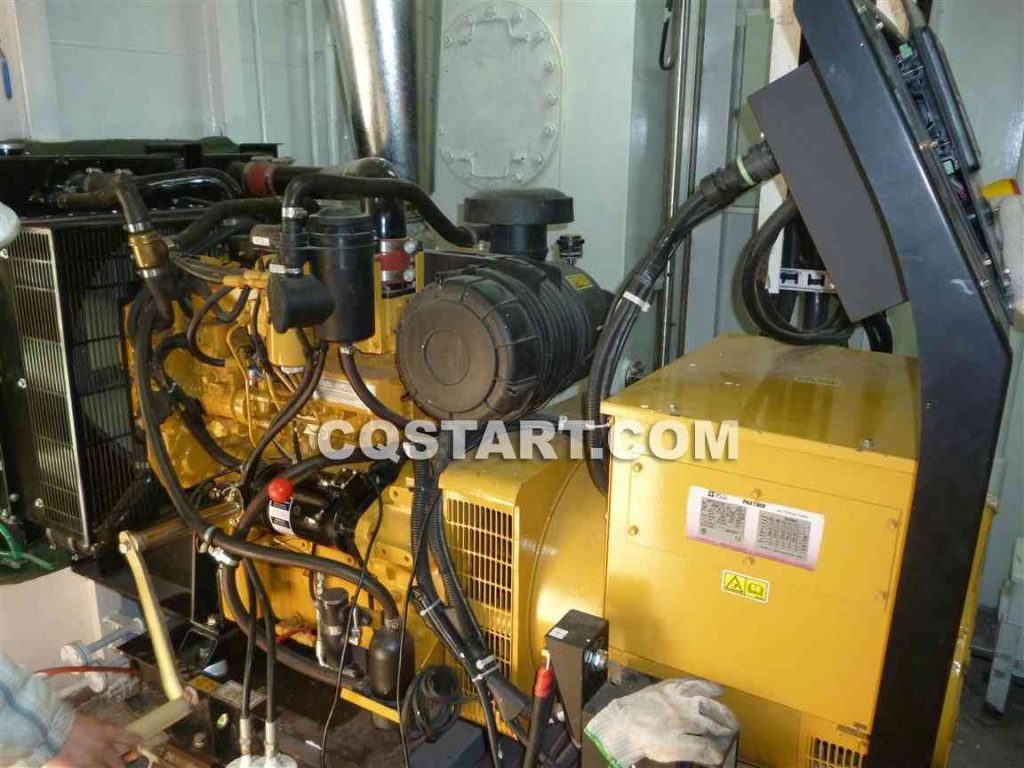
Exact Caterpillar Engine Model Compatibility
Cqstart’s spring starter lineup is precision-matched to CAT’s most popular engine models:
| CAT Engine Model | Displacement (L) | Recommended Cqstart Series |
| C3.6 / C4.4 / C7 | ≤ 7.5L | Cqstart 5 / 1 Series |
| C9 / C13 / C15 | 7.5L – 16L | Cqstart 2 / 4 / 3 Series |
| C18 / C32 | 16L – 30L | Cqstart 6 Series |
| 3508 / 3512 / 3516 | 30L – 50L | Cqstart 0 Group System |
Every model features the exact SAE flange and pinion gear specifications required for Caterpillar engines, which provides perfect engine compatibility and enables smooth flywheel engagement while preventing all gear damage that usually happens with universal starters.
Ready to eliminate downtime?
Visit the Cqstart Spring Starter to find the exact match for your Caterpillar model and ensure your engine starts—every single time.