
In the field of industrial power, the electric starter is the most common choice, however, it is often one of the “weakest link” in mission-critical applications. Using only battery-dependent systems can pose significant risks, especially in harsh environments in which failure isn’t a possibility. As engineering standards worldwide evolve towards more autonomy and security, the non electric starter is emerging as a viable strategic investment. So, transitioning to non-electric technology-specifically mechanical spring starters-is a necessity rather than a luxury for industries demanding absolute reliability, zero-spark safety, and operational independence.
The Hidden Risks of Battery-Dependent Systems
For most people that use electric starters, it’s typically a “black box” that works until it stops working. But, relying on lithium or lead-acid battery banks could result in undiscovered operational risks:
Extreme Thermal Sensitivity – Batteries suffer significant losses in cranking amps when they are in cold conditions. As temperatures drop the chemical reaction within batteries slows and it becomes incredibly difficult to attain the high torque needed for a cold start.
A “Silent Failure” of Standby Power – Batteries are prone to self-discharge and plate sulfation if put in standby mode long periods of time. Generators intended to be used in emergencies is often not working when it is most needed due to the battery having silently declined.
Complexity of Maintenance – Electric systems are an array of solenoids, starters, complicated cabling and charging circuits. Each connection point can be an opportunity for failure due to corrosion, vibration-induced looseness or short-circuiting. These can add to the cost of the ownership.
5 Critical Scenarios Where Non-Electric Starters Prevail
When evaluating “When is a non-electric starter the better choice?”, engineering managers must look at environmental and operational constraints that make traditional electricity unsuitable or dangerous.
1. Hazardous and Explosive Atmospheres (ATEX Environments)
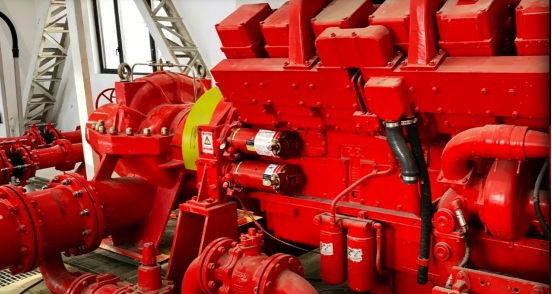
In oil and gas production, chemical processing or underground mining, the presence of explosive fumes creates every electrical spark a risk to the life of. Standard electric starters are not naturally explosion-proof. Non-electric starters, such as mechanical spring starter is a spark-free option. Since they do not require contact with electricity and wiring that is high-current They are able to comply with strict safety rules providing security when traditional electrical ignition is forbidden.
2. Extreme Temperatures and Remote Work Sites
For isolated Arctic exploration or mining at high altitudes the use of electricity is usually an expense, and stable temperatures in the air are not present. Mechanical spring starters do not depend on battery health or intricate circuitry. It makes use of stored electrical potential to generate exactly the amount of torque required in order to rotate the wheel regardless of if temperature outside is -40°C or +50°C.
3. Long-Term Standby Applications
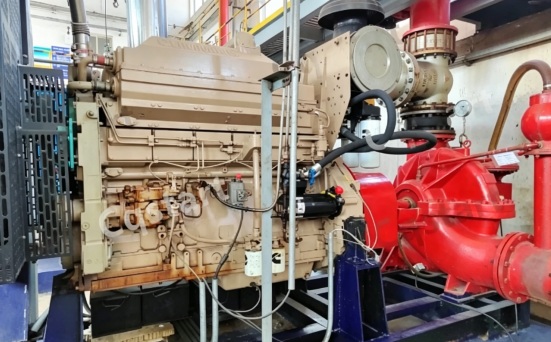
Take into consideration fire pump engines or generators for emergency backup in remote infrastructure. They could be in a state of utter idleness for months. While a battery will require continuous trickle charging and regular maintenance A spring starter is “always ready.” It conserves energy mechanically, which means it doesn’t diminish it’s “charge” over time. In the event of an emergency, the mechanical system will be exactly as powerful as when it was first installed that is, it requires zero power consumption during standby.
4. Space and Weight Constrained Environments
When drilling offshore, or on specially designed ships, space is at a premium. A standard electric starting system requires heavy battery banks, battery chargers, and massive cable runs. In contrast, a mechanical spring starter is a compact, self-contained unit that bolts directly to the engine housing. This drastically reduces the physical footprint and the weight load on the machinery, allowing for more streamlined equipment design.
5. Absolute System Redundancy (The “Black-Start” Requirement)
True “Black-start” capability means starting a system from a complete power-outage state without any external grid or battery support. In the event of a total systemic grid collapse, electric starters are useless. A manual spring starter, however, permits the operator to trigger the mechanism in order to store energy, and then activate the start. Human-centric redundancy means that the engine is always activated, which is a crucial protection for data and power grids.
Mechanical Spring Starters: The “Zero-Maintenance” Advantage
Although the pneumatic (air) starters and hydraulic starters offer alternatives that are not electrical, they usually require support systems from the outside, such like high-pressure tanks, air compressors and hydraulic pumps. The “peripheral dependencies” create new failing points, for example seal ruptures or air leaks.
The Mechanical Spring Starter, however, stands out as the ultimate independent solution. It stores energy within a high-strength spring cartridge, requiring no external air, oil, or electricity to initiate a start. This “install and forget” capability is why industry leaders are increasingly moving away from complex starting architectures in favor of pure, mechanical reliability.
Making the Strategic Shift
The choice of the best starter isn’t just about the timing of ignition, it’s about ensuring the availability of your most important industrial assets. If your work involves risky areas, remote locations or require emergency services of a critical nature, the risks that come with battery systems powered by electricity surpass the initial benefits of their widespread availability.
Is it time to upgrade your engine reliability?
Non-electric starters represent a shift toward smarter, more resilient engineering. By eliminating battery dependency, you remove the most common cause of engine starting failure.
For engineers and procurement managers ready to optimize their equipment for high-stakes environments, we invite you to explore our range of high-torque, mechanical spring starters designed for reliability in the harshest conditions.
References
- ASME. (2024). Reliability Standards for Mission-Critical Industrial Engines. American Society of Mechanical Engineers. https://www.asme.org/topics-resources/content/reliability-standards-for-mission-critical-industrial-engines
- ACS Energy Letters. (2025). Thermal Degradation of Lithium Battery Cold Cranking Performance. https://pubs.acs.org/doi/10.1021/acsenergylett.5c02345
- IECEx. (2023). IEC 60079-36 Non-Electrical Equipment for Explosive Atmospheres. https://www.iecex.com/standards/iec-60079-36-non-electrical-equipment-for-explosive-atmospheres
- NFPA. (2022). NFPA 20 Standard for the Installation of Stationary Pumps for Fire Protection. https://www.nfpa.org/codes-and-standards/all-codes-and-standards/list-of-codes-and-standards/detail?code=20
- GB/T 43462-2023. Technical Guide for Black-Start of Electrochemical Energy Storage. State Administration for Market Regulation. https://www.gbt168.com/standard/GB-T43462-2023/
- PMC. (2025). Standby Self-Discharge and Sulfation Failure of Lead-Acid Batteries. https://pmc.ncbi.nlm.nih.gov/articles/PMC11913365/
- ASME. (2023). Fluid Power System Leakage & Peripheral Component Failure Analysis. https://www.asme.org/engineering-topics/articles/fluid-power-system-leakage-failure-analysis