
You crank the handle, hear the ratchet click, pull the release and … nothing. It’s frustrating, especially when an engine or generator needs to start right now. The good news is that when a mechanical spring starter won’t release its stored energy, it’s almost never the spring that’s at fault. In most cases, it is a sticking latch, worn pawl or dry clutch that is interrupting the energy transfer. We’ll explain how this system works, list the seven common faults, give you a safe troubleshooting workflow, and cover ways to prevent this issue from recurring.
How a Mechanical Spring Starter Stores and Releases Energy
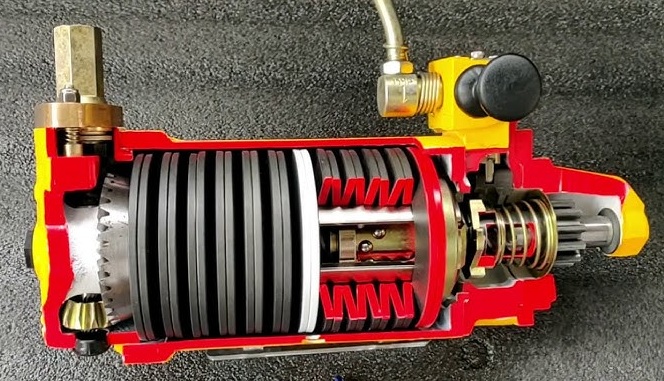
A mechanical spring starter takes power from hand cranking or a motor. It winds a spring so the system stores elastic energy. After that, it releases the stored force in one timed burst. That burst turns the engine over.
This setup has four main steps:
1. Rewind: Turn the handle or wind the gear train to charge the main spring.
2. Holding. The spring is prevented from unwinding by the ratchet and the pawl.
3. Release. The spring unwinds and the latch is released by the trigger.
4. Transmission: A clutch and drive gear pass the torque to the flywheel.
If any link in this chain breaks, it looks the same from the outside: the spring is loaded, but the engine doesn’t turn. Therefore, the diagnosis should be along the energy path, not starting with the spring.
Common Signs Your Spring Starter Is Not Releasing Energy
Confirm the symptom before you take anything apart. Typical signs include:
- The release feels unusually stiff, gritty, or sudden.
- The handle winds normally, but triggering produces no movement.
- You hear a click, but no torque reaches the flywheel.
- The starter turns only a fraction of a revolution, or very slowly.
- The trigger needs several attempts before it releases.
7 Main Reasons a Mechanical Spring Starter Fails to Release Stored Energy
The causes below are ordered from most to least likely.
1. Stuck or Worn Release Latch
Symptom: the trigger moves, but nothing unlocks.
Cause: hardened grease, dirt, or worn latch edges prevent a clean release.
Fix: clean and inspect the latch surfaces. Replace the latch if the edges are rounded or chipped.
2. Ratchet and Pawl Damage
Symptom: a clicking noise without full release or drive.
Cause: repeated loading rounds off the pawl tip and ratchet teeth, so they bind or slip.
Fix: replace worn pawls and ratchets as a matched set rather than one at a time.
3. Poor Lubrication or Contaminated Grease
Symptom: sluggish, uneven release.
Cause: old grease thickens, especially in cold weather, and dust turns it into an abrasive paste.
Fix: remove old lubricant and relubricate with grease rated for your operating temperature range.
4. Corrosion and Rust
Symptom: parts that look fine but move stiffly or not at all.
Cause: moisture attacks unprotected steel. The AMPP (formerly NACE) IMPACT study estimated the global cost of corrosion at roughly US$2.5 trillion a year, about 3.4% of global GDP, so this is a major cause of mechanical failure across industries.
Fix: remove light rust, apply protective coatings, and store units in dry conditions.
5. Spring Fatigue or Permanent Set
Symptom: a weak, short release even though the mechanism moves freely.
Cause: after many load cycles, or after overloading, the spring loses elasticity and cannot return its full torque.
Fix: replace the spring. Don’t try to straighten or reheat it.
6. Issues with Clutch or Drive Starter Gear Engagement
Symptom: spring unwinds, but the flywheel does not turn.
Cause: A slipping clutch or chipped gear teeth disconnect the engine.
Solution: Check clutch spring, tooth profile, distance of engagement.
7. Faulty Charging or Operator Error
Symptom: Different operators produce different results.
Cause: partial winding, skipping a ratchet position, or releasing before system fully engaged.
Fix: Follow charging sequence of manufacturer, train operators on number of turns.
Troubleshooting Guide – Step by Step
SAFETY FIRST
Stored energy in springs can cause serious injury. Hazardous energy (including energy stored in springs) is addressed by the lockout/tagout standard (29 CFR 1910.147). It requires that such energy be released or restrained before servicing. Wear eye protection and gloves and never open a loaded spring housing.
Regular inspection
1. Make the unit safe. Verify that the spring is fully released or mechanically locked.
2.Test the trigger. It should flow and come back by itself.
3. Inspect the ratchet and pawl Look for round teeth, cracks or foreign material.
4. Inspect lubrication. If the grease becomes dry, dark or gritty, it’s time for service.
5. Check clutch and drive gear. Check for slippage and chipped teeth.
6. Check the spring. Look for cracks, deformation or corrosion pitting and retest under controlled conditions.
Repair or replace?
| Situation | Repair | Replace |
| Dirty or dry mechanism | ✔ | |
| Light surface rust | ✔ | |
| Worn latch or pawl | ✔ (swap parts) | |
| Cracked or deformed spring | ✔ | |
| Heavily pitted ratchet teeth | ✔ | |
| Repeated failure after service | ✔ |
Safety Warnings for Stored Energy Handling
An unplanned energy release can cause handles, pawls or fragments to be thrown away at high velocity. Never attempt to strip the main spring pack without specialised holding tools and training. Keep hands out of moving parts during test. If you have any doubt whether the spring is fully discharged, stop work and consult a certified technician or manufacturer.
How To Choose A Good Mechanical Spring Starter
Prevention starts at the purchase. When comparing suppliers consider spring material and heat treatment, rated torque, engine compatibility and corrosion resistance. Precision machining of the latch and ratchet is just as important as these are the parts that are impacted over and over each cycle.
Cqstart designs and manufactures mechanical spring starters with attention to these details, and offers customized solutions for different engines and operating environments. You can explore the range at cqstart.com.