
In extreme and harsh environments, such as marine emergency setups, offshore oil and gas operations, mining, and remote engineering projects, the reliable starting of diesel generator sets and emergency pumps is paramount. However, traditional battery starters are prone to failure due to power loss, freezing temperatures, or corrosion, while pneumatic systems rely on complex compressed air tanks and piping.
As a completely independent, purely mechanical starting solution, the Mechanical Spring Starter (also known as a mechanical spring motor, mechanical starter) has become the top choice for explosion-proof and emergency application scenarios.
How does a spring starter work? How does it instantly release immense torque to start a large diesel engine without relying on electricity, compressed air, or hydraulic pressure? In this post, we will delve into the core working principles, internal structure, technical advantages, selection criteria, and applications of spring starters.
What Is a Mechanical Spring Starter?
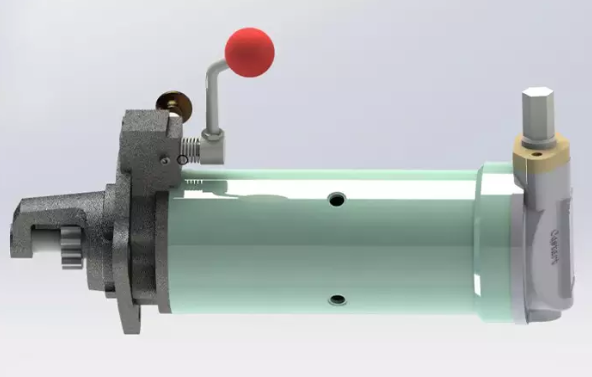
A Mechanical Spring Starter is a zero-electric starting device that stores mechanical energy in an internal group of high-strength springs through manual cranking.
When the operator triggers the trip mechanism, the potential energy stored in the springs is instantly converted into powerful rotational torque. This rotates the flywheel ring gear, achieving a true “Black Start” for the diesel engine.
How Does a Spring Starter Work?
The operation of a mechanical spring starter can be summarized into four key stages: storing mechanical energy, locking the energy storage mechanism, releasing the energy, and driving engine rotation.
1. Storing Mechanical Energy: Compressing the Spring Pack
Before starting the engine, the spring starter must store sufficient mechanical energy. The operator rotates the input shaft using a winding handle or suitable mechanism, applying force through the internal transmission to compress the disc spring pack. As cranking continues, the springs deform progressively, storing elastic potential energy.
At this stage, the manual work done by the operator is transformed into energy storage that will provide the necessary power to start up the engine. The amount of energy storage capacity, the design of the transmission system, and the amount of releasable energy determine the efficiency of the system.
2. Locking Mechanism: Retaining Stored Energy
After the springs have attained the necessary state of energy storage, a locking device keeps the whole system stationary to avoid any unintentional early release of energy. This step sets the stage for the starting process.
It is crucial that the locking system design be of utmost importance for the safety and efficiency of the mechanical starter. Operators need to strictly adhere to the manufacturer’s guidelines when operating the device.
3. Releasing Mechanical Energy: Converting Spring Energy into Rotational Motion
At the moment when the engine needs to be started, the user engages the trip mechanism. Due to the restoration of springs to their initial configuration, the elastic potential energy is converted into the rotary motion through the internal transmission system and transferred to the output shaft.
In contrast to the electrical starters which need continuous supply of electrical energy in order to produce the torque, the mechanical spring starters operate using the mechanical energy stored beforehand.
4. Driving the Flywheel: Rotating the Crankshaft
Upon the meshing of the pinion gear from the starter with that of the flywheel, the torque is then applied to the engine. As a result, the flywheel starts to spin, causing the rotation of the crankshaft along with its pistons and other moving parts.
In order for the diesel engine to be able to ignite properly and operate on its own, the crankshaft needs to have a particular starting RPM with the proper condition of the fuel supply and compression. Once the ignition is complete, the drive system of the starter will then automatically disengage or stop supplying power in order to prevent any damage to the starter system caused by back driving.
Core Internal Components of a Mechanical Starter
The five core internal components together form the starter’s “Energy Storage and Release System.” Their precision mechanical engineering guarantees instantaneous explosive power in zero-electric environments:
High-Strength Belleville Disc Spring Pack
Operation Principle: Consists of several discs of high-quality spring steel arranged in a certain manner. Upon compressing, either manually or by using hydraulic pressure, the discs deform elastically, which stores kinetic energy in the form of potential energy.
Features: High load carrying capacity, short deformation distance, very high fatigue resistance, and energy storage stability.
Reduction Gearbox
Operating Principle: Based on the use of the highly accurate internal gearing system that amplifies the mechanical force generated through the help of the winding handle.
Features: Provides an increase in mechanical force while providing smooth and efficient transfer of energy, saving a lot of operator’s efforts.
Anti-Recoil & Pawl Assembly
Operating Principle: Features precision pawls that engage with a ratchet wheel to provide one-way locking during energy storage or under unexpected kickback forces.
Features: Effectively prevents reverse energy discharge during winding, protecting operators from sudden handle kickback and ensuring personal safety.
Trip Lever Mechanism
Operating Principle: Functions as the main release trigger. Once the springs are fully compressed and locked, pulling or tripping the lever instantly releases the lockup mechanism.
Features: Lightweight, responsive action that allows the spring energy to burst forth in milliseconds.
Pinion & Overrunning Clutch
Operating Principle: When the plunger is released, the gear quickly slides forward to engage with the teeth of the flywheel on the engine. As soon as the engine fires up and surpasses the rotational speed of the starter, the overrunning clutch disengages the gear mechanism.
Features: Ensures efficient power transmission at the moment of start and provides automatic disengagement protection against engine back-drive.
Comparison: Spring Starter vs. Electric Starter vs. Air Starter
When choosing an emergency starting system for diesel engines, consider the following technical comparison:
| Comparison Metric | Spring Starter | Electric Starter Motor | Air (Pneumatic) Starter |
| Power Source | Pure manual mechanical energy | Lead-acid / Lithium battery | Compressed air tank / Air source |
| Black-Start Capability | 100% Independent (Unlimited manual cycles) | Limited by residual battery power | Limited by air tank capacity |
| Explosion-Proof & Safety | Extremely High (No electrical sparks; ATEX compliant) | Poor (Prone to electrical sparks) | Moderate to High (Gas leakage risks) |
| Environmental Adaptability | Excellent (-20°C to +55°C, immune to humidity) | Poor (Battery capacity drops drastically at low temperatures) | Moderate (Piping prone to freezing or moisture accumulation) |
| Maintenance Cost | Extremely Low (Fully sealed design; maintenance-free) | High (Requires regular battery replacement and corrosion checks) | Moderate (Requires drainage and valve maintenance) |
| Primary Applications | Marine emergency pumps, lifeboats, mines, hazardous areas | Standard land-based generators, commercial vehicles | Heavy industrial engines, oil drilling platforms |
Typical Application Scenarios of Mechanical Starter Motor
Due to its purely mechanical, zero-electricity, zero-pneumatics, explosion-proof, anti-static, and highly reliable nature, spring starters play an irreplaceable role in high-risk, mission-critical environments:
Diesel Fire Pumps & Emergency Rescue
In situations of severe emergencies like fires, earthquakes, or power blackouts in the grid, the normal starter systems may not work because of lack of power and dead batteries. On the other hand, mechanical starters do not need any external sources of power and can be switched on manually instantly. These can be mounted in fire pump stations or flood drainage vehicles.
Oil & Gas / Hazardous Areas
There is zero tolerance for any electric sparks in refineries, offshore oil drilling facilities, and LPG fuel stations that operate in both Zone 1 and Zone 2 hazardous locations. As there is zero electric element in spring starters, these are intrinsically safe devices that eliminate the possibility of explosions.
Mining & Tunneling
Conditions inside underground mines are characterized by excessive moisture, dusty environment, and possible presence of flammable gases like methane. The spring starters are made from tough materials that cannot be influenced by dust or moisture; thus, they are suitable sources of energy for explosion-proof diesel mine trucks, dewatering pumps, and ventilation systems.
Remote Power & Telecommunications
Deserts, high telecom tower setups, remote locations, or exploration camps where battery maintenance and replacement prove too expensive, and batteries discharge fast owing to large variations in temperatures, spring starters help equipment break away from the dependence on batteries, making it possible for a single operator to manually start a diesel generator any time he wishes.
Marine & Offshore Engineering
Spring starters are completely in compliance with the IMO SOLAS standards for emergency lifeboats, emergency fire pumps, and black-start generators. They help avoid the risk of short circuiting and line corrosion due to the extremely harsh marine environment, which is subject to excessive salt and moisture content, as well as battery failure.

How to Select the Right Mechanical Spring Starter
Achieving exact technical specifications is vital for guaranteeing sufficient torque output and easy mechanical installation. Consider the following four important aspects when choosing a mechanical spring starter:
Engine Displacement & Cylinder Configuration: Starter motors are made for engines with certain displacement volumes (such as below 2L up to 50L and above).
SAE Flange Mounting Size: Verify the original electric starter’s flange dimensions (such as SAE 1, SAE 2, SAE 3, etc.) to ensure a “Direct Bolt-on” replacement without modifying the engine housing.
Flywheel Pinion Teeth & Module: The starter’s pinion gear tooth count and gear module must match the flywheel ring gear precisely to prevent gear stripping or engagement failure.
Direction of Rotation: Confirm whether your engine requires Clockwise (CW) or Counter-Clockwise (CCW) rotation (viewed facing the engine flywheel).
Cqstart: World-Leading Mechanical Spring Starter Solutions Expert
As a globally renowned brand in mechanical spring starters, Cqstart brings nearly 20 years of professional R&D and manufacturing experience to the industry. Backed by extensive mechanical engineering expertise, Cqstart offers one of the broadest spring starter product portfolios in the market:
Industry-Leading Displacement Range (< 2L to 50L): Cqstart’s product lineup covers compact diesel engines under 2L all the way up to heavy-duty 50L engines, breaking the traditional limit where spring starters could only support small-to-medium engines.
Deep Compatibility with Major Engine Brands: High degree of compatibility with popular engines manufactured by major diesel engine brands like Caterpillar, Cummins, Perkins, Deutz, MTU, Weichai, Yuchai, etc., for applications ranging from marine fire pumps, rescue boats, heavy generators and mining equipment.
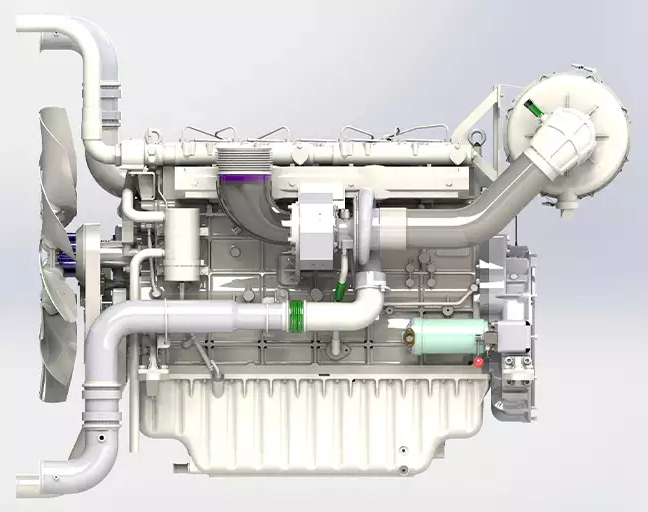
Standard SAE Flange Design: Designed as per standard SAE flange specifications, starters from the Cqstart range can be installed on existing electric starters without any modification to the engine structure.
Rigorous Quality & Explosion-Proof Certifications: The whole range is manufactured in strict compliance with SOLAS guidelines and industrial explosion-proof guidelines.
Mechanical Starter Operation and Maintenance Best Practices
To ensure your spring starter provides instant “pull-and-start” readiness during emergencies and maintains peak performance over years of harsh operation, follow these standard guidelines:
Precise Selection & Flange Matching
Always double-check flywheel teeth count, flange size, and rotation direction (CW/CCW) before replacing an electric starter. Ensure precise meshing between the pinion and flywheel ring gear to avoid misalignments and tooth wear.
Smooth Winding Operation
Crank the winding handle at a steady, uniform pace without applying sudden impact force. Keep an eye on the discharge/charge indicator window and stop immediately once it reads FULL to prevent over-compressing the springs or damaging transmission gears.
Regular Simulated Testing
Perform simulated trip tests every month to ensure fast response from the trip lever and smooth operation of the drive pinion and overrunning clutch without any jamming.
Environmental Protection & Anti-Corrosion
In cases where the environment is highly saline or dusty, remove the accumulated salt and dirt particles, inspect the seals, and use anti-rust lubricating grease on the linkages.
Conclusion
With their purely mechanical, zero-power, explosion-proof, and easy-to-operate design, spring starters provide the ultimate safeguard for emergency diesel engine starting.
If you are looking for a dependable mechanical starter, explore the Cqstart Spring Starter Series. Backed by nearly two decades of technical innovation and an impressive engine starting capacity up to 50L, Cqstart is dedicated to delivering highly reliable, user-friendly mechanical starting solutions for diesel engines across global marine and industrial applications.