
In critical applications such as marine emergency generator sets, offshore oil platforms (ATEX hazardous areas), fire pumps, and mining equipment, the Mechanical Spring Starter has become an exceptional black start and emergency starting solution due to its complete independence from storage batteries, external air sources, and hydraulic pipelines.
For equipment engineers and procurement managers, the central question during selection is typically: What size diesel engine can a mechanical spring starter start?
This guide provides an objective and comprehensive technical analysis covering displacement limits, power ranges, critical physical factors influencing starting performance, and comparisons with electric starters.
Quick Answer: What Size Diesel Engine Can a Mechanical Spring Starter Start?
Standard industrial mechanical spring starters are generally suitable for common diesel engines ranging from 0.5 L to 18 L. However, specialized spring starting solutions engineered with high-torque mechanisms, such as the Cqstart 0 Group System Mechanical Spring Starter, can extend maximum displacement compatibility up to 50 L.
Without relying on electricity or external power sources, a hand-cranked energy-storage spring starter can cover everything from small single-cylinder diesel engines to V12 / V16 / V20 configurations, driving large industrial and marine engines with power outputs reaching hundreds of kilowatts.
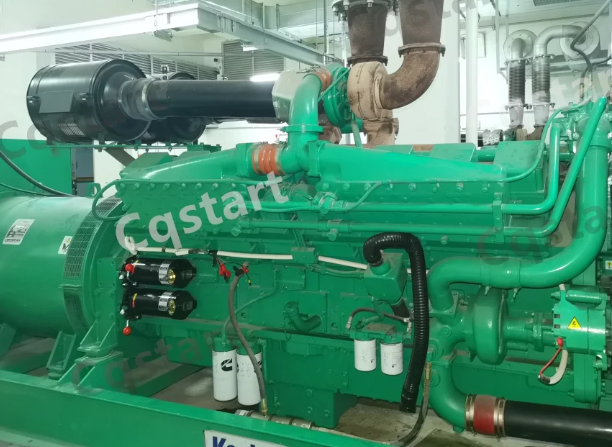
Engine Compatibility Reference Table
| Engine Displacement | Cylinder Count | Typical Power Range | Suitability & Selection Advice |
| Micro / Small (0.5L – 3.0L) | 1 – 4 Cylinders | Up to 50 kW | Easy Fit: Directly replaces OEM electric starters. Requires few hand-cranking turns with minimal effort. |
| Medium (3.0L – 9.0L) | 4 – 6 Cylinders (e.g., Cummins 6BT) | 50 kW – 200 kW | Standard Mainstream: Widely used in marine emergency gensets, fire pumps, and lifeboats. |
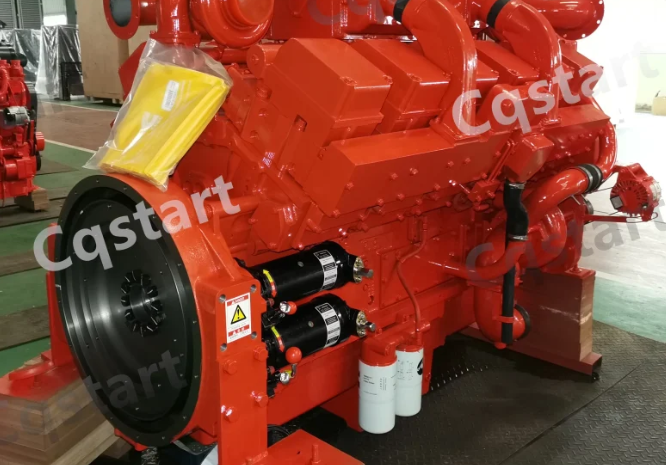
| Large (9.0L – 18.0L) | 6 – 12 Cylinders (Inline-6 / V8 / V12) | 200 kW – 400 kW | High-Torque Application: Requires high energy density disc spring packs to reliably overcome compression top dead center (TDC) in large displacement engines. |
| Ultra-Large / Heavy Duty (18.0L – 50.0L) | V12 / V16 / V20 | > 400 kW (500+ HP) | Specialized Advanced Solution: Uses high-torque energy storage structures or dual-starter configurations to break the traditional 18L limit, driving engines up to 50L. |
Is Engine Displacement the Only Criteria for Choosing a Mechanical Spring Starter?
Engine displacement is not the sole factor when selecting a mechanical spring starter. Displacement only helps define a rough application scope. Achieving a successful start ultimately depends on evaluating these 5 core engineering factors:
1. Starting Torque & Cranking Speed
A diesel engine cannot simply be turned over; it must reach a minimum cranking speed to initiate compression ignition. According to SAE engineering standards regarding starter drive torque, output torque directly dictates the starting sequence. A mechanical spring starter must satisfy two requirements simultaneously:
Sufficient Breakaway Torque: Overcomes static friction and inertia inside the engine.
Sufficient Cranking Speed: Rapidly accelerates the engine to its firing speed within a fraction of a second.
2. Engine Architecture
Cylinder count, compression ratio, crankshaft design, and stroke type directly impact resistance distribution during starting.
For instance, engines with more cylinders stagger their compression strokes, resulting in smoother moment of inertia; conversely, high-compression engines create sudden resistance spikes.
Additionally, if an engine features a decompression mechanism, initial resistance decreases significantly, boosting manual cranking efficiency.
3. Ambient Temperature & Oil Viscosity
Ambient temperature strongly influences engine drag. Low temperatures cause lubricating oil viscosity to spike sharply, drastically increasing crankshaft rotation resistance. If the spring starter operates in cold climates, outdoor job sites, mines, vessels, or remote regions, the actual operating temperature must be specified to allow for necessary torque margins.
4. Parasitic Loads
If the engine flywheel shaft is directly coupled to un-disengaged loads—such as hydraulic pumps, high-pressure water pumps, or alternators—these parasitic loads will consume substantial starting energy. Engineering best practice requires ensuring the engine is in a disengaged (no-load) state at the moment of starting.
5. Flywheel & Interface Matching
As mechanical drive devices, spring starters must match the engine’s physical interfaces precisely. Selection requires strict verification of:
- Flywheel & Ring Gear (Teeth count / Module / Pitch)
- Mounting Flange (Dimensions and bolt circle pattern)
- Pinion Gear (Number of teeth)
- Rotation Direction (Clockwise CW or Counter-Clockwise CCW)
How Spring Starters Release High Energy Instantly?
Engineers often ask: How can manual effort (typically generating only 100–200 W) start a massive 50 L diesel engine?
The secret lies in a spatiotemporal conversion mechanism: high-ratio reduction slow energy storage combined with ultra-high power density instantaneous release.
1. High-Strength Disc Spring Packs
Structural Attributes: The core energy storage relies on industrial-grade Belleville washers. Compared to helical coil springs, disc springs offer extremely high stiffness and energy density per unit volume, holding tens of tons of compressive load within a minimal axial stroke.
Geared Mechanical Advantage: As the operator cranks the handle, a high-ratio reduction mechanism (planetary gears or lead screws) amplifies the input torque. This transforms light hand effort into tens of thousands of Newtons of axial force, compressing the stacked disc springs and converting mechanical work into elastic potential energy.
One-Way Locking: A ratchet-and-pawl mechanism continuously locks energy during cranking, preventing handle kickback and protecting the operator.
2. Instantaneous Discharge
Trip Lever & Engagement: Actuating the trip lever instantly unlocks the retaining pawl.
Inertial Axial Advance: In the first few milliseconds of decompression, internal helical splines or ball ramps drive the pinion gear axially to achieve complete mesh with the engine flywheel ring gear.
Rapid Energy Release: Kilojoules of stored potential energy release fully within 0.1 to 0.2 seconds. Based on $P = \frac{E}{t}$, compressing time amplifies human power input hundreds of times over, yielding instantaneous peak outputs of tens or even hundreds of kilowatts.
3. Overcoming TDC & Disengagement
Overcoming Compression TDC: Massive peak torque quickly overcomes high compression ratios (typically 15:1 to 22:1) and static friction, driving the crankshaft across top dead center (TDC).
Reaching Firing Speed: Within 1 to 2 crankshaft revolutions, the starter accelerates the engine past firing speed (typically 100–150+ RPM), allowing the fuel injection pump to build sufficient pressure for ignition.
Overrunning Protection: Once the engine fires, the flywheel speed quickly surpasses the pinion speed. An internal overrunning clutch automatically disengages and retracts the pinion, preventing the running engine from back-driving and damaging the starter.
Spring Starter Compatibility: Supported Diesel Engine Brands & Models
As a zero-electric, zero-pneumatic black start solution, mechanical spring starters hold major classification society approvals (such as DNV, ABS, CCS, BV, LR) and comply with ATEX / IECEx explosion-proof standards. They match standard SAE flywheel housings (SAE 1# to 4#) and mainstream diesel engines worldwide:
1. Cummins
As one of the most widely used engine brands in industrial and marine sectors, spring starters offer mature flywheel ring gear and flange adaptors for Cummins models:
Small/Medium Displacement (3.9L – 8.3L): 4BT 3.9, 6BT 5.9, 6CT 8.3, QSB series (commonly found in fire pumps and lifeboats).
Large Displacement & Heavy-Duty (14L – 50L): NT855 / N14, KTA19, KTA38, KTA50, QSK19 / QSK38 (widely used in offshore platform emergency generators and ATEX black start skids).
2. Caterpillar
The specific high torque spring starter is used in order to deal with high compression ratios and high starting torque in Caterpillar engines:
Industrial & Marine Classic Engines: 3304, 3306, 3406, 3408, 3412 (standard black start power used in mining and oil fields).
C-Series Engines: C4.4 – C32 (C4.4, C6.6, C7.1, C9, C13, C15, C18, C27, C32) used in land gensets, explosion-proof oil field skids, and marine auxiliary engines.
3. Perkins
Small & Compact: 400 Series (403, 404), 1100 Series (1103, 1104, 1106) (ideal for small generators and emergency pumps).
Medium/Large Industrial Models: 1200, 1500, 2000 (2200, 2500, 2800), and 4000 Series (4006, 4008, 4012, 4016).
4. Deutz
Air-cooled and water-cooled Deutz engines excel in harsh environments:
Classic Air-Cooled Series: FL912, FL913, FL914, FW413 / FW514 (standard configuration for underground mining equipment).
Water-Cooled Series: BFM1013, BFM1015, TBD234, TBD620 / TCD series.
5. Yanmar & Volvo Penta
Ideal for marine applications demanding salt-spray resistance and high reliability:
Yanmar: 3JH / 4JH series, 6HAL / 6LA / 6CX series, S165 / S185 series (preferred for lifeboats and workboats).
Volvo Penta: D2, D5, D7, D9, D13, D16 full marine range.
6. Chinese Mainstream Engine Brands (Weichai / Yuchai / Jichai, etc.)
Weichai: WD615, WP4, WP6, WP10, WP12, WP13, M26 / M33 series.
Yuchai: YC4E, YC6A, YC6MK, YC6T, YC6TD series.
Jichai / SDEC: Jichai 12V190 large-bore engines, SDEC D/G/W series.
Selection Note: Because engine configurations vary by production year and application, please supply the exact engine model, displacement, flywheel teeth count, and pinion offset when specifying a spring starter.
Applicable Diesel Engine Applications for Mechanical Spring Starters
Since there is no use of batteries, compressed air, or hydraulics, mechanical spring starters are real zero-electric and zero-pneumatic black start solutions:
Emergency Diesel Generator Sets: Serves as an ideal backup starting mechanism to avoid lockups due to dead batteries, old cables, or controls failure in places like data centers, hospitals, offshore oilrigs, and skyscrapers.
Fire Pump Sets & Emergency Water Pumps: Adheres to the code of fire protection that demands 100% starting capability in the absence of electricity or floods.
Mining & Underground Machinery: Suitable for mining machinery, ventilation fans, and pumps where no-spark operation of mechanical parts is crucial in dusty and humid environments.
Oil & Gas / Hazardous Areas: Suitable for refineries, drilling platforms, and chemical transfer pumps. Inherently ATEX / IECEx compliant without electrical spark risks.
Defense & Specialized Vehicles: Used in field power stations, tactical vehicles, and defense power units requiring high EMP immunity and operating ranges from -40°C to +60°C.
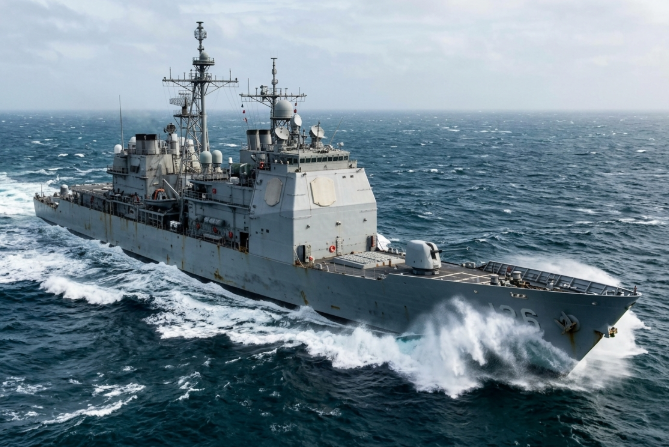
Marine & Offshore Engineering: Used in life boats, work boats, emergency generators, and emergency fire pumps in accordance with international maritime standards.
Mechanical Spring Starters vs. Electric Starters
| Comparison Dimension | Mechanical Spring Starter | Standard Electric Starter |
| Power Source | Manual Hand-Cranking (Stored Mechanical Energy) | Lead-Acid or Lithium Batteries (Electrical Energy) |
| Battery Dependency | Zero Dependency (No battery or charging needed) | 100% Dependent (Fails if batteries lose charge) |
| Emergency Black Start | Exceptional (Crank and start anytime) | Poor (Risk of self-discharge during long idle periods) |
| Explosion Safety | Inherently Safe (Zero electric spark risks) | Requires costly explosion-proof enclosures |
| Temperature Tolerance | Exceptional (Unaffected by cold battery drain) | Limited (Battery discharge drops in low temperatures) |
| Routine Maintenance | Minimal (Virtually maintenance-free) | High (Requires battery testing, fluid checks, and replacements) |
| Primary Applications | Marine emergency gensets, fire pumps, oilfield ATEX zones, lifeboats | Daily automotive, standard standby gensets, general industrial machinery |
Cqstart Mechanical Spring Starters: Global Emergency Black Start Solutions
A specialized producer of non-electric emergency starters, Cqstart provides dependable and efficient mechanical spring starter systems to customers all around the world. Be it harsh weather conditions, salt spray environments, or ATEX areas, Cqstart is there to make sure that your vital machinery starts without fail.
Full Displacement Range (<2L to 50L): Covers everything from small single-cylinder engines up to massive 50L V-type diesel engines.
Zero Maintenance & Always Ready: Pure mechanical construction without batteries, air tanks, or hydraulic lines. Maintains readiness even after years of storage with zero TCO.
SAE Standard Compatibility: Standard SAE flanges and custom pinion options integrate seamlessly with Cummins, Caterpillar, Perkins, Deutz, Yanmar, Weichai, and other major engines.
ATEX Compliant & All-Weather Operational: Eliminates electric spark hazards naturally and operates in extreme temperatures ranging from -40°C to +60°C.
Conclusion
The engine displacement is taken to be a base parameter but not the only deciding parameter for choosing a mechanical spring starter. A technical analysis should take into account the torque, speed required for cranking, operating temperature, parasitic loads, and flywheel size. Mechanical spring starters are an established choice for black starts for emergency generators and marine applications, where high safety and no electrical dependency are critical.