
In critical power scenarios such as emergency generator sets, marine diesel engines, fire pump units, and field mining operations, the reliability of the starting system is paramount to overall safety. Electric starting systems face the risk of battery power loss, pneumatic starting relies on air compressors and storage tanks, and hydraulic starting carries risks of line leakage and high maintenance costs.
As a purely mechanical emergency starting solution, the spring starter (spring energy storage starting device) stores mechanical energy in high-strength springs via human effort and releases it in a single burst to drive the flywheel to cranking speed. Free from reliance on batteries, air sources, hydraulic stations, and external power supplies, it serves as a core backup choice for dead ship starting, black start, and explosion-proof environments.
However, the quality of spring starter manufacturers in the market varies widely. For diesel engine application engineers, generator set procurement teams, and system integrators, selecting a manufacturer requires much more than looking at a spec sheet or single-unit quote. This guide outlines a systematic manufacturer evaluation framework on how to choose a spring starter manufacturer, covering application matching, manufacturing fundamentals, testing capabilities, and after-sales support.
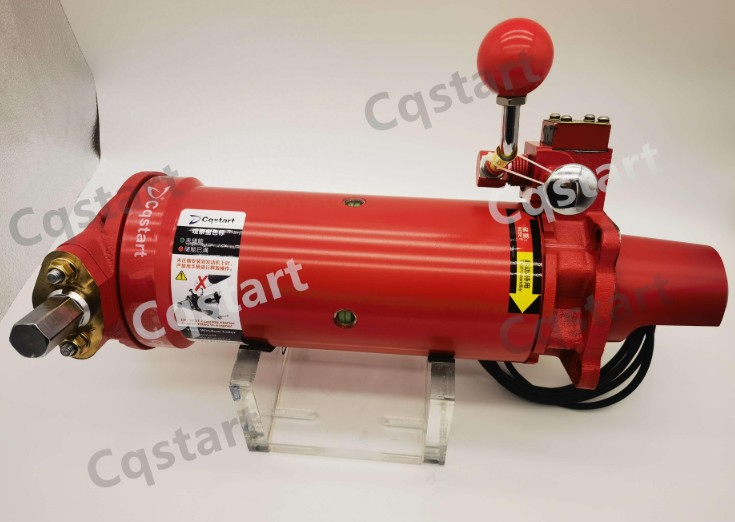
Define Engine Parameters Before Contacting Mechanical Starter Suppliers
A spring starter is no generic part. Diesel engines greatly vary in terms of displacement, flywheel housing design, ring gear module and starting torque requirement. Never will a professional manufacturer suggest a model based purely on engine displacement.
The following should be compiled and confirmed before contacting your suppliers.
- Engine Displacement & Model: Specify the exact rated displacement and full engine model designation.
- Flywheel Housing & Ring Gear Specs: SAE mounting interface size, flange dimensions, ring gear tooth count and module, and whether the flywheel housing features dual starter mounting ports.
- Starting Application Role: Whether the spring starter is intended as the primary daily starter or as an emergency backup for an electric starting system.
- Installation Space & Layout: Available space for the starter body, the operational sweep radius of the manual crank handle (energy storage lever), and interference with surrounding piping.
- Operating Environment: Exposure to explosive gas environments, high-humidity salt spray (marine environments), extreme high/low temperatures, or dusty conditions.
- Starting Frequency: Frequency of routine testing/maintenance vs. emergency continuous starting demands.
Selection Tip: For flywheel housings equipped with dual starter ports, the spring starter can be installed in parallel with the original electric starter, creating a double-insurance configuration (“electric primary, mechanical backup”). If only a single mounting port is available, evaluate whether to use it as a full mechanical replacement or adopt an emergency swap-out solution.
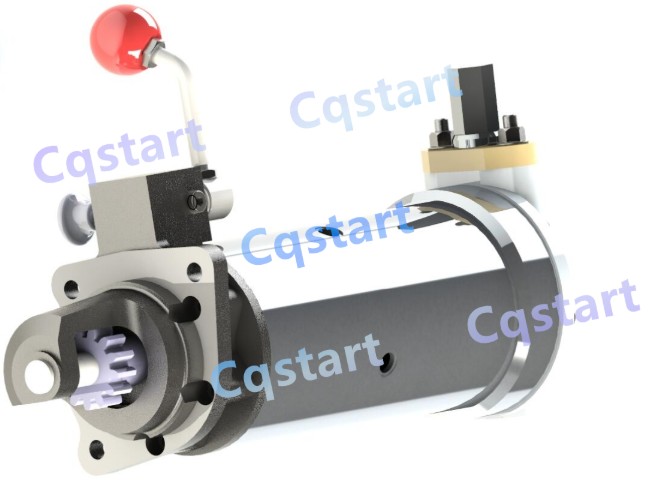
7 Core Criteria for Evaluating Mechanical Spring Starter Manufacturers
Once your requirements are clear, evaluate suppliers across these 7 key dimensions:
1. Product Range & Compatibility
Different diesel engines require distinct starting torques and release speeds. A manufacturer offering only a few fixed standard models will struggle to meet non-standard project demands or large-displacement engine integration requirements.
Key Considerations:
Supported engine displacement range (whether it covers small engines up to heavy-duty engines over 50L).
Compatibility with major engine brands such as Cummins, Perkins, CAT, MTU, Detroit, Yuchai, Weichai, etc.
Availability of complete model specification matrices, engine compatibility databases, and 2D/3D installation drawings.
2. In-House R&D & Core Manufacturing Process
A spring starter is a high-precision mechanical energy storage device. Its performance and service life depend not only on overall structural design, but also on the heat treatment and machining accuracy of high-stress energy springs, overrunning clutches, and reduction gear sets.
Key Considerations: Evaluate whether the supplier possesses in-house R&D capabilities and precision machining and assembly processes for core components, or if they merely assemble off-the-shelf parts. Manufacturers controlling core production processes deliver significantly better batch consistency and fatigue resistance.
3. Quality Control & Testing Equipment
Factory testing is the dividing line between a professional manufacturing facility and a basic assembly workshop.
Key Considerations: Check if the supplier is equipped with a dedicated spring starter performance test rig. Qualified factory testing should measure and log:
- Stored energy capacity and peak output torque.
- Release speed and energy conversion efficiency (release efficiency).
- Gear mesh smoothness and endurance cycle test logs.(Note: For bulk purchases, verify the single-unit traceability of test data.)
4. Interface Compatibility & Customization Capabilities
Engines with similar displacements can still differ in flywheel housing interfaces (e.g., SAE 1#, 2#, 3#) and ring gear specs. Unverified interfaces can result in installation failures or gear meshing issues upon delivery.
Key Considerations: Support for standard SAE interfaces; capability to supply custom non-standard flanges or drive pinions for unique marine engines or retrofit projects; and ability to adjust manual crank angles within tight spaces.
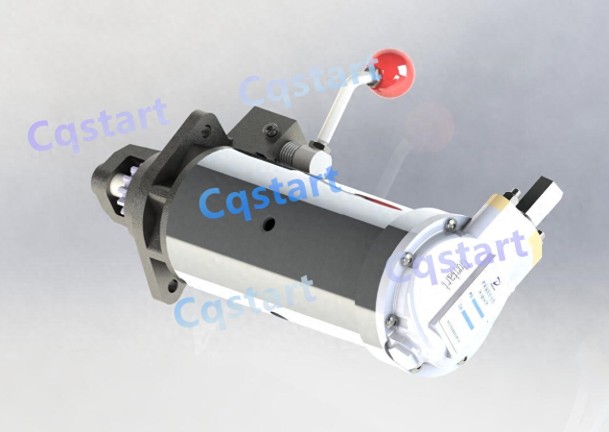
5. Industry Experience & Track Record
A robust portfolio of real-world applications demonstrates product performance under harsh industrial conditions. Look for proven experience in:
Marine & Offshore: Marine emergency generator sets, primary/auxiliary engine emergency starting.
Power & Black Start: Black start systems for standby generator sets in hospitals and data centers.
Fire Pump Systems: Diesel engine fire pump sets (requiring 100% first-attempt start reliability).
Mining, Oil & Gas: Sparkless and explosion-proof starting in flammable, explosive, or dusty environments.
6. Safety Features & Environmental Adaptability
A purely mechanical design does not automatically guarantee compliance with hazardous environment standards.
Explosion-Proof & Sparkless: Oilfields and chemical plants require verified friction-spark suppression and explosion-proof mechanical structures.
Corrosion & Salt Spray Resistance: Marine and coastal applications require evaluation of anti-corrosion coating processes, internal spring material selection, and sealing grades.
Extreme Temperatures: Performance stability of greases and spring materials under high-cold (-40°C) or high-temperature engine room conditions.
7. Technical Support, Spare Parts & After-Sales Service
As emergency backup equipment, a starter may remain idle for long periods, but it must work instantly when needed.
Key Considerations: Availability of detailed installation manuals and operational training; healthy factory stock of wear parts (e.g., crank handles, clutch assemblies); and rapid remote or on-site technical response times.
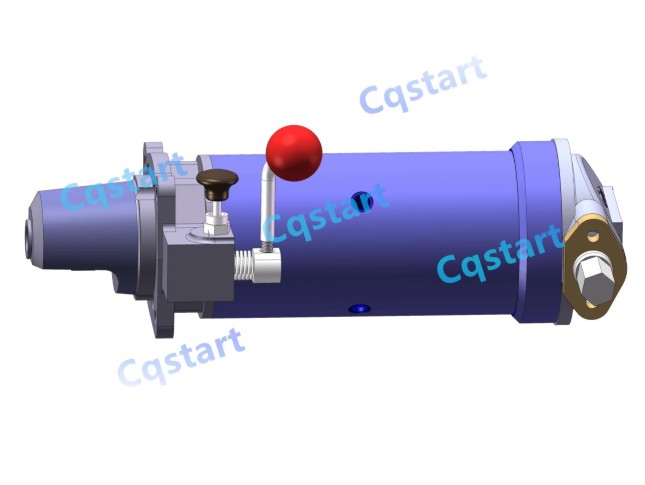
Common Mistakes to Avoid When Choosing a Spring Starter Motor Supplier
Avoiding these common mistakes during procurement can significantly reduce installation friction and long-term operational risks:
| Procurement Mistake | Potential Risk | Correct Approach |
| Mistake 1: Focusing solely on unit price | Inferior springs suffer energy decay or breakage; rough gear tooth profiles damage flywheel ring gears. | Evaluate material quality, test data, and service life comprehensively to calculate Total Cost of Ownership (TCO). |
| Mistake 2: Selecting solely by engine displacement | Ignoring flywheel housing dimensions and tooth counts leads to installation incompatibility on delivery. | Provide complete engine model details along with flywheel housing and ring gear specs for precise matching. |
| Mistake 3: Ignoring factory testing capabilities | Assemblers without test rigs deliver unverified performance, leading to unreliable field performance. | Require the supplier to provide unit-specific factory performance test reports and torque/speed curves. |
| Mistake 4: Assuming all mechanical devices are naturally explosion-proof/corrosion-proof | Unprotected products corrode and fail rapidly in marine or oilfield environments. | Disclose special operating conditions upfront to customize anti-salt-spray or explosion-proof configurations. |
| Mistake 5: Overlooking after-sales and spare parts availability | Damage caused by improper field operation cannot be repaired quickly without replacement parts. | Include installation support, operational training, and spare parts availability clauses in the contract. |
Why Choose Cqstart as Your Spring Starter Partner?
If you are seeking a technically mature and reliable spring starter manufacturer, Cqstart is your trusted technical partner.
Since its establishment in 2008, Cqstart has focused exclusively on the R&D and manufacturing of mechanical energy storage starting technology for diesel engines. By continuously upgrading its product lines and testing capabilities, Cqstart delivers independent emergency starting solutions to global clients.
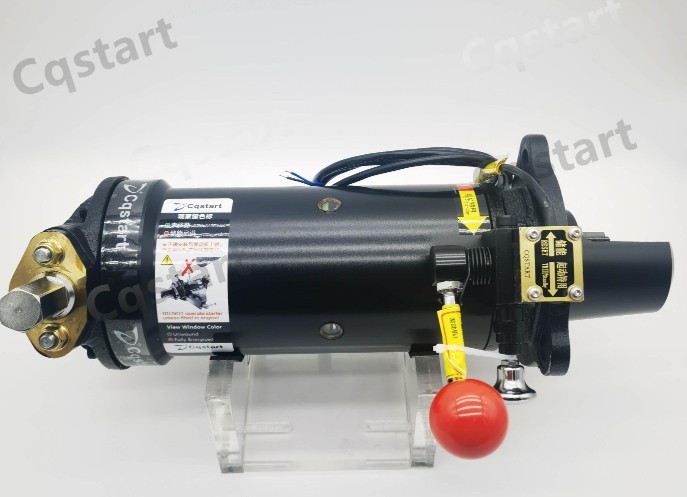
Cqstart Core Strengths:
Full Displacement Coverage (0.5L – 50L+): Complete product lines offering mature starting solutions from small diesel engines up to heavy-duty 50L+ high-power engines.
100% Independent Mechanical Starting: Utilizes highly durable mechanical energy storage and release structures, operating entirely independent of batteries, electrical cables, or compressed air systems.
High Cost-Performance & Quality Assurance: Delivers significant price advantages compared to international brands while enforcing strict control over manufacturing and inspection processes to ensure reliable quality under extreme conditions.
Proprietary Dedicated Test Rig System: Conducts factory testing on every single unit, precisely recording stored energy, output torque, release speed, and efficiency for full data traceability.
Extensive Engine Matching Experience: Seamlessly compatible with major global engine brands including Cummins, Perkins, CAT, MTU, Deutz, Yuchai, Weichai, and others, supporting standard SAE interfaces and custom non-standard flanges.
Proven in Harsh Environments: Widely deployed across global marine engineering, fire pumps, open-pit mining, oil and gas extraction, and generator set black start scenarios.
Dedicated Technical Support: Provides one-on-one drawing verification and technical matching recommendations based on your engine model, displacement, and flywheel housing interface.
FAQs About Spring Starter Manufacturers
Q1: Can a spring starter completely replace an electric starter?
A: It depends on the application scenario. Flywheel housings with dual mounting ports can host both simultaneously, utilizing the spring starter as an emergency backup. Single-port housings can use it as a primary starter or as an emergency swap-out option. The decision should be based on explosion-proof requirements, starting frequency, spatial constraints, and operating conditions.
Q2: Is engine displacement enough to determine the correct model?
A: No. You must also confirm flywheel housing interface specs, required starting torque, installation clearance, ambient temperature ranges, explosion-proof/anti-corrosion requirements, and operator clearance.
Q3: How do you black start an electronically controlled diesel engine during a power failure?
A: Typically, the spring starter supplies the mechanical cranking power, while a dedicated auxiliary battery/UPS power unit energizes the Engine Control Module (ECM) to enable fuel injection. System co-design and testing with the engine manufacturer are recommended.
Q4: Does “maintenance-free” mean zero maintenance is required?
A: No. A low-maintenance design reduces routine workload, but external cleaning, corrosion inspection, gear engagement checks, and readiness checks after long storage periods should still be conducted per the user manual.
Q5: How can I tell if a starter manufacturer is reliable?
A: Look for four key documentation sets: Quality Management System certificates, individual factory test records, case studies on similar engine models, and customized engineering/after-sales training proposals. Suppliers offering verifiable test data and interface dimensional drawings generally minimize communication friction.
Q6: How long does it take to operate a spring starter once?
A: A standard operation cycle takes under 30 seconds (around 10 seconds for smaller engines). Actual time depends on starter model size, surrounding working space, and operator familiarity. A live demonstration can be performed during project commissioning.
Conclusion
Selecting a reliable spring starter manufacturer involves far more than comparing price tags or marketing spec sheets. Engine compatibility, manufacturing precision, factory testing procedures, spatial constraints, real-world track records, and after-sales support must all be evaluated holistically.
For diesel engine OEMs, generator set integrators, marine equipment suppliers, and industrial equipment buyers, partnering with an experienced, specialized manufacturer minimizes installation matching risks and ensures the safety and readiness of emergency power systems.
Whether you are seeking a matching starting solution for a new diesel generator set or upgrading an existing engine with a mechanical emergency starter, contact Cqstart to review your technical specs and explore customized spring starting solutions.