
A diesel generator almost never fails to start at a hassle-free time– it happens throughout a blackout, a storm, or the precise minute backup power is required most. The good news is that virtually every initial failure traces back to one of three systems: the battery, the fuel system, or the starter motor. Each creates a distinctive collection of signs and symptoms. Let’s walk through how to identify which one is failing, why it occurs, and how to avoid it from taking place again.
Quick Diagnostic: What Your Symptoms Are Telling You
Before digging into any single component, the fastest way to narrow down the problem is to listen and watch:
- No sound, no reaction at all → Usually battery or wiring
- A clicking sound but no cranking → Weak battery or a failing solenoid
- Engine cranks normally but won’t fire → Almost always a fuel system issue
- Cranking is slow, weak, or labored → Battery or starter motor
This quick filter matters because misdiagnosis is common — industry field data consistently shows that battery-related issues account for a large share of no-start calls, often cited around 40–50% of service dispatches, followed by fuel-related faults and starter/electrical faults making up most of the remainder.
Battery-Related Starting Problems
Common Symptoms
A dimming control board, repeated clicking when turning the key, or a crank that starts strong and promptly fades are classic battery signs.
Common Causes
- Age and sulfation: Many conventional lead-acid beginning batteries have a service life of 3– 5 years; past that, interior resistance climbs sharply.
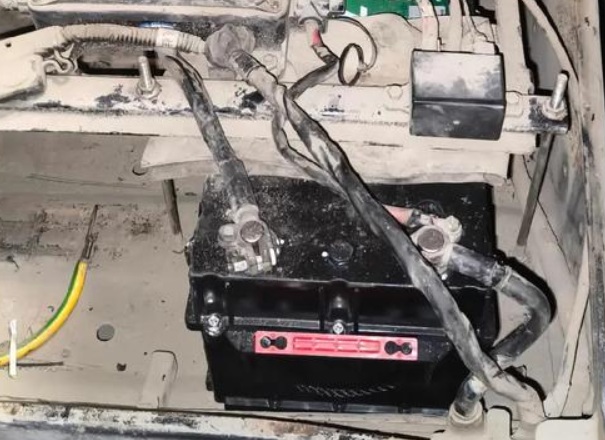
- Corroded or loosened terminals: Also a well-charged battery can stop working to supply existing via a rusty connection.
- Parasitical drain: Standby generators sitting idle for weeks can lose charge to little background loads.
- Winter: Battery capability can stop by roughly 20% at freezing temperature levels and by as high as 50% at -20 ° C, which is precisely when engines also need a lot more cranking power to get rid of thicker oil.
How to Verify
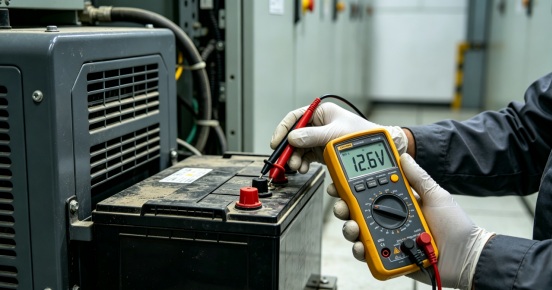
An easy voltage check tells a lot of the story: a healthy 12V starting battery must read around 12.6 V at rest. Anything regularly below 12.2 V suggests it needs to be scheduled for charging or replacement. A load test under actual cranking problems is a lot more trustworthy than a fixed voltage reading alone.
Fuel-Related Starting Problems
Common Symptoms
The engine turns over with normal cranking speed but never fires, or it starts briefly and then stalls.
Common Causes
- Low or empty fuel level, often overlooked on units that run infrequently
- Clogged fuel filters, restricting flow to the injection system
- Air in the fuel lines, which prevents proper injector pressure
- Water or microbial contamination, particularly in tanks that sit unused for long periods
- Fuel gelling in cold climates, when paraffin wax crystallizes below roughly -6°C to -10°C depending on the fuel blend
How to Check
First check the fuel level and quality, then check the filter for discolouration or clogging. If the engine has been sitting for a long time without running, sometimes all it takes is bleeding air out of the fuel lines to get it running again.
Starter Motor & Starting System Problems
Common Symptoms
Complete silence when cranking, a single click with no follow-through, or a grinding sound as the gear engages.
Common Causes
- Worn starter motor components, including brushes and bearings that degrade with age and cycle count
- Failing solenoid, which is responsible for engaging the starter gear and passing current to the motor
- Poor gear engagement, from wear on the flywheel ring gear or starter pinion
- Corroded or damaged wiring, especially on units exposed to moisture or vibration
A Hidden Risk
Repeated cranking of a weak starter motor puts additional load on an already weak battery, with the result that the more the operator cranks away at it, the less power is available to actually start it.
Battery vs Fuel vs Starter: Side-by-Side Comparison
| Issue | Typical Symptom | Common Cause | Quick Check |
| Battery | Clicking, dim lights, slow crank | Age, corrosion, cold weather, parasitic drain | Voltage/load test |
| Fuel | Cranks but won’t fire | Low fuel, clogged filter, air in lines, gelling | Fuel level, filter inspection |
| Starter | No crank, single click, grinding | Worn motor, failed solenoid, gear wear | Listen for engagement sound |
Why Starting Reliability Matters Even More for Standby & Emergency Generators
For standby power, fire pumps, marine engines, or equipment operating in remote and harsh environments, a battery failure isn’t just an inconvenience — it’s a single point of failure that can take an entire backup system offline exactly when it’s needed. Because batteries are the most failure-prone component in the starting chain, particularly in cold, humid, or vibration-heavy conditions, critical applications increasingly rely on starting methods that don’t depend on stored electrical charge at all.
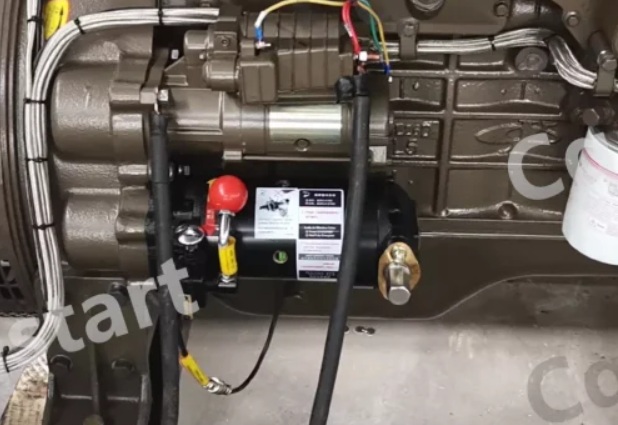
Mechanical spring starters and air starters are two such solutions. Rather than drawing on a battery, a spring starter stores mechanical energy that can be released instantly to crank an engine, making it largely immune to cold-weather capacity loss, battery aging, or parasitic drain — the very failure modes responsible for most no-start incidents. This is why these systems are widely specified in marine, military, mining, and explosion-proof (ATEX) environments where a failed start is not an acceptable outcome.
How to Prevent Diesel Generator Starting Problems
Test batteries under load regularly, not just with a resting voltage check
Run scheduled load tests on standby units, since idle time accelerates battery and fuel degradation
Maintain fuel quality, including periodic filter changes and water separator checks
Inspect starter components during routine service intervals, watching for wear before it causes a failure
Consider redundant or battery-independent starting systems for mission-critical equipment where downtime carries real operational or safety risk
Final Thoughts
Battery, gas, or starter– the 3 normal suspects behind a diesel generator that won’t start each leave unique clues. Discovering to read those ideas transforms a difficult troubleshooting session into a quick, methodical repair. For equipment where failing to start merely isn’t an alternative, it’s worth evaluating beginning systems that remove the battery as a single factor of failure entirely. Reach out to our team to discuss reliable, battery-independent starting solutions for critical diesel engine applications.