
Diesel engines for marine diesel are at the engine of fishing vessels, commercial vessels, ships, offshore equipment in addition to emergency systems for marine vessels. An efficient and reliable process for starting is crucial because engine failure in the sea could quickly turn into very dangerous for safety. If it is caused by battery issues or fuel system issues or even harsh marine conditions problems with startup can lead to expensive downtime and delays in operation. Knowing how to start a diesel engine in a marine environment correctly — and selecting the appropriate starter for the marine engine will improve reliability, increase engine life, and guarantee the readiness of an emergency.
Pre-Start Checks for Marine Diesel Engines
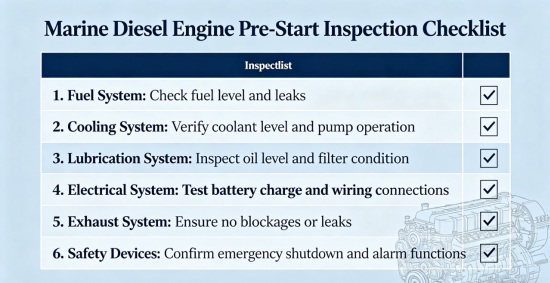
Before you attempt to start any diesel engine in a marine vessel make sure you have completed these non-negotiable pre-start checks that are aligned with IMO and best practices in marine engineering. By not doing these, you can cause 70% of marine engine start-up problems, according to the International Marine Contractors Association (IMCA).
Lubrication System Inspection
Check the level of oil using a dipstick. Keep it within the min/max marks. Low oil may cause a seizure in bearings and overfilling can cause foaming.
Verify the oil’s quality: Dark or amber brown oil is good for health; milky oil is a sign of the presence of water contaminants (a significant red warning).
Start the pre-lubrication pump and run it for 3-5 mins to build 0.2MPa oil pressure. Ensure that the moving components are coated.
Fuel System Verification
Verify the amount of diesel available: Tank gauges are checked and make sure there is no debris or water (drain the fuel filter of water every day).
Check for fuel lines: no cracks, leaks or damaged connections. clean blocked filters to prevent fuel starvation.
Lines leaking air: After filter changes, it is critical to remove air bubbles block fuel injection.
Cooling System Preparation
Seacocks that open raw and untreated Important for cooling engines The seacocks that are shut can lead to overheating within 2-3 minutes.
Check the level of coolant: Maintain the level of expansion tank 50/50 antifreeze/water mix helps prevent corrosion in saltwater environments.
Clean the cooling filter: Get rid of obstructions to ensure a free flow of water.
Starting System & Safety Checks
Disengage turning gear:Confirm it’s fully removed to avoid catastrophic engine damage.
Set gear to neutral:This setting stops the vessel from moving during startup operations.
Check starter power:For electric starters,ensure battery voltage is at least 12V which increases to 24V for larger engines;air starters require a tank pressure of 25 to 30 bar.
Inspect mechanical spring starter (if equipped):Verify no damage and proper mounting which serves as vital backup for emergencies.
Common Marine Engine Starter Types
The method used to “turn” the engine significantly impacts its reliability, especially in offshore conditions where external power may be compromised.
Electric Starters
The most common type, relying on DC battery banks. While convenient, they are vulnerable to terminal corrosion, battery discharge, and performance drops in cold temperatures.
Air Starters
Common on large-scale commercial vessels. They use compressed air to drive a turbine or vane motor. While powerful, they require complex systems of compressors, tanks, and piping that are prone to leaks.
Mechanical Spring Starters
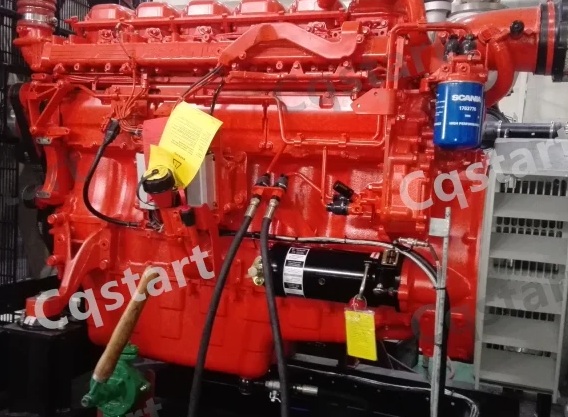
These represent the pinnacle of emergency reliability. A mechanical spring starter requires no electricity or air. It stores potential energy in high-tensile springs through manual winding and releases it in a high-torque burst. They are increasingly favored in “Dead Ship” scenarios and hazardous, explosive environments (ATEX zones).
Step-by-Step: How to Start a Marine Diesel Engine
A proper sequence of starting enhances safety as well as engine reliability.
Step 1 — Complete All Pre-Start Checks
Make sure that all systems have been examined including lubrication, fuel and cooling as well as starting readiness.
Step 2 — Confirm Neutral Position and Ventilation
The technician needs to check two things which include transmission status and engine room ventilation condition. It needs to open all cooling water systems completely before they start the engine.
Step 3 — Select the Starting Method
Choose the appropriate startup system:
- Primary electric starter
- Air starter
- Backup mechanical spring starter
Emergency conditions may require switching directly to the backup starter system.
Step 4 — Engage the Marine Engine Starter
Activate the starter system for a short period only.
Avoid excessive cranking because prolonged starter operation may:
- Overheat electrical components
- Drain batteries
- Damage the starter motor
If the engine does not start after several attempts, investigate the cause before retrying.
Step 5 — Monitor Engine Conditions After Startup
Once the engine starts, immediately check:
- Oil pressure
- Cooling water flow
- Exhaust smoke color
- Engine vibration
- Unusual noises
Abnormal conditions should be addressed immediately to prevent damage.
Step 6 — Allow Proper Warm-Up
Marine diesel engines should not operate under heavy load immediately after startup.
Allow several minutes of idle warm-up to stabilize:
- Oil circulation
- Engine temperature
- Fuel combustion efficiency
This helps extend engine lifespan and improve performance.
Troubleshooting: Why Your Engine Won’t Start
If you encounter a “no-start” situation, use this diagnostic hierarchy:
| Symptom | Probable Cause | Immediate Action |
| No Response | Battery dead or solenoid failure | Switch to Mechanical Spring Starter |
| Slow Cranking | High resistance or low voltage | Clean terminals or use backup power |
| Cranks but No Fire | Fuel starvation or air in lines | Bleed the fuel system |
| Heavy Smoke/No Fire | Cold cylinders | Increase pre-heat time |
Best Practices for Safe and Reliable Marine Engine Starting
A reliable startup depends largely on the routine maintenance of your equipment and operating discipline.
Maintain the Starter System Regularly
Inspect:
- Batteries
- Fuel filters
- Starter mechanisms
- Wiring connections
- Corrosion protection
Routine inspections help reduce unexpected failures.
Avoid Excessive Cranking
Repeated long-duration cranking can damage both the starter and engine components.
Always diagnose the root cause before repeated attempts.
Use Backup Starting Systems
Many commercial marine operators now install backup starting systems to improve redundancy and emergency preparedness.
Mechanical spring starters are increasingly viewed as essential safety equipment for marine diesel engines.
Train Crew Members on Emergency Procedures
Proper crew training ensures faster response during offshore startup failures or emergency situations.
The safe operation of a marine diesel engine requires operators to conduct pre-start checks, follow established procedures, and maintain effective starting equipment. Electric and air starters function properly in normal situations, but they become unusable during critical applications that occur in extreme weather conditions, power failures, and severe environmental circumstances. The mechanical spring starter system provides a solution to these issues because it delivers complete operational dependability together with maintenance-free operation and immediate engine activation through its built-in power supply.