
When a catastrophic fire erupts within an industrial facility or offshore vessel, the diesel-driven fire pump functions as the ultimate shield against total destruction. However, if the system’s primary chemical battery fails, the automatic control console will issue a start command only to be met with complete silence instead of the roar of a heavy engine. For reliable startup without relying on electric power, spring starter offers a practical mechanical backup option to keep fire pumps operational in urgent scenarios.
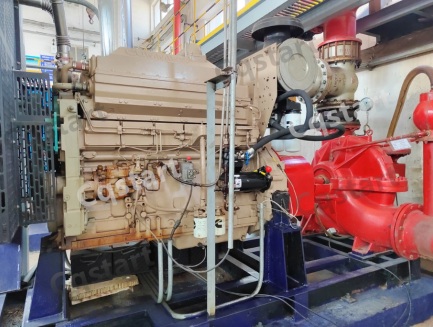
The Effect of Fire Pump Battery Failure
In industrial emergency response, a fire pump does not fail in isolation. Its sudden paralysis triggers a sequence of operational, legal, and structural crises that can permanently damage an enterprise.
Instantaneous Loss of Hydraulic Fire Suppression
Heavy-duty diesel fire pumps rely on massive Cold Cranking Amps (CCA) to overcome internal engine compression and rotate the heavy flywheel. If a chemical battery falls below its voltage threshold that is, the pinion of the starter motor is unable to be engaged.
In the end, the whole high-pressure sprinklers, foam monitors, as well as outdoor fire hydrants immediately reduce the pressure of water. Without a functional pump to maintain pressure against the fire, a localized localized electrical fire or fuel leak can expand completely unchecked into an uncontrollable inferno within minutes.
Failure of Compliance Audits and Immediate Legal Penalties
In highly regulated regions across North America, Europe, and the Middle East, facility managers are legally required to adhere to strict fire safety mandates. Third-party safety inspectors and municipal fire marshals and insurance underwriters frequently perform unannounced tests on power cuts.
The discovery of a dying or dead battery in a audit of compliance can result in grave consequences:
- Instant Fines: Afflicting heavy financial penalties imposed from local boards of safety.
- Stop-Work Orders: Complete operating shutdowns that are forced on warehouses, factories and offshore platforms, until the issue is solved.
- Insurance Cancellation: Commercial property insurance policies can be instantly voided if the insured party fails to maintain a fully operational backup starting system.
Why Batteries Are Prone to Failure in Pump Rooms
To build an effective backup plan, engineers must recognize that standard chemical batteries are poorly suited for the harsh environments found inside industrial pump rooms.
According to historical maintenance data compiled by FM Global and the National Fire Protection Association (NFPA), more than 60% of all emergency diesel generator and fire pump failure-to-start incidents trace directly back to storage battery malfunctions. This remarkably high failure rate makes a durable fire pump starter essential for risk prevention, and the failure rate stems from two unavoidable environmental factors:ipment that is durable easy to use, as well as reliable.
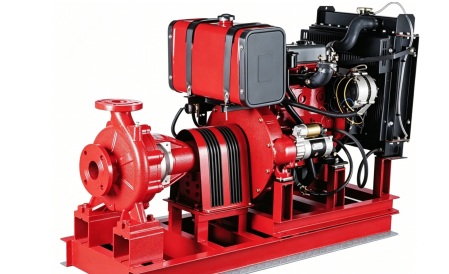
Standing Atrophy and Sulfation
Fire pumps are made to run on standby, meaning they can be left idle for a period of weeks or even months between the mandatory tests. During these extended periods of inactivity, lead-acid batteries suffer from continuous micro-self-discharge.
Even with automated trickle chargers for batteries, they often suffer sulfation. This is a chemical process that causes lead sulfate crystals form on the battery’s internal plates. The crystallization process permanently reduces the battery’s capacity to hold charges and supply the quick burst of current needed to turn on the engine cold.
Extreme Environmental Sensitivity
Industrial fire pump installations are often located in unheated outbuildings, damp basements, or offshore marine environments exposed to freezing temperatures. Chemical batteries are highly sensitive to thermal shifts:
At 0°C (32°F), a typical lead-acid battery sort of loses over 20% of its stated cranking power, even if everything else seems fine.
When temperatures slide down to -20°C (-4°F), the battery’s useful capacity drops by more than 50%, kind of suddenly.
At the very same time, the freezing weather makes the engine’s lubricating oil thicken and, which boosts the mechanical resistance to cranking by a lot. So you end up with this tricky intersection where the engine needs near-maximum energy to get going, while the chemical battery is in its weakest physical state.
The Mechanical Salvation: High-Torque Spring Starters
To achieve true emergency readiness without adding maintenance complexity, modern facilities are replacing erratic chemical batteries and high-pressure fluid lines with a completely autonomous fire pump starter solution: the mechanical spring starter.
Pure Zero-Electricity Reliance
A mechanical spring starter bypasses the entire electrical infrastructure of a facility. It stores energy physically using high-elasticity internal alloy springs.
To operate the system, a technician uses a heavy-duty manual hand crank to winding up the internal spring mechanism. Once fully compressed, the energy is locked securely inside the starter housing. Pressing a physical trip lever releases this stored mechanical energy all at once, spinning a rugged drive pinion that meshes directly with the diesel engine’s flywheel ring gear to start the motor instantly.
The Clear Advantages of Mechanical Starters
| Engineering Feature | Lead-Acid Battery Starter | Mechanical Spring Starter |
| Energy Source | Perishable Chemical Reaction | Physical Elastic Energy Storage |
| Temperature Tolerance | Severe degradation below 0℃ | Unaffected from -40℃ up to +65℃ |
| Maintenance Needs | Testing every week, constant charging and biannual swap | Zero active maintenance or fluid checks required |
| Operational Lifespan | 2 to 3 Years maximum | 10+ Years |
| Risk of Fluid Leaks | High (Corrosive battery acid) | None |
Since it does not contain electronic components A spring starter is totally invulnerable from electromagnetic interference (EMI) as well as circuit malfunctions in the charger damp environments, prolonged standby times. It offers a constant solid security net that is able to go on even after decades of sitting in an uncontrolled pump room.
How Mechanical SpringProtecting Your Facility Against Critical Failure
Relying on an electrical battery to power the primary fire alarm is a risk which could endanger the safety of your facility. When the standard electrical charger fails or temperatures drop to freezing levels, a battery will lose power, a dependable fire pump starter keeps your safety system functioning. The upgrade of your emergency systems to batteries that store energy in physical form protects your investment, eases regulatory compliance, and assures your fire protection pumps begin when you require they most.