
In volatile industries, such as gas and oil chemical processing, and underground mining, the margin of error is absolutely zero. One spark of electricity in an Zone 0 or Zone 1 environment could trigger catastrophic explosions. If power goes out and a diesel emergency engine is required to start, the starter system is as important like the actual engine.
This is the reason why the Spring Starter has become the ultimate Safety Starter for operations with high risk. It is the crucial interplay of ATEX certification and mechanical dependability acting as the primary security element for operational operations in areas where electrical systems are not allowed to go.

What is ATEX Certification & Why Is It Non-Negotiable?
ATEX, or Appareils destinés à être utilisés en ATmosphères EXplosives, refers to the European laws and regulations concerning explosive atmospheres. Since 2003, ATEX regulations have become a legal requirement across the European Union and has established a world standard for safety.
To be ATEX-certified it must undergo a rigorous test to make sure it is not an ignition point. In dangerous areas, conventional electric starters pose dangerous because they depend on electrical contacts with high current and solenoids that could be prone to overheating or arch. In accordance with safety guidelines such as EN ISO 80079-36, non–electrical equipment should be constructed to avoid sparks in the event of a rare malfunction.
Spring Starters: Spark-Free Mechanical Solution
Although pneumatic and hydraulic starters are both available, but spring starters stand out as the most reliable “Plan B.” Contrary to other types of systems, the spring starter is a pure mechanical storage device for energy.
How it Works
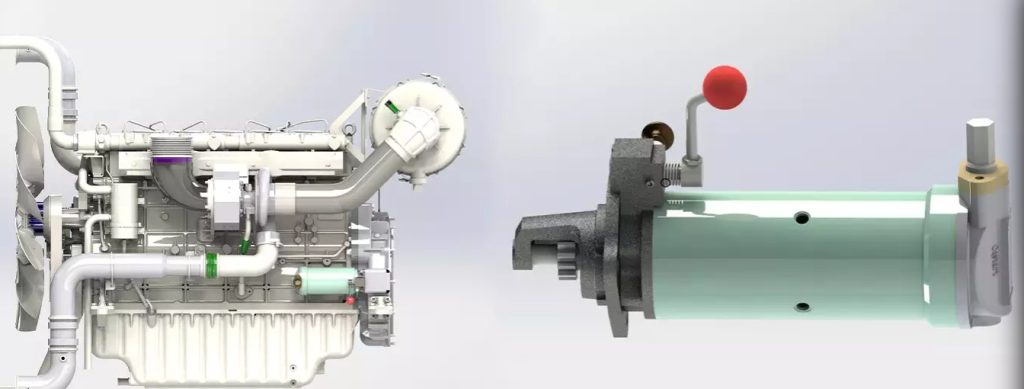
The spring starter system employs a robust internal spring which operators can wind up either through manual control or motorized operation. The system activates when it sends a powerful mechanical force to the flywheel of the engine.
Why It Excels in Safety:
Total Electrical Isolation
The presence of electricity increases danger in locations that have high security risks. The spring starter system achieves complete electrical isolation because it does not require any wires or batteries or solenoids or sensors. The system operates with mechanical components which completely eliminate the risk of short circuiting or cable arcing or static discharge that can lead to explosions in Zone 0 or Zone 1 environments.
Superior Thermal Stability
The design of traditional electric cranking motors leads to their failure because they overheat when starting for extended time periods which results in dangerous temperature points that can ignite nearby gases. The design of mechanical starters results in almost no heat output which allows them to remain below safe temperature limits during heavy operational periods.
Zero Maintenance Dependency
In contrast to batteries that suffer from excessive drain or lose 50 percent of their power in extreme cold, a spring starter does not suffer from temperature. Made to last, spring starters from Cqstart are able to remain inactive for a long time and provide 100% torque at the point of being tripped and ensure that you have a “Plan B” never fails.
Key Factors in Choosing an ATEX-Certified Starter
Selecting the right starter requires more than just checking a box. You must evaluate the specific demands of your “Hazardous Zone” classification.
Quick Selection Checklist for ATEX Safety Starters
| Selection Factor | Priority | Requirement for Hazardous Zones |
| ATEX Marking | Critical | Must display the “Ex” hexagon & Category |
| Material | Critical | Non-sparking pinion (Beryllium-free available) |
| Zone Rating | High | Must match Zone 0, 1, or 2 requirements |
| Torque Output | High | Must exceed engine’s break-away torque |
| Seal Integrity | Medium | Dust and water ingress protection (IP Rating) |
A. Identification and Marking
The authentic ATEX-certified starter requires the “Ex” symbol to appear in a hexagon which shows its equipment group and category. For example, Group I (Mining) or Group II (Surface Industries).The official databases require you to check the certificate number which the manufacturer provides.
B. Material Integrity
All friction between the starter pinion and engine flywheel must not generate “incendive sparks” during explosive conditions. Premium manufacturers use specialized non-sparking materials or coatings to meet ATEX application standards.
C. Torque Requirements vs. Engine Displacement
Safety is irrelevant if the engine doesn’t start. You must match the starter’s output torque to the engine’s break-away torque requirements, especially in low-temperature environments where oil viscosity increases resistance.
Where “Safety First” is the Only Rule
Based on the data of the industry, the demand for ATEX certified mechanical starters is specifically concentrated in three high-risk industries:
Offshore Oil Platforms
In the harsh surroundings of an oil well, emergency lifeboats as well as fire pump engines constitute the last first line of defense. They must be able to achieve an 100% starting rate, regardless of whether the main power grid has been damaged or the batteries have been damaged through salt air.
Chemical Refineries
In areas of processing in which flammable vapors and volatile gases are in constant presence (Zone 0/1) Safety officers on site frequently prohibit electrical starters altogether. A spark-free spring starter can be the only acceptable option to minimize the danger of ignition.
Underground Mining
The buildup of methane gas and coal dust can create an explosive atmosphere. Mechanical starters offer the vital reliable, spark-free security required by mining safety committees around the world in order to safeguard workers deep in the in the underground.
Investing in Spring Starters
The choice of a safety starter with ATEX certification is not just an administrative box to check, it is a pledge to your employees’ safety and the long-term durability of your investment. While electric systems are useful to use on a daily basis, a mechanical spring starter provides your ultimate protection against the unpredictability.
For procurement officers and engineers, the objective is simple make sure that, if you encounter the “worst-case scenario” happens, your equipment is the only item that is functional.