
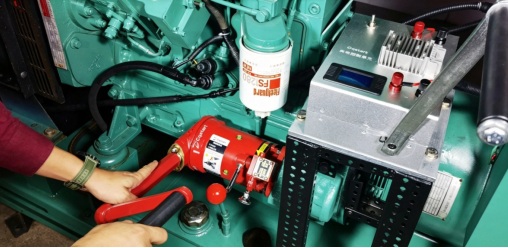
In mission-critical environments—from offshore drilling platforms to remote mining sites—mechanical spring starters are the ultimate safeguard for engine reliability, providing “black start” capability when electrical systems fail. However, true security goes beyond the mere functional aspect; it demands a strict, systems-based method of operation and maintenance. By integrating safety protocols that are industry standard and precise mechanical oversight operators can minimize risky situations and ensure maximum performance. Below, we outline 10 essential best practices for spring starter security, synthesized from years of field data and engineering excellence at Cqstart.
Section 1: Pre-Operational Safety Protocols
Before a single engine rotation occurs, your safety profile is defined by meticulous preparation.
1. Proper Torque Calculation
Never assume a universal setting. Every engine displacement requires a specific torque output. At Cqstart, our data analysis shows that improper torque matching is the leading cause of premature starter gear failure. Always align the spring tension with the engine manufacturer’s cranking requirements to avoid internal component stress.
2. Inspecting the Engaging Mechanism
The pinion gear and the engine flywheel ring gear must mate with surgical precision. Even a 0.5mm misalignment can bring about “jumping teeth,” and then it can cause catastrophic gear shearing. You also should check the engaging lever, and the spring-back response too on a regular basis. This helps make sure the gear retracts fully after the engine actually fires.
3. Keeping the work area clear
Mechanical energy release is powerful, almost aggressive. So set up a clear “no-go” zone around the starter housing during the manual winding process. Also make sure operators are never placed directly in the line of the winding handle, because if there is a manual release or recoil that happens unexpectedly, injuries are the kind of thing that can follow.
Section 2: Operational Security in Hazardous Environments
When operating in ATEX-rated or volatile zones, “security” takes on a new meaning: preventing ignition sources.
| Symptom | Probable Cause | Recommended Action |
| Sluggish Engagement | Viscosity issue (Cold temp) | Switch to low-temp rated lubricant |
| Gear Grinding | Pinion/Ring gear misalignment | Re-adjust mounting distance (0.5mm) |
| High Resistance | Excessive internal friction | Check grease integrity & spring housing |
| ATEX Warning | Damaged seal or loose casing | Immediate inspection/seal replacement |
4. ATEX/Ex Compliance
Verify that your starter unit carries valid ATEX/Ex certification for the specific gas or dust group of your environment. Non-compliant units can create static discharge or friction-based sparks. Always cross-reference the unit’s serial plate with your facility’s safety audit requirements.
5. Temperature Monitoring
Extreme cold can increase the viscosity and viscosity of grease and can cause “sluggish” engagement, while extreme temperatures could alter the spring’s metallurgical properties. If you are operating at temperatures below -20°C or over 50 °C, make sure that your device is fitted with lubricants designed for cold start to ensure the same energy supply without getting stuck.
6. Safety For Manual Release
Do not force a manual release, ever. Instead, use the manufacturer approved release tool, and keep a solid grip on the winding shaft. Do it gradually, and in a controlled way because a sudden, high velocity movement may lead to internal impact damage within the dampening system.
Section 3: Maintenance and Long-Term Reliability
Safety is not an event; it is a cycle of preventative maintenance.
| Maintenance Interval | Task Description | Criticality |
| Pre-Shift | Inspect engaging lever & clearance | High |
| Monthly | Lubrication check (pins & pivot points) | Medium |
| Every 1,000 Cycles | Full teardown, fatigue/crack inspection | Critical |
| Annual | ATEX/Ex seal & bolt torque verification | High |
| Long-term Storage | Relax spring, anti-corrosion treatment | Medium |
7. Lubrication Integrity
Mechanical starters rely on high-pressure metal-to-metal contact. Using non-spec grease can lead to “stick-slip” phenomena or complete seizing. Use lithium-complex greases specifically formulated for high-load industrial springs to ensure the internal mechanism slides freely during the discharge cycle.
8. Routine Internal Inspection
Establish a “1,000-cycle” inspection rule. Every 1,000 starts, perform a teardown to inspect the main spring for hairline fatigue cracks and the housing for stress corrosion. In our testing at the Chongqing Microelectronics Industrial Park, we discovered that early detection of microscopic fatigue can extend the service life of the spring by over 40%.
9. Storage Best Practices
If your engine is mothballed, don’t store the starter that is fully tensioned. It should be kept in an “relaxed” state in a temperature-controlled location. Spray a corrosion-inhibiting agent on links on the outside to prevent environmental deterioration that could result in the starter failing in the time it is most needed.
Section 4: The Human Factor
10. Comprehensive Operator Training
The most advanced mechanical system can be compromised by human error. Every operator must be trained in the specific SOPs (Standard Operating Procedures) for their model. Conduct semi-annual drills where operators demonstrate the correct winding, engaging, and emergency stop procedures. Knowledge is the final line of defense.
Conclusion & Expert Support
Keeping the safety of your spring starter is really a constant, kind of ongoing commitment to engineering rules and careful upkeep. When you follow these ten practices , you kind of shift away from the “fix it after it fails” mode, and toward a more forward minded dependability, so your engine stays ready for whatever comes, no matter how rough the environment gets.
Need an expert assessment of your engine’s starting system?
At Cqstart, we specialize in mechanical power solutions for the world’s most demanding applications. Whether you are dealing with ATEX compliance or need a custom torque analysis for your engine fleet, our technical team is here to support your operations. Contact us today to secure your power future.