
In the automotive, commercial vehicle, and heavy-duty industrial diesel engine sectors, the starter motor is one of the most critical components of the entire powertrain. When you turn the key or press the start button, the starter must instantly deliver massive torque to crank the engine’s flywheel. If the starter motor fails, the equipment is rendered completely paralyzed, resulting in exorbitant downtime losses.
So, how long does a starter motor actually last? What factors impact its lifespan? What are the warning signs before it completely breaks down? This article provides a comprehensive, industrial-grade analysis.
How Long Does a Starter Motor Last?
A starter motor does not have a fixed expiration date. In practical applications, its lifespan depends heavily on its operating environment and construction type. Generally, its average lifespan can be measured from two dimensions: Calendar Time/Mileage and Start Cycles (the preferred metric in industrial applications).
Typical Lifespan Reference by Equipment Type
| Equipment / Application Type | Typical Calendar Lifespan | Typical Mileage / Cycle Lifespan |
| Passenger Cars / Light Commercial Vehicles | 3 – 7 Years | 80,000 – 150,000 Miles |
| Heavy-Duty Commercial Trucks | 5 – 10 Years | 20,000 – 50,000 Start Cycles |
| Industrial Diesel Generator Sets | 5 – 15 Years | Dependent on maintenance and testing frequency |
| Marine Engines | 5 – 12 Years | Highly dependent on the marine salt-spray and corrosive environment |
Industrial Professional Measurement Standards
In heavy industry, construction machinery, and large diesel engines (such as trucks, generators, and marine vessels), the industry prefers to evaluate actual lifespan using start cycles.
Industrial Standard: A high-quality, industrial-grade electric starter motor is typically designed with a theoretical lifespan of 20,000 to 50,000 starts.
Industry Warning: Although the theoretical data above suggests a long service life, the reality in harsh industrial and field operations is quite different. Due to fragile electrical systems, aging batteries, or severe environments, many electric starter motors burn out prematurely, long before reaching their design limits.
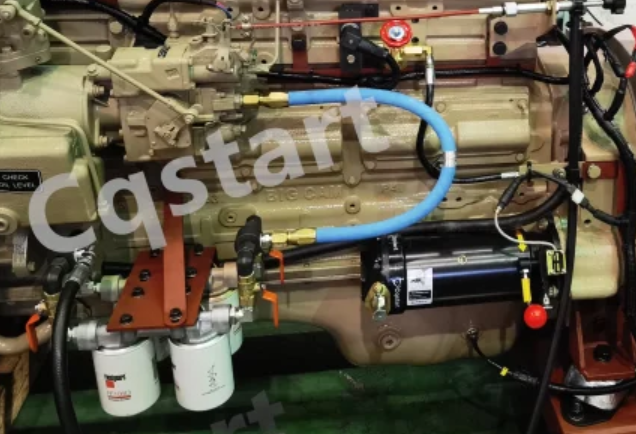
What Factors Affect a Starter Motor’s Lifespan?
A starter motor is a classic example of equipment designed for short-duration, ultra-high-load operation. In industrial applications, its demise is rarely due to “natural aging.” Instead, its lifespan is determined by the intersection of five core factors:
1. High Frequency of Start Cycles
Every single ignition subjects the starter motor to massive mechanical impact and instantaneous electrical load. For applications requiring frequent stop-and-start operations, the wear rate accelerates exponentially:
Logistics Delivery Vehicles & Taxis: Frequent daily stop-and-starts accelerate the wear and tear of carbon brushes and commutators.
Field Construction Machinery & Generator Sets: Frequent routine testing or intermittent operations subject the mechanical gears to repeated engagement shocks.
2. Poor Battery Health
The battery is the lifespring of the electric starting system. Many instances of a “burned-out starter” are actually caused by a failing battery. When battery voltage is insufficient or the battery is aging, the starter motor’s internal current spikes dramatically to output enough cranking power. This results in:
- Prolonged cranking times, causing extreme heat buildup within the motor windings.
- Instantaneous excessive current, accelerating brush wear and burning the solenoid contacts.
3. Engine Obstacles (Sump, Fuel System, or Compression Issues)
If the diesel engine itself suffers from a clogged fuel system, faulty injectors, insufficient compression pressure, or ignition anomalies, it becomes extremely difficult to start. To force-crank the engine, operators often extend the ignition duration. Continuous, prolonged cranking (typically exceeding 15 seconds) generates devastating heat, directly leading to burned starter coils and shorted armatures.
4. Harsh Environmental Exposure
Industrial-grade starter motors are often exposed to extremely brutal environments, particularly in the following four high-reliability sectors:
Marine Vessels & Offshore Platforms: Long-term exposure to high humidity and salt spray causes oxidation of electrical terminals and internal components.
Oil & Gas Exploration: Accompanied by high temperatures and flammable/explosive gases, presenting strict challenges to electrical system safety and explosion-proof integrity.
Mining Equipment: Heavy exposure to dust and sand ingress accelerates the jamming and wear of mechanical gears and bearings.
Emergency Power Systems: Extended dormancy in extreme sub-zero temperatures or drastic thermal cycles increases engine oil viscosity, exponentially increasing the resistance during cranking.
5. Neglected Electrical Maintenance
The electric starting system is a complex electrical circuit. Because of constant vibration, improper connections in cables, corrosion in the control circuit, or inadequate grounding, these types of resistances are extremely frequent.
The results from these hidden resistances are the voltage drop and current variations, which make the starter motor work in an unhealthy and highly loaded mode called “low voltage, high current.”
5 Common Symptoms and Diagnosis of a Failing Starter Motor
While a starter motor can occasionally fail without warning, in the vast majority of cases, it will issue early warning signals. Below are the five most common fault symptoms and their underlying mechanical causes found in industrial operations:
1. Clicking Noise
Upon turning the key or pressing the start button, only a single or continuous “clacking/clicking” sound is emitted from the engine bay, but the engine flywheel does not rotate at all.
Root Cause: This typically indicates that the internal contacts of the starter solenoid are severely pitted, eroded, or worn, preventing them from maintaining electrical closure. Another common cause is that the battery charge has depleted below the threshold required to drive the motor.
2. Slow Cranking
Excluding oil viscosity factors, the engine cranks noticeably slower and feels extremely heavy (commonly known as “weak ignition”).
Root Cause: This indicates that the internal carbon brushes are worn to their limits, or the internal field coils have suffered localized short circuits and aging. The motor’s electrical-to-mechanical energy conversion efficiency plummets, rendering it incapable of outputting sufficient cranking torque.
3. Grinding or Screeching Noise
A harsh metal grinding, screeching, or a spinning freewheel sound is heard during ignition.
Root Cause: This is a highly dangerous signal. It shows that the Bendix gear (driving gear) of the starter is excessively worn out, or the engaging system has undergone a mechanical failure, causing the starter gear to fail to engage properly with the engine flywheel ring gear. If ignored, the starter would completely damage the costly engine flywheel.
4. Intermittent Starting Failure
The equipment sometimes starts instantly on the first press, but other times yields absolutely no response; occasionally, tapping the starter motor housing temporarily restores system functionality.
Root Cause: This is a classic physical manifestation of poor contact in the starter armature or control circuit connectors that have loosened due to prolonged vibration. This type of intermittent fault means the motor has entered its final countdown to complete failure.
5. Smoke or Burning Smell
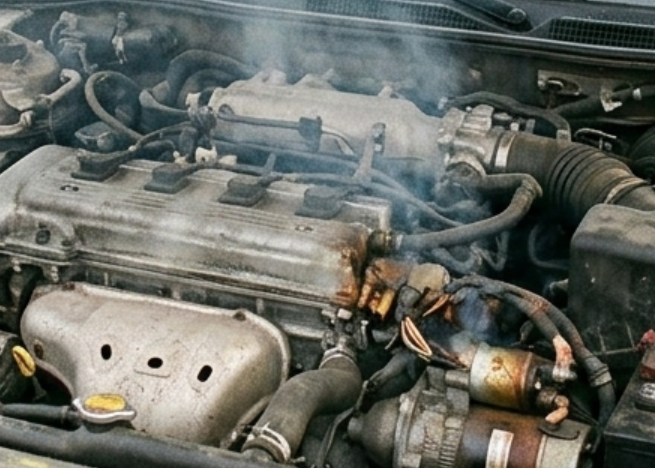
The dashboard illuminates, but during continuous cranking attempts, light smoke rises from the engine bay, or a strong odor of burning plastic and enamel wire is detected.
Root Cause: This means that due to the operator cranking the engine for too long (typically exceeding 15 seconds), or a severe internal short circuit, the internal insulation layers of the starter motor have been melted by instantaneous high temperatures. Power must be cut immediately, as this condition can easily trigger a catastrophic electrical fire.
Can a Starter Motor Sudden-Death?
The answer is yes, but the probability of a pure “sudden death” is extremely low.
Many engineers assume the starter motor suddenly failed when a piece of equipment refuses to start. However, in most cases, operators simply overlooked early warning signs like slow cranking, occasional failures, minor abnormal noises, or ignition delays.
Traditional electric starting systems rely on an elongated and vulnerable electrical chain consisting of the “Battery , Switch , Relay , Solenoid , Brushes , Coils.” Degradation at any single node accumulates. If a facility lacks Preventative Maintenance, these hidden symptoms will erupt simultaneously during harsh weather or high-load operations, creating the illusion of a “sudden failure” and causing massive economic losses due to unexpected downtime.
The “Lifespan Dead-Zone” of Traditional Electric Start Systems
In most routine applications, traditional electric starters perform well. However, in extreme, critical, or emergency industrial scenarios, traditional electric starting systems exhibit irreconcilable limitations:
“Calendar Aging” and Idle Failure: Many emergency systems (such as lifeboats, fire pumps, and standby generators) are rarely started throughout the year. However, their electric starters and batteries still degrade naturally over time. Batteries, in particular, are highly prone to losing charge when left idle. When a disaster strikes and emergency starting is required, the system often fails precisely because it has been “left idle for too long.”
Environmental Endurance Limits: In extreme sub-zero temperatures (e.g., -30°C to -40°C) or high-salt marine platforms, battery activity drops off a cliff, and the wiring harnesses and connectors of electric starters corrode rapidly.
Mechanical Spring Starter: A Higher-Dimension, Long-Life Solution
To completely eliminate the lifespan bottlenecks of electrical systems in “zero-failure-tolerance” scenarios, the industrial sector developed an entirely different technology: Mechanical Spring Starter.
Unlike electric starter motors that rely on electrical energy, batteries, and complex wiring, a mechanical spring starter utilizes a purely mechanical architecture.
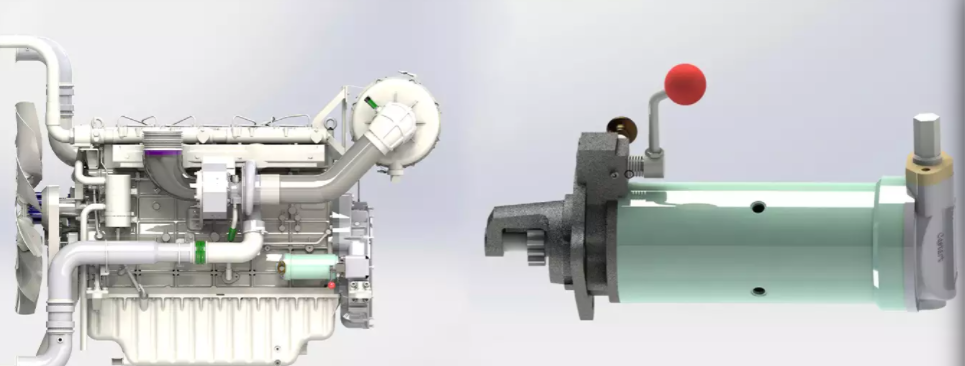
Why Do Spring Starters Have an Exceptionally Long Mechanical Lifespan?
Zero Calendar Aging: Spring starters contain no brushes, no solenoids, require no wiring harnesses, and absolutely no batteries. Their lifespan does not degrade due to “long-term idling.” Even if stored in a warehouse for many years, it can still successfully start an engine by simply winding up the handle manually to store energy and pressing the single-button release.
High-Strength Alloy Construction: Professional spring starter manufacturers utilize high-strength alloy spring steel. The springs inside them endure testing for hundreds of thousands of times to ensure the mechanical lifespan of over 20 years.
Inherent Protection against Harsh Conditions: Being made up of pure mechanical components, it is 100% protected against weather, moisture, and frost. Moreover, as no spark is generated when it runs, it is also explosion-proof.
In many large commercial vessels, offshore oil and gas platforms, and hospital emergency generators, engineers often implement a dual starter system: installing a traditional electric starter for daily high-frequency operations, while concurrently installing a mechanical spring starter as the “ultimate safety card” for emergencies.
Conclusion
Lifespan of a normal electric starter motor usually lies between 3 and 7 years. It is vital to ensure the proper functioning of the battery and not crank it for too long. Nevertheless, in case you have to work in difficult conditions and your equipment is an important part of an emergency power supply system, it is crucial that you are aware of the Spring Starter technology and its importance.
As an original equipment manufacturer of high-precision mechanical spring starters, Cqstart spring starter provides pure mechanical starting solutions worldwide, compatible with major heavy-duty engines such as Cummins, Perkins, Detroit, and more. Feel free to contact our technical experts for professional model selection advice and technical support tailored to your equipment.
Frequently Asked Questions
Q: If the engine fails to start after repeated cranking, how long should I wait before trying again?
A: Traditional electric starter motors must never be cranked continuously for more than 10–15 seconds. If the engine fails to fire up, you must force a cooling period of at least 2 minutes before attempting the next ignition. Otherwise, the accumulated internal heat will burn out the coils within minutes.
Q: How do I determine if the starter motor is broken or if the battery is dead?
A: Diagnostic test that is simple: Switch on the headlamps or the instrument panel of the machine, and try starting the engine. When there is a rapid drop in the brightness of the lamp, or when it goes out entirely the minute you switch on the starter, the problem may be that the battery is dead (the voltage being pulled down). When the brightness of the lamps hardly changes, and the starter is totally silent or gives off just a faint click, the problem may be the starter motor or its circuitry.
Q: Is it physically exhausting to wind a mechanical spring starter manually?
A: Not at all. Spring starters are engineered with a high-ratio reduction gear mechanism inside. Using the matching winding handle, a standard adult only needs to spend a few dozen seconds turning it smoothly, much like cranking an old-fashioned generator, to easily store sufficient energy within the powerful internal spring.