
When an industrial facility or power plant loses its normal external power source, some or all of its internal busbars can go dead. Restoring operations requires a reliable startup mechanism. Large main generator sets can’t simply restart on their own. Their core auxiliary systems depend on electricity to function. That creates a critical physical dependency: to restore power, you first need power.
To understand the black start generator purpose, you have to see where it fits in the plant’s power restoration sequence. It’s not there to carry long-term loads. It’s there to supply the very first slice of power when normal external power isn’t available. So let’s break it down.
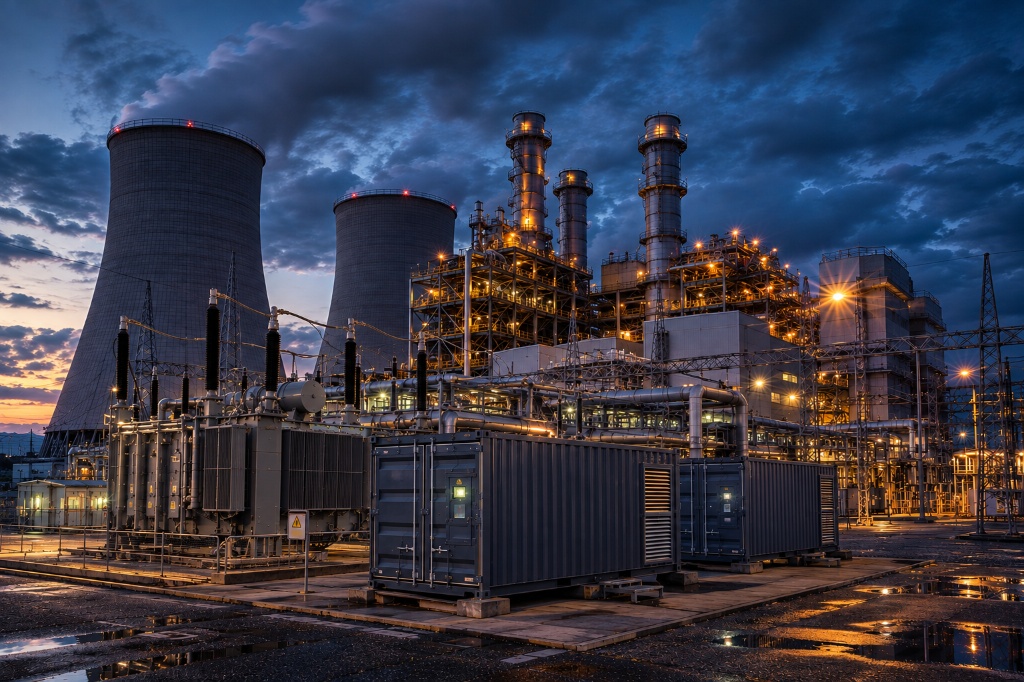
What Is the Purpose of a Black Start Generator?
A black start generator provides initial power during extreme outage conditions. It does this without relying on normal external power. Its job is to activate the auxiliary systems that larger generators need, so those main units can gradually come back online.
Here’s the thing about understanding black start generator purpose: you have to look at the big picture of infrastructure recovery. A large power plant can produce massive amounts of electricity during normal operation. But its internal cooling pumps, lubrication oil pumps, and control cabinets also need power to run. When the external grid goes down and normal plant power is lost, the whole facility hits a deadlock. It can’t start itself.
That’s where the black start generator comes in. Its real purpose isn’t to feed end users directly. It acts as “seed power.” It wakes up the auxiliary equipment so the main generators can eventually take over.
Now, there’s an important distinction to make here. The black start generator supplies that initial power. But whether it can actually start in a grid-down situation depends entirely on its engine starting system. That starting system has to work reliably without normal external AC power. If it can’t, the black start generator can’t do its job.
So what does the black start generator actually do in practice? Let’s list the core functions.
Provides an Independent Power Source: When normal external power is lost and you need to establish an independent supply, the black start generator delivers the initial voltage and frequency reference. It acts as a self-sufficient power source for the recovery process.
Supplies Essential Auxiliary Systems: It sends priority power to the barring gear, lube oil pumps, cooling water pumps, and control cabinets. These are the support systems that keep the main equipment safe.
Enables Primary Generating Equipment to Restart: It gives the main generator set’s startup support systems the juice they need. That allows the main units to reach the basic conditions required for operation.
What Role Does a Black Start Generator Play in Power Restoration?
Think of the black start generator as a catalyst for system recovery. When the external supply is completely cut off, operators can’t just fire up the large main generator sets. Those units need their auxiliary systems to establish proper operating conditions first. Oil pressure, cooling, control signals – all of that has to be in place.
So what’s the real value of a black start generator? It takes a system that has lost all power and gives it the ability to climb back. By delivering stable initial power, it makes sure the entire restoration process moves forward in a controlled, orderly way.
Here’s how that plays out step by step.
Establishes the First Stable Electrical Source: In a blackout environment with no grid reference, the black start generator creates the first usable power benchmark. It gives downstream equipment a stable voltage and frequency to work with.
Builds Up Auxiliary Plant Loads: It gradually expands the plant loads it supports, following a safety-based priority order. For example, it might power the control system and lube oil pumps first. Then it moves on to cooling and feedwater hardware.
Creates Conditions for Main Unit Startup: It supplies power step by step to the lube, cooling, and control systems, following the main unit’s startup sequence. That brings those systems to the physical state where the main unit can actually start.
Supports a Controlled Restoration Sequence: It works with on-site operators to increase loads gradually. That avoids unnecessary overloads or protection trips during the recovery process.
Why Is Black Start Capability Necessary?
You might be wondering: can’t a standard backup generator handle this? The short answer is no. The roles are fundamentally different.
Black Start Generator vs. Conventional Standby Generator
Let’s look at how these two compare side by side.
| Evaluation Aspect | Conventional Standby Generator | Black Start Generator |
| Primary Task | Provides backup power to designated critical loads. | Provides the initial power needed to restore generation capability. |
| Typical Loads | Emergency lighting, communications, servers, fire pumps, and similar end-use applications. | Lube oil pumps, cooling systems, control circuits, barring gear, and other plant auxiliaries. |
| Restoration Objective | Maintains continuous operation of selected critical loads. | Drives the recovery of the main generator sets or the entire plant power system. |
| System Role | Backup power on the load side. | The startup power at the very beginning of the restoration chain. |
Why Main Generating Units Cannot Simply Restart
Here’s the core problem. Large generator sets produce huge amounts of electricity, sure. But during startup, they usually need external power to run their lube, cooling, control, and fuel supply systems. Some units also need extra starting or barring equipment to reach the required conditions.
Since all of these auxiliary systems need electricity themselves, you get a classic chicken-and-egg dependency. That’s why an independent black start power source isn’t optional. It’s an essential part of the design.
In practice, different types of generator sets can handle this task. One common setup is a black start diesel generator. It’s a widely used independent starting power configuration.
Where Are Black Start Generators Used?
Facilities with black start capability are usually found in industrial and energy sectors where power continuity is absolutely critical. These are places that need to be able to pull themselves back online after a major outage. Here are the typical deployment scenarios.
Power Plants: Gas plants, hydro stations, and thermal power plants all use black start generators. They supply the initial power to bring turbine auxiliary systems back to life.
Large Industrial Facilities: Think refineries and metallurgical plants. These continuous-process facilities rely on black start power to protect critical process equipment and restart their own on-site generation when the external grid fails.
Remote Facilities and Islanded Grids: Mines and other remote operations often lack strong grid support. A black start generator helps establish an initial power source for their isolated microgrid.
Offshore Platforms and Marine Vessels: On offshore platforms and ships, marine emergency starting systems need to be designed according to the vessel type, main engine configuration, and applicable codes. These systems support engine recovery and onboard power restoration.
Critical Power Infrastructure: Black start units are also installed at key substations and control nodes. They supply emergency restoration power to control cabinets, breaker mechanisms, and communications equipment.
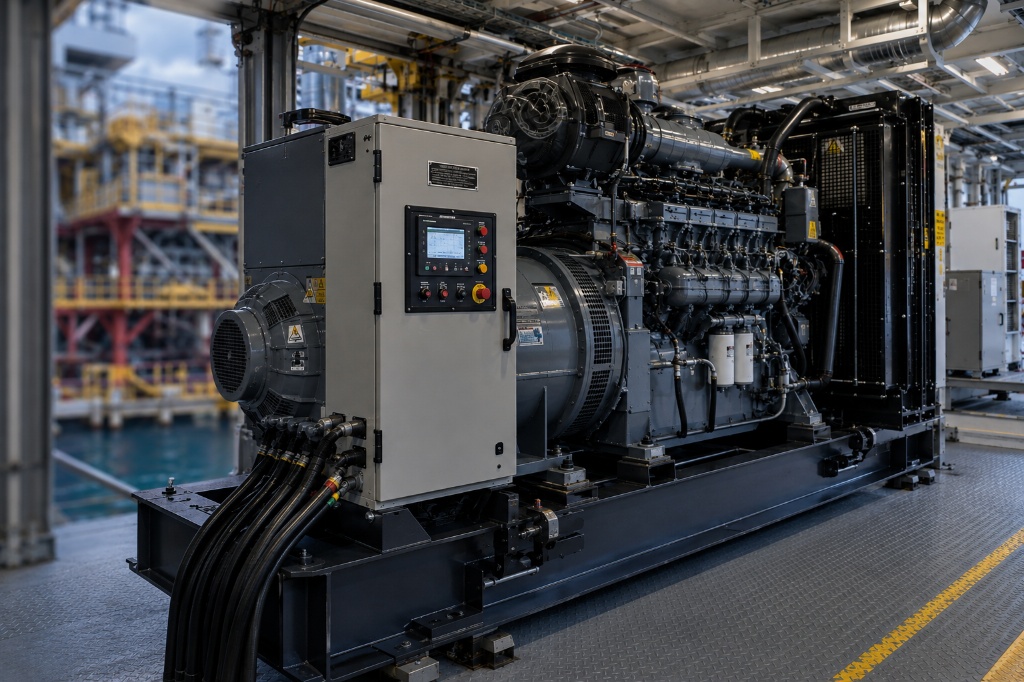
What Makes a Black Start Generator Reliable?
So what separates a black start generator that can actually do its job from one that falls short? It comes down to its performance in a no-grid environment. These units spend most of their lives in long-term standby, so their design has to guarantee they’ll perform when called upon.
Here are the key reliability factors.
Independent Startup Capability: The generator’s own starting system has to function without normal external AC power. No exceptions.
Motor Starting Capability: It needs to handle the inrush current from auxiliary motors like lube oil pumps and water pumps. That means no major voltage or frequency dips during starts.
Stable Electrical Output: After starting, it must deliver voltage and frequency that meet the requirements of the connected auxiliary equipment.
Long-Term Standby Readiness: The unit sits idle for long periods, sometimes years. But every component has to stay in good condition so the system responds instantly when the start signal comes.
What Happens If a Black Start Generator Fails?
Let’s be blunt about this. If the designated black start generator can’t deliver power, the planned restoration path may stall right at the first step. For a setup with only one black start source, that failure can directly block the initial recovery path. If the system has a backup black start source or alternative recovery plans, it can usually follow another route. But expect extended outage times. There’s no avoiding that.
Here’s how the failure chain looks in practice.
The black start generator fails to start. No initial power is available. Auxiliary systems stay offline. The main unit restart process gets delayed. Overall recovery time stretches out, and the facility may need to switch to alternative recovery paths.
That failure disrupts the whole restoration sequence. Grid or plant dispatchers are forced to hunt for alternatives. That adds uncertainty to a process where you really don’t want any.
What Starting Systems Can Be Used for Black Start Generators?
Here’s a point that doesn’t get enough attention. A black start generator can only function if its engine can start when normal external power isn’t available. That makes the engine starting system a fundamental reliability factor. It’s not an afterthought; it’s a core design decision.
When choosing a starting method for a black start generator, you have to look at the storage environment and maintenance conditions. Different approaches come with different trade-offs.
Electric Starting: This relies on batteries to drive a starting motor. It’s widely used, but it demands regular maintenance. Batteries self-discharge over time, especially during long idle periods.
Pneumatic Starting: Compressed air drives an air starter motor. This delivers high starting torque, but it depends on pressure vessel integrity and proper gas storage.
Hydraulic Starting: An accumulator releases hydraulic energy to drive a hydraulic motor. This also provides high starting torque.
Mechanical Spring Starting: Here’s where it gets interesting. A mechanical spring starter stores mechanical energy and releases it directly to turn the engine flywheel. This gives you a starting option that doesn’t depend on battery power. For diesel engines that stay in long-term standby, the energy storage method matters for reliability. If you’re curious, spring starters in black start scenarios let you pre-store mechanical energy, so the engine gets independent starting power even when normal external power is unavailable.
Conclusion
When you get right down to it, understanding the black start generator purpose means recognizing that first step in the infrastructure recovery chain. The core value isn’t about carrying all terminal loads for hours on end. It’s about delivering an independent, reliable shot of seed power under extreme conditions. That initial power activates the cooling, lubrication, and control auxiliaries that larger generators depend on. That’s what enables an orderly restart of the main generating units.
But here’s the thing. No matter how well you design the black start generator’s electrical capacity and transient response, it all comes back to one basic requirement: can the engine start without grid power? That’s the real foundation. So when you’re evaluating your black start setup, pay close attention to the engine starting system. Look for high reliability and low maintenance dependency. That’s your guarantee that the black start plan will work when it matters most.
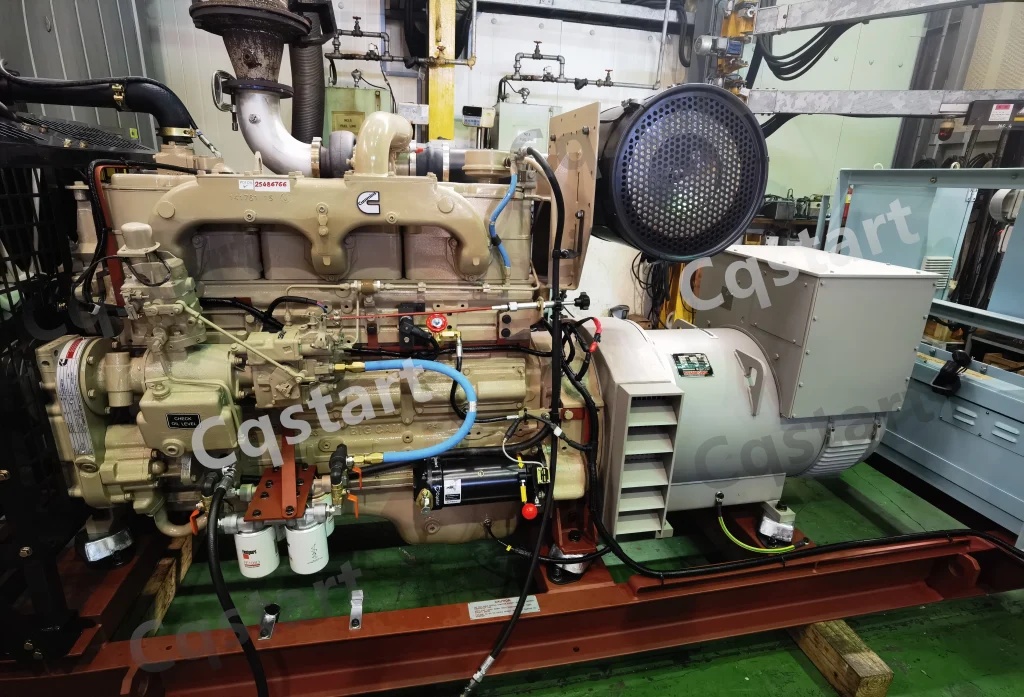
During the actual selection process, you’ll also need to match the starting torque, flywheel ring gear size, and available mounting space to your specific engine. You can always verify these parameters with Cqstart for your particular engine model.