
In construction machinery, heavy-duty vehicles, power generation equipment, and other industrial applications, Detroit Diesel Engines are widely used for their reliability and durability. However, even a reliable diesel engine can sometimes experience starting problems.
When a Detroit Diesel engine is not starting, the cause may come from the battery, starter motor, fuel system, electrical system, sensors, ECM, or even internal engine components.
Therefore, when troubleshooting a Detroit Diesel starting problem, the first key question is:
Does the engine fail to crank completely, or does it crank but fail to start?
Different symptoms can point to very different causes. This article explains the common causes, troubleshooting steps, and starting system solutions for Detroit Diesel engine starting problems, helping you diagnose the issue more systematically.
Why Is My Detroit Diesel Engine Not Starting?
A Detroit Diesel engine may fail to start due to problems in several different systems. Common causes include:
- Low battery voltage or a failed battery
- Starter motor failure
- Poor battery connections or grounding
- Insufficient fuel supply
- Clogged fuel filter
- Air in the fuel system
- Electrical wiring or relay problems
- Sensor failure
- ECM or electronic control system problems
- Low engine compression or other mechanical problems
- Cold temperatures causing difficult starting
Thus, it is impossible to diagnose the precise cause based on the fact alone that the engine fails to start. The proper procedure for diagnostics would be to see what occurs when you try to start the engine.
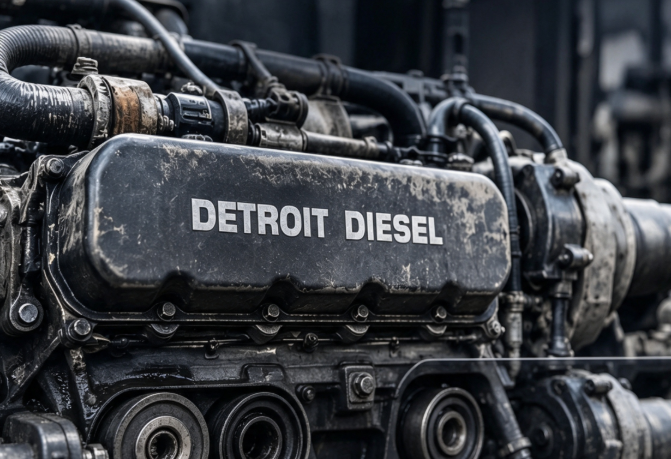
Detroit Diesel Does Not Crank
The failure of the Detroit Diesel engine to crank upon attempted starting indicates a problem with the battery, the starter motor, or the electrical circuitry.
As opposed to the problem where the engine cranks but fails to start, a no-crank situation needs to be looked into with regards to whether the starting system can get enough electrical power.
1. Check the Battery
The battery is an important component of a conventional electric starting system. In case the battery is drained out or it does not supply enough current to crank the engine, the starter may lack enough energy to rotate the engine.
The indicators could be lack of any reaction to the signal for start, a clicking sound while starting, or the dashboard working but engine unable to rotate.
It would be crucial for equipment that has not been used for long or works in cold conditions to check the battery’s efficiency.
2. Inspect Battery Connections and Ground
In addition to checking the battery itself, inspect the battery terminals, ground connections, and battery cables.
If the terminals or grounding cables are loose, corroded, or damaged, starting current may not be properly delivered to the starter motor even if the battery itself is in good condition.
For trucks, generator sets, and other equipment operating in high-vibration environments, loose electrical connections can be a relatively common cause of starting problems.
3. Check the Starter Motor
When the battery and wiring look fine, the next step to do is check the starter motor.
After using for a long time, the starter motor can be damaged inside; it can have a worn out motor, solenoid issues, or damage inside the mechanical parts.
If the starter motor cannot work properly or cannot produce enough cranking speed, the crankshaft of the engine will not turn.
4. Inspect the Starter Solenoid, Relays, and Wiring
The starting system does not consist of the starter motor alone.It also consists of the starter solenoid, relays, fuses, and wiring harness.
If the starting command cannot be sent effectively, there will be no reaction from the engine despite the normal operation of the battery and the starter motor.
Thus, in investigating a no-crank problem with a Detroit Diesel engine, it is necessary to check the starter motor and its control circuitry and wiring.
5. Consider an Alternative Starting System
If equipment frequently operates in remote areas, cold environments, or locations where battery maintenance is difficult, a Spring Starter can be considered as an auxiliary or alternative starting solution to a conventional electric starting system.
A Spring Starter uses pre-stored mechanical energy to drive the engine during starting. It does not rely on the battery to provide starting power and can provide a reliable starting option for certain heavy-duty diesel engines and industrial equipment.
Detroit Diesel Cranks but Won’t Start
Another common situation is when the Detroit Diesel engine cranks normally but will not start.
Unlike a no-crank condition, this usually indicates that the starter motor is functioning. Therefore, troubleshooting should focus more on the fuel supply, fuel system, electrical signals, sensors, and engine control system.
1. Check Fuel Level and Fuel Quality
To begin with, ensure that there is adequate fuel in the tank and determine the state of its quality.
The presence of water, impurities, and other substances in the fuel, as well as fuel degradation from long storage, can affect the normal functioning of the fuel system.
With poor fuel quality, the engine will crank normally; however, there will be no stable combustion.
2. Inspect the Fuel Filter
The fuel filter is an important component of a diesel engine fuel system.
If the fuel filter becomes clogged, it can restrict fuel flow and prevent the engine from receiving an adequate fuel supply.
Severe filter blockage can result in:
- Hard starting
- Poor engine performance
- Engine stalling
- Cranks but won’t start conditions
Therefore, the fuel filter is a basic but important inspection point when diagnosing a diesel engine starting problem.
3. Check the Fuel Supply System
If the fuel filter does not appear to be the problem, inspect the entire fuel supply system, including:
- Fuel lines
- Fuel pump
- Fuel pressure
- Fuel connections
A malfunctioning fuel pump, insufficient fuel pressure, restricted fuel lines, or fuel leaks can prevent fuel from reaching the engine properly.
As a result, the engine may crank normally but fail to start.
4. Check for Air in the Fuel System
Air entering the fuel system can also cause difficult starting or a complete no-start condition.
This may occur after replacing a fuel filter, running the fuel tank empty, improperly connecting fuel lines, or when there is a leak somewhere in the fuel system.
If air is suspected, follow the appropriate procedures for the specific Detroit Diesel engine model to inspect and properly prime or bleed the fuel system.
5. Inspect Sensors and Electrical Signals
Modern Detroit Diesel engines rely on multiple sensors and electronic control systems to determine engine operating conditions.
If a critical sensor fails to provide the correct signal, or if there is a problem with the related power supply, wiring, or electrical connections, the engine control system may not be able to complete the starting process correctly.
Therefore, after confirming that there are no obvious fuel supply problems, the relevant sensors, electrical connections, and wiring should also be inspected.
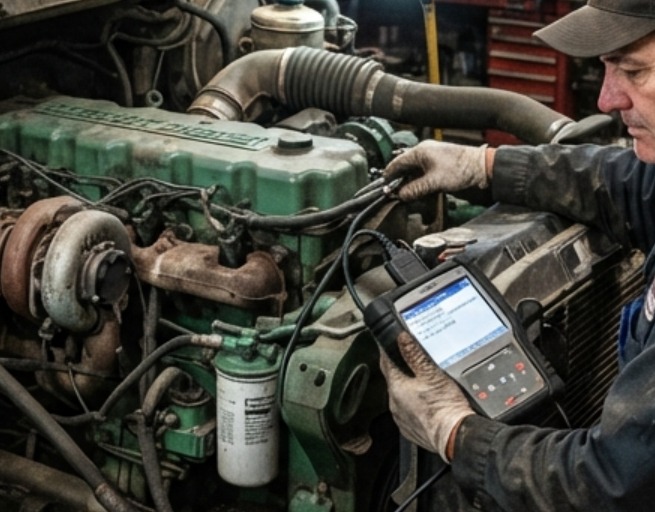
6. Scan for Diagnostic Fault Codes
If the Detroit Diesel engine is equipped with an electronic control system, a compatible diagnostic tool can be used to read Diagnostic Fault Codes.
Fault codes can help technicians identify potential:
- Electrical faults
- Sensor problems
- ECM-related problems
- Fuel system issues
- Communication problems
Instead of replacing components without confirming the cause, reading diagnostic fault codes first can help narrow down the problem more efficiently.
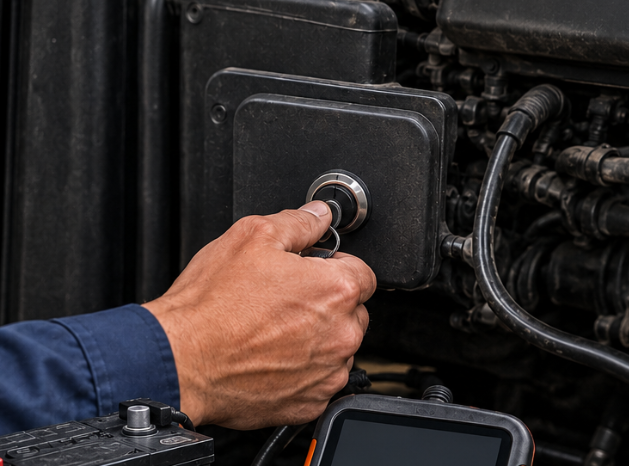
Common Reasons a Detroit Diesel Engine Won’t Start
For a quick overview, common Detroit Diesel starting problems can be categorized into the following systems:
| Problem Area | Possible Causes | Typical Symptom |
| Battery | Low voltage, damaged battery | No crank or slow crank |
| Starter System | Starter motor or solenoid failure | Engine does not crank |
| Fuel System | Low fuel, clogged filter, air in fuel | Cranks but won’t start |
| Electrical System | Wiring, relay, or fuse problems | Intermittent or no start |
| Sensors | Sensor failure or incorrect signal | Cranks but won’t start |
| ECM | Electronic control problems | No-start condition or fault codes |
| Mechanical System | Low compression, timing problems | Hard starting or no start |
This basic classification can help identify which system is most likely responsible before performing more detailed troubleshooting.
How to Troubleshoot a Detroit Diesel Engine That Won’t Start
In case of troubleshooting a Detroit Diesel engine for failure to start, it is advisable to start with the most basic testing process and work towards the more complicated processes.
First find out whether the engine does not crank at all or the engine cranks but doesn’t start.
Step 1: Determine If the Engine Cranks
First check how the engine starts when attempting to start it.
If the engine does not crank, then you should focus your attention on the battery, starter and the electrical system.
If the engine cranks but doesn’t start, then you should focus your attention on the fuel system and engine control system.
Step 2: Check the Battery
Check the battery voltage, battery terminals, and ground connections.
Low battery voltage or poor electrical connections can prevent the starter from receiving sufficient starting current.
Step 3: Inspect the Starter System
If the engine does not crank, inspect the starter motor, solenoid, relay, and wiring.
Also make sure the grounding connections are secure and in good condition to prevent electrical problems from affecting starter operation.
Step 4: Check Fuel Supply
If the engine cranks normally, check the fuel level, fuel quality, and fuel supply system.
Insufficient fuel, contaminated fuel, or restricted fuel flow can prevent the engine from starting.
Step 5: Inspect the Fuel Filter
Check whether the fuel filter is clogged.
A severely restricted fuel filter can limit fuel flow and affect engine starting. Replace the filter when necessary according to the engine manufacturer’s maintenance requirements.
Step 6: Check Electrical Connections
Inspect the fuses, relays, wiring harnesses, and electrical connectors.
For electronically controlled engines, also inspect the wiring and electrical connections associated with critical sensors and the ECM.
Step 7: Read Diagnostic Fault Codes
If the engine is equipped with an electronic control system, use an appropriate diagnostic tool to read Diagnostic Fault Codes.
Fault codes can help identify problems related to sensors, the ECM, the electrical system, or the fuel system.
Step 8: Check Engine Mechanical Condition
If no obvious problems are found in the above systems, mechanical problems should also be considered, including:
- Low compression
- Valve problems
- Timing problems
- Other internal engine issues
These types of problems generally require further diagnosis by a qualified technician.
What If the Battery or Electric Starter Fails?
For diesel equipment that relies on a conventional electric starting system, a discharged battery or failed electric starter can prevent the engine from starting.
For equipment operating in remote locations, heavy-duty applications, or environments where starting reliability is particularly important, a mechanical starting device can also be considered as an alternative or backup starting solution.
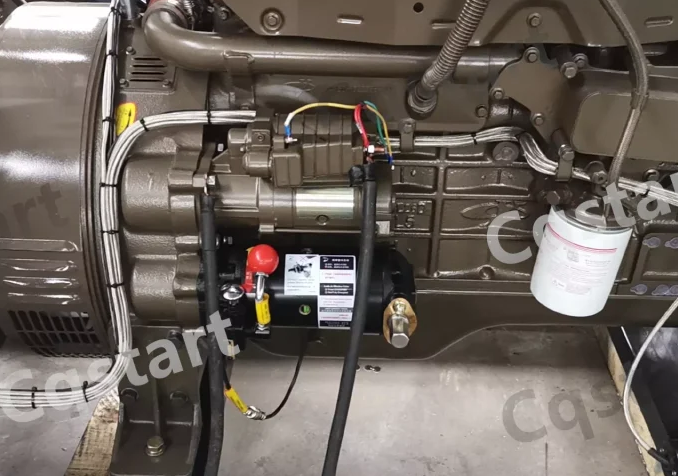
Mechanical Spring Starter
A Mechanical Spring Starter is a mechanical engine starting device.
It stores mechanical energy and releases that energy when the engine needs to be started, providing the mechanical power required to turn the engine.
Compared with a conventional electric starting system, one of the main advantages of a mechanical Spring Starter is that it does not rely on a battery to provide starting energy.
Therefore, for compatible diesel engine applications, a Spring Starter can be used as a:
- Battery-independent starting solution
- Backup starting system
- Emergency starting solution
- Remote equipment starting solution
It is important to understand that a Spring Starter primarily addresses the source of starting power.
If the actual cause of a Detroit Diesel no-start condition is a fuel supply problem, ECM failure, sensor fault, or internal engine mechanical problem, replacing the starting device will not solve the underlying issue.
How to Prevent Detroit Diesel Starting Problems
In addition to repairing problems after they occur, regular maintenance can help reduce the likelihood of Detroit Diesel starting problems.
It is possible to prevent equipment failure by inspecting the battery, starting system, and fuel system prior to the start of the work process.
Maintenance of the Battery
Periodically inspect the battery for condition, voltage level, terminals, and grounding.
The terminals must be clean and all connections must be secured. It will provide a reliable current flow through the starter motor.
Inspect the Starter System
Regularly inspect the starter motor, solenoid, wiring, and related connections.
If you notice abnormal starter speed, unusual starting noises, or loose wiring, inspect the starting system promptly.
Replace Fuel Filters Regularly
Fuel filters should be inspected and replaced according to the engine manufacturer’s recommended maintenance schedule.
Timely replacement helps reduce the risk of clogged filters and restricted fuel supply affecting engine starting performance.
Keep the Fuel System Clean
Avoid using diesel fuel contaminated with water, dirt, or other contaminants whenever possible. Also inspect the fuel lines and connections for leaks. Keeping the fuel system clean helps maintain a stable and reliable fuel supply.
Check Electrical Connections
Regularly inspect wiring, fuses, relays, and ground connections.
For equipment operating in high-vibration environments for extended periods, pay particular attention to loose, damaged, or corroded wires and electrical connectors.
Follow the Manufacturer’s Maintenance Schedule
Maintenance requirements can vary between different Detroit Diesel engine models.
Therefore, always follow the maintenance recommendations provided by the engine manufacturer.
For equipment operating in remote locations or applications where starting reliability is critical, an appropriate backup starting solution may also be considered based on the specific operating conditions.
Need a Reliable Starting Solution for Your Diesel Engine?
For diesel equipment operating in remote locations, harsh environments, or situations where battery power is limited, a Mechanical Spring Starter can provide a reliable mechanical starting solution.
If you are looking for a suitable starting solution for a Detroit Diesel engine or another diesel engine, the appropriate Spring Starter should be selected based on factors such as engine model, engine displacement, mounting configuration, and operating environment.
Contact Cqstart to discuss your diesel engine starting requirements and find the right mechanical starting solution for your application.