
In freezing temperatures or critical emergency blackouts, technical personnel often resort to starter fluid as a rapid fix for stubborn, uncooperative diesel engines. While this volatile chemical spray delivers instant ignition, its harsh combustion can seriously damage costly industrial equipment. Below, we break down how starter fluid harms diesel cylinders, pistons and glow plugs. We also explore reliable, safer alternatives, focusing on the battery-free mechanical spring starter, to help engineers start engines reliably without wearing down key components.
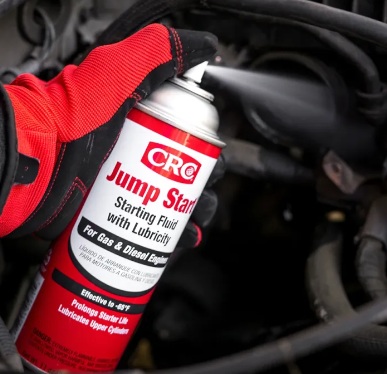
The Dark Side of Starter Fluid: How It Damages a Diesel Engine
The Mechanics of Pre-Ignition and Hydro-Lock
Starter fluid mainly contains diethyl ether, whose auto-ignition temperature of 160°C is far lower than diesel fuel at 210–250°C. Spraying it into the air intake triggers pre-ignition long before the piston reaches Top Dead Center. The violent opposing force bends connecting rods, cracks piston crowns and even leads to hydro-lock, which may rupture the entire engine block, based on equipment failure analysis reports.
Cylinder Wall Scoring and Cylinder Washout
Diethyl alcohol also functions as an extremely strong solvent that removes the film of lubricating oil that is thin on the cylinder’s walls and causes a problem known as washout of the cylinder. If the lubrication is not adequate piston rings rub directly against the bores of the cylinder. This leads to deep scoring. wears down piston rings rapidly and weakens the compression seals and eventually causes an irreparable loss of power and excess oil burning.
Destructive Glow Plug Explosions
Glow plugs preheat combustion chambers for normal diesel operation. When ether vapor contacts a hot glow plug, it detonates abruptly instead of burning steadily. Resulting thermal shock easily breaks glow plug tips. The fallen metal fragments enter cylinders, scratching internal parts, damaging valves and triggering complete cylinder head failure in a very short time.
Common Scenarios Where Technical Crews Risk Using Starter Fluid
Sub-Zero Climates and Thermal Limitations
The desire to use starter fluid increases during harsh winter conditions. In cold temperatures diesel fuel suffers “gelling,” where paraffin wax dissolves from the liquid, blocking fuel filters and restricting flow of the fluid to injectors. In addition, cold air can reduce the heat produced during the compression stroke of the piston and makes the natural combustion ignition hard to attain.
Electrical Depletion and Battery Failures
Lead-acid and AGM starting batteries experience huge performance declines in cold temperatures. When temperatures drop to -18°C (0°F) an average commercial vehicle battery is able to lose about half of the rating cold Cranking Amps (CCA), precisely because the engine’s thick, cold oil needs up to double that normal force to turn the crankshaft. If the electrical system is unable to spin the starter motor at a sufficient speed field workers often use starter fluid in desperate need by inadvertently playing with the internal components of the engine.
Mission-Critical, Remote Off-Grid Deployments
In remote environments, such as deep-pit mining operations remote agricultural water pumps as well as off-grid telecommunications towers and ocean-going vessels, failing to start isn’t an alternative. In these highly risky situations the possibility of a dead battery coupled with the lack of external power backup forces the operators to employ chemical starter aids to bring generators for backup online, highlighting the necessity of an extremely reliable, non-electrical mechanism for starting.
Exploring Safer Alternatives to Traditional Cold Starting
When engineers try to protect heavy industrial equipment, they have, for years, used auxiliary heating systems to handle those cold-weather starting failures , more or less.
- Electronic Block Heaters units circulate heated coolant around the engine block, ensuring optimal temperatures for start-up. But, they need constant connectivity to outside AC shorepower, which renders them useless when grid power is completely blackout.
- Battery Warmers and Blankets:These heating elements are insulated and preserve the chemical activity of the battery. Like block heaters they depend on external power inputs, and do not mitigate the wiring or mechanical problems within the electric starter motor itself. durable easy to use, as well as reliable.
The Ultimate Zero-Risk Solution: Mechanical Spring Starter
| Core Parameter | Traditional Starter Fluid Spray | Mechanical Spring Starter System |
| Electrical Power Needed | Highly Dependent | 100% Zero Electricity |
| Risk of Engine Damage | Severe (Pre-Ignition) | Absolute Zero Risk |
| Low-Temperature Efficacy | Unpredictable / Violent | Flawless Performance (-40°C) |
| Explosion-Proof Rating | Highly Hazardous | Certified ATEX / IECEx Safe |
Why Spring Starters Protect and Preserve Your Engine
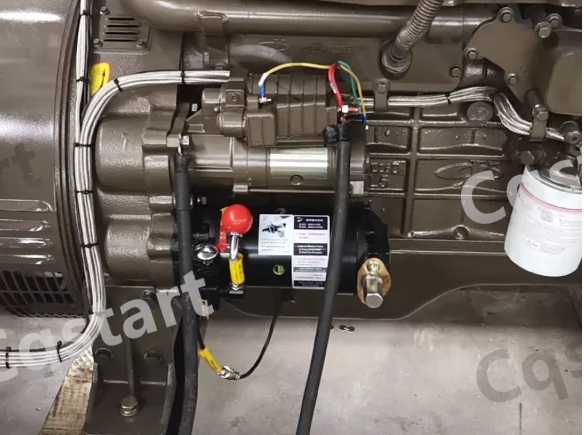
In contrast to the violent chemical explosions that are uncontrolled and caused through starter fluids, a spring starter cranks the diesel engine with a constant, controlled physical force. It is able to rotate the internal crankshaft with ease which allows the engine’s combustion system release diesel fuel in the exact timing that is that is set from the manufacture. Since it doesn’t pre-ignite at all it is not at chance of bent connecting rods or washing away lubrication for the cylinder and causing damage to glow plugs. It gives you a clean and reliable start that prolongs the life expectancy of your engine.
Flawless Reliability in Harsh and Hazardous Areas
Since spring starters work solely on mechanics, they’re invulnerable to the flaws that plague chemical and electrical systems. They are able to function flawlessly even in temperatures as low as -40°C and are unaffected by gelled batteries frozen or surface fluids. In addition, the absence batteries, electrical wiring, and volatile gasses makes them safe from explosions. They are the worldwide gold standard for hazardous areas, such as offshore oil platforms underground mining operations and lifeboats for marine life.
Guard Your Powertrain assets from chemical Hazards
The use of starter fluids to deal with problems with cold-starting can create structural risk that could cause catastrophic engine failure costly repairs, as well as costly operational downtime that is not scheduled. Modern engineering requires durable reliable, non-destructive, and predictable mechanical solutions for starting. Safeguard your critical backup power systems and primary heavy machinery by upgrading to premium, field-proven infrastructure. Discover the complete line of certified, explosion-proof mechanical spring starter systems, rugged installation adaptation kits, and heavy-duty emergency starting solutions engineered to withstand the world’s harshest environments at CQSTART. Ensure your heavy industrial engines start reliably every single time, without the risk of chemical damage.