
Time is money in the oil and gas game. That’s not just a saying. When a massive diesel engine—think generator sets or pump drives—goes down because it won’t start, even a single day of downtime can translate into losses that are genuinely staggering.
Here’s the thing that puzzles a lot of people. We’ve all gotten used to smart starting systems in our cars. Turn the key, push a button, and the engine fires right up. So why would an industry as technologically demanding as oilfield operations put so much trust in a device that looks, frankly, kind of old school?
We’re talking about the mechanical spring starter. The short answer is this: out in the brutal conditions of an oilfield, the simpler the machine, the harder it is to kill.
Why Electric Starters and Batteries Fail in Oilfields
In your daily life, you probably don’t think twice about starting your car. Battery, starter motor, key turn, engine runs. But out on a rig or a remote wellhead, that same system has a nasty habit of letting you down right when you need it most. Let’s break down why that happens.
The “Dead Battery” Nightmare
Oilfields aren’t exactly located in mild, forgiving climates. Think frozen tundra like Siberia or the Daqing region in China. Think scorching deserts with no shade. When temperatures plummet to minus twenty or worse, battery chemistry basically goes to sleep.
You can charge a battery fully in the evening, leave it overnight in the cold, and come back the next morning to nothing but a weak clicking sound when you try to crank the engine. That clicking is the sound of lost revenue.
And here’s another headache. A lot of emergency equipment might sit idle for months at a time. Batteries don’t like that. They self-discharge, they suffer from over-discharge, and when an actual emergency hits and you absolutely need that engine to start, the battery is dead weight.
Environmental Assaults
Oilfield environments are harsh in every possible way. You either get blinding dust storms blowing across a desert site, or you get the salty, humid air of an offshore platform. Either way, electrical systems suffer.
Fine dust sneaks into the solenoid switches of electric starter motors and jams them up solid. Salty mist and condensation eat away at electrical connectors, and corrosion leads to short circuits. You can try to seal everything up, but in practice, these failures are all too common.
The Spark Hazard
And this one’s serious. It’s not just about inconvenience; it’s about safety. Oil and gas sites often have volatile gases hanging around—methane, for example.
Electric starting systems produce sparks. It happens at the brushes, at the relays, during normal operation. If there’s a short circuit or just normal wear and tear, that tiny spark becomes an ignition source. In an atmosphere with flammable gas, a spark can turn an entire drilling platform into a disaster zone.
Yes, you can pay a fortune for explosion-proof electric starters, but even those have aging components that can fail.
Advantages of Spring Starter vs Electric Starters
So compared to all those problems, the mechanical spring starter is like a cold steel weapon from another era. No wires. No batteries. It’s pure mechanical energy solving a mechanical problem.
Here’s a quick look at how they stack up against each other.
| Comparison Dimension | Traditional Electric Starting System | Mechanical Spring Starter |
| Energy Dependence | Relies completely on batteries and charging systems. | Zero electricity needed. Pure mechanical energy. |
| Environmental Adaptability | Sensitive to cold, moisture, and dust. Prone to failure. | Unaffected by extreme temperatures, high humidity, or dusty conditions. |
| Safety / Explosion Proof | Has spark risk. Requires expensive explosion-proof modifications. | 100% spark-free. Naturally explosion-proof by design. |
| Long-Term Storage | Batteries self-discharge over months. Likely dead when you need them. | Can sit for years and still release massive energy instantly when triggered. |
| Maintenance Costs | Requires regular battery swaps, cable checks, and circuit maintenance. | Simple, rugged construction. Almost maintenance-free over its lifetime. |
Let’s pull that apart a bit.
No battery, no power problem. As long as a human has some muscle power, or you’ve got an external mechanical source, you can store energy in that spring. You never have to worry about a dead battery again.
Zero sparks, maximum safety. The whole starting process happens inside a sealed mechanical housing. No electrical arcs, no sparks, period. When you’re working right at a wellhead where gas could be leaking, a spark-free starter isn’t a luxury—it’s a lifesaver.
How a Mechanical Spring Starter Works in Oilfields
The basic idea is actually pretty familiar. Remember those pull-back toy cars you played with as a kid? Or a wind-up alarm clock?
Well, a mechanical spring starter works on the exact same principle. It’s just that the forces involved are hundreds of times more powerful.
The whole process breaks down into three simple steps.
1. Energy Storage
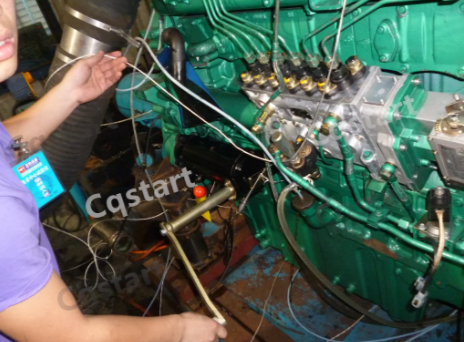
The operator grabs a long cranking handle and starts turning it. This winds up the mechanism like a giant mainspring. Inside the starter, a stack of high-strength disc springs—Belleville washers, if you want the technical term—gets progressively compressed.
With every turn, you’re packing more and more mechanical energy into those springs. For smaller engines, hand cranking is doable. But for bigger engines out in the field, it can be physically exhausting.
That’s why modern spring starters also support an external power drive. You can hook up a portable pneumatic motor or a hydraulic tool to wind the spring in just a few seconds. That saves a lot of sweat, especially in the middle of a hot summer day.
2. Lock and Ready
Once those springs are fully compressed, a latching mechanism inside the starter locks everything in place. Think of it like a crossbow that’s been drawn and cocked. It’s holding all that potential energy, just waiting for the right moment.
3. Energy Release
Here’s where the magic happens. The operator pulls the trip lever, and in less than a second, all that pent-up energy gets unleashed.
The springs snap back to their relaxed state, and that explosive burst of mechanical power gets transferred through a pinion gear that engages directly with the engine’s flywheel ring gear.
In plain English, the starter gives the engine one massive kick. The starting torque is huge. The rotational speed is more than enough to spin a cold, sluggish diesel engine up to ignition speed in a single go. One kick, and it fires.
Common Oilfield Equipment That Uses Spring Starters
You’ll find these rugged starters all over an oilfield operation. Sometimes they’re the primary starting method. Other times, they serve as the ultimate backup—a black start system when everything else has failed.
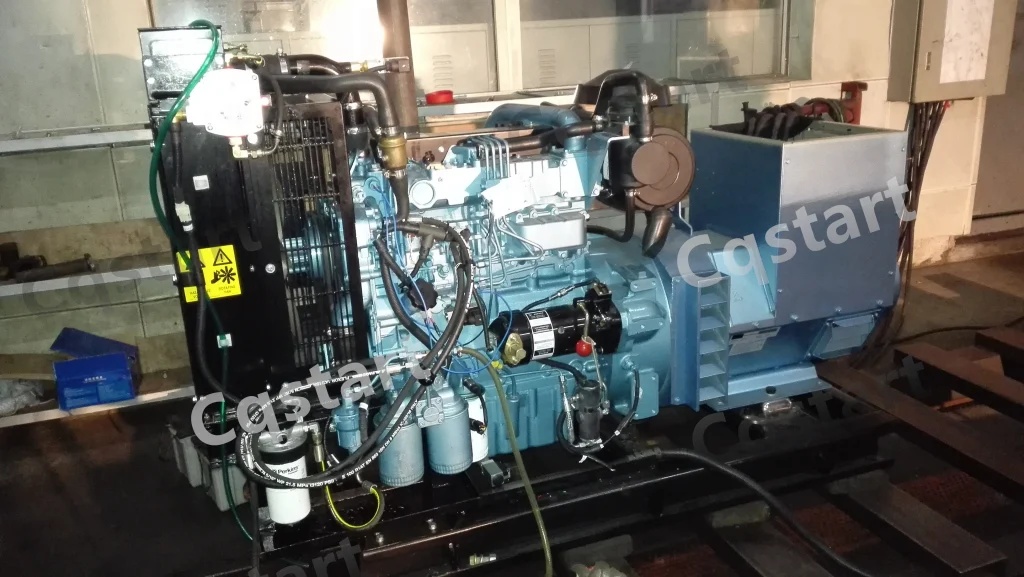
Drilling rigs. These things run 24/7. The main diesel engines and the mud pump engines simply cannot stop. If an electrical glitch shuts them down, a spring starter can get them turning again within minutes. That can prevent a stuck drill pipe situation, which is a nightmare scenario.
Generator sets. Out in remote wilderness areas, that generator is the only source of power for the entire camp. A spring starter makes sure that generator fires up no matter how cold or wet the weather gets.
Compressors. For gas compression and pipeline boosters, the site is strictly no-spark. Mechanical spring starters are the logical, safe choice.
Pumping units. Those iconic nodding donkeys you see scattered across remote landscapes, or the long-distance oil transfer pumps, are often miles away from the nearest maintenance shop. A purely mechanical start system means less worry.
Emergency backup engines. Fire pumps are a great example. They might sit unused for years. When a fire breaks out, there’s no time to charge batteries or troubleshoot electrical problems. A spring starter just works. You pull the lever, and the pump roars to life.
Industries That Benefit from Spring Starters
It’s not just oil and gas exploration, by the way. Any industry with harsh conditions and a low tolerance for failure has found a use for these starters.
Mining industry. Underground mines have the same explosive gas concerns, plus heavy dust. Surface mines deal with mud and rain. Mechanical starters handle it all.
Marine engines. Think about ocean-going cargo ships, lifeboats, or offshore platforms. Saltwater corrosion eats electrical systems for breakfast. Lifeboat regulations often explicitly require non-electric starting systems, and spring starters fit that requirement perfectly.
Remote power stations. Up in the mountains, out in the desert, or on isolated islands, there’s no grid power to rely on. Maintenance crews might take days to reach a site. A spring starter that needs almost no upkeep eliminates countless service calls.
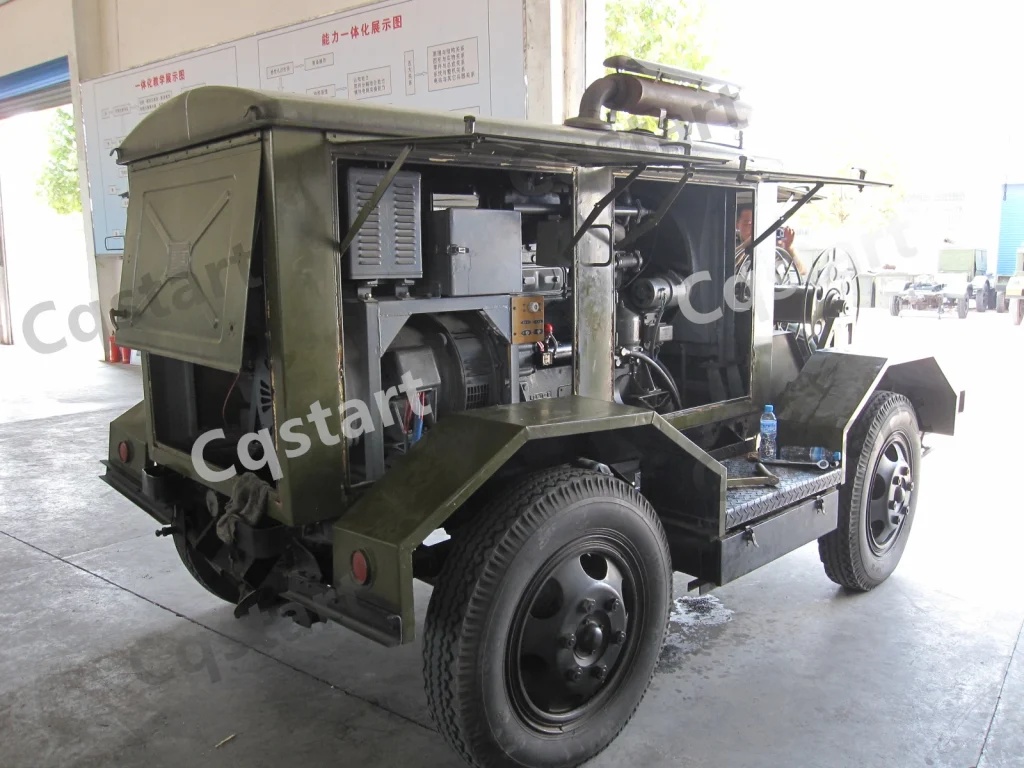
Military and emergency rescue equipment. Tactical vehicles and flood control pumps need to start on command, even after an electromagnetic pulse or years in storage. Spring starters deliver that kind of absolute reliability.
How to Choose the Right Spring Starter for Your Engine
Now, don’t get the idea that you can just grab any spring starter off the shelf and bolt it onto any engine. That’s not how it works. You need to match the starter to the engine carefully.
Engine type and displacement. This is your starting point. A little 4-cylinder diesel needs a lot less muscle than a massive 12-cylinder industrial engine. You need to know the exact make and model—Cummins, Caterpillar, Perkins, whatever it is—and the total displacement in liters.
Required starting torque. Ambient temperature makes a huge difference. In freezing conditions, engine oil turns thick and syrupy. That increases the cranking resistance significantly. If you’re operating in a cold climate, you may need a spring starter with a reduction gear mechanism to multiply the torque output.
Working environment. For offshore platforms, you’ll want a starter with a heavy-duty marine-grade anti-corrosion coating. For extremely cold inland sites, the internal grease has to stay fluid at low temperatures. If that grease stiffens up, the spring won’t release smoothly.
Frequency of use and maintenance access. If you’re starting the engine multiple times a day, look for a model with both manual and mechanical drive interfaces. Also, check the physical dimensions. Make sure there’s enough room for an operator to swing the cranking handle without hitting anything.
Why Choose Cqstart Spring Starter
Let’s be direct about this. Cqstart has been in the mechanical starting game for 18 years. We’ve got the certifications to back it up—CCS quality system approval, plus a bunch of domestic and international invention patents. In the global diesel engine market, we’re known as the heavy hitter.
When you go with Cqstart, you’re getting three specific technology advantages.
More starting muscle. We’ve broken the world record for starting a 50-liter giant diesel engine. Our adaptive displacement technology gives us a threefold wider compatibility range compared to typical starters. On top of that, our material quality means we pack over 20% more energy density than other international brands, and our drivetrain efficiency is 9% better. That makes a real difference when you need one solid kick to get a cold engine running.
Ridiculous longevity. We ran our starters through 5,000 cycles of brutal endurance testing. After all that abuse, the energy output had only dropped by 8%. That’s world-class performance. We also use special protective coatings and anti-seize compounds. Friction on moving parts is cut by 40%, so there’s no galling or seizing even in extreme heat or cold.
Digital testing, full traceability. We’re one of the few manufacturers with a dedicated digital test bench. Every single unit we ship gets its torque, work output, and internal component performance measured quantitatively. We don’t guess. We verify. So when you receive your starter, you know it’s performing at its absolute peak.
When the power goes out, when temperatures crash, when the wind kicks up dust storms, and when you’ve got flammable gas all around—that’s the moment the Cqstart spring starter proves its worth. It’s the last line of defense. And it’s a fortress you can trust.