
When a generator hard to start immediately, the damage is more than just frustration; it could threaten the continuity of operations and security. It could be an emergency power source at an isolated drilling site or a crucial backup system in a marine vessel. A “hard start” signifies a malfunction of the highly delicate equilibrium between fuel as well as air and ignition. What better way to discover the underlying causes of the difficulties in starting and create an effective plan for solving the issue? From routine electrical maintenance to the implementation of high-reliability mechanical spring starters, we will explore why moving beyond traditional electrical reliance is the ultimate strategy for guaranteed engine performance.
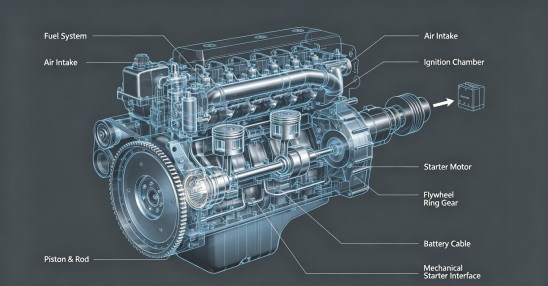
Common Causes of Generator Hard to Start
Knowing what is the “why” is the first step towards a lasting solution. Engines that fail to start are rarely an issue that is not understood; it is generally a sign of system-wide degradation.
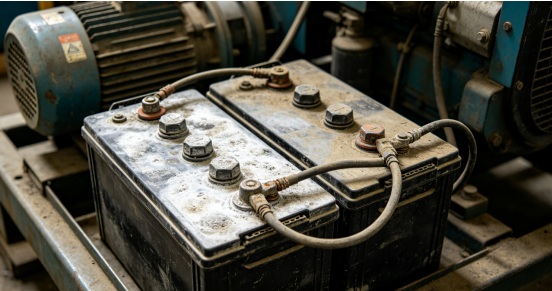
- Electrical failure (The #1 Culprit): The majority of generators rely upon lead acid batteries. If a battery is not charged properly or sulfated, the start-up motor will not be able to produce the needed breakaway torque required to increase the engine’s necessary ignition speed.
- Fuel System Obstructions: Diesel engines have air trapped in these fuel lines (air lock) or blocked fuel filters are quite common. In addition, the quality of fuel stored in tanks for a long time may cause problems with injection.
- Mechanical and environmental factors: Extremely low temperatures increase the viscosity of the lubricating oils, which causes engines to exert more effort on beginning the crank. In addition wear on the piston rings could result in lower compression pressure, which makes combustion ignition almost impossible in the cold start.
Troubleshooting Checklist: A Step-by-Step Approach
Prior to making major system enhancements, make sure that your current infrastructure is in good shape:
Step 1: Examine the starting Circuit: Make use of an electronic multimeter to determine the voltage at rest for your battery. A reading lower than 12.4V for a 12-volt system is a sign of a possible failure. Clean the battery terminals thoroughly to get rid of corrosion. This increases the resistance.
Step 2: Bleeding of the Fuel System: If the generator is sitting, inspect your fuel lines to see if there are air bubbles. Unlock the bleeder screws according to the manual of the manufacturer and set the system up for a clean flow of fuel to the injectors.
Step 3: Assess The climate: In colder conditions, you should check the functioning that is in your Jacket Water Heating System. In the event that your engine blocks are frozen the combustion chamber will not reach the temperature needed for self-ignition.
Electrical vs. Mechanical Starting Systems
When routine maintenance fails to eliminate starting issues, it is time to reconsider the starting mechanism itself.
| Feature | Electrical Starting | Mechanical Spring Starter |
| Energy Source | Battery (Requires charging) | Stored Mechanical Energy |
| Reliability | Susceptible to aging/voltage drop | Guaranteed cold-start reliability |
| Environment | Fails in extreme cold | Operates in any climate |
| Maintenance | Frequent battery/motor service | Minimal/Maintenance-free |
| Safety | Risk of sparks/short circuits | Intrinsically safe/Non-electric |
The Ultimate Solution: Moving Beyond Electrical Starters
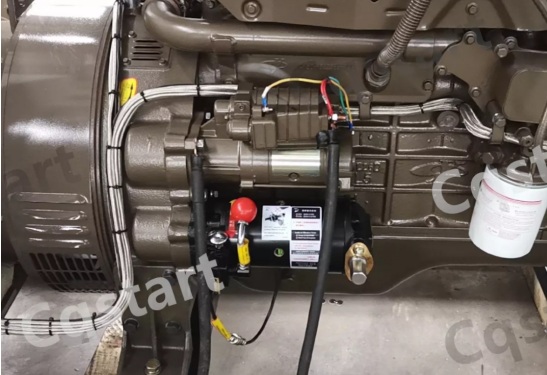
If your generator’s role is mission-critical, relying on battery-dependent starters is a calculated risk. Mechanical Spring Starters provide a definitive solution to the “hard start” problem by eliminating the dependency on electrical systems entirely.
Why Spring Starters are the Gold Standard for Reliability
Instant Energy Release: Because the energy is stored mechanically, the starter is immune to the “battery drain” that plagues emergency generators left in storage.
Hazardous Environment Compatibility: Being non-electric, spring starters are the preferred solution for offshore platforms and oil and gas facilities where ignition risks must be zero.
Extreme Durability: These units are designed to withstand vibration, heat, and salt spray, making them ideal for the harsh conditions often associated with generator hard starting cases.
Case Study: Solving Reliable Startup in Remote Operations
Consider a recent scenario involving a series of emergency generators on a remote coastal drilling site. The facility faced chronic hard-start issues due to high humidity and cold night temperatures, which consistently degraded their battery banks. Maintenance teams were replacing batteries every six months, yet “no-starts” remained a recurring emergency.
Upon replacing the electrical starter motors with high-torque mechanical spring starters, the site achieved a 100% cold-start success rate. The mechanical system functioned perfectly regardless of the ambient temperature or the state of the facility’s electrical grid. This investment not only eliminated the hard-start problem but also reduced the site’s total cost of ownership by eliminating the need for periodic battery bank replacements.
Guaranteeing Your Engine’s Reliability
Generator hard start should not be viewed as an inevitable part of equipment ownership. Through a systematic troubleshooting procedure, you will be able to determine if the issue is simply a maintenance issue or a systemic design issue.
For critical infrastructures in which “no-start” is not an option, mechanical starters can give peace of peace of. It removes the weakest link—the electrical battery—and replaces it with a robust, energy-dense, and fail-safe mechanical spring starter.