
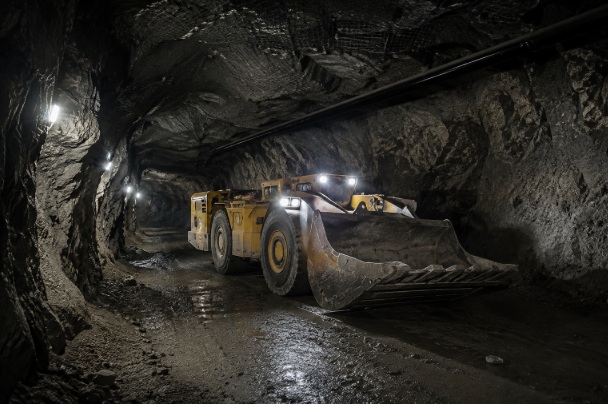
Hundreds of meters below the surface, a diesel-powered LHD loader sits idle at the end of a shift change. The operator turns the key — and nothing happens. In an open-pit yard, this would be a minor inconvenience. But inside a tight underground tunnel, where methane or coal dust can linger, a failed start then more cranking attempts become a real safety concern, not only a throughput headache. Underground mining is one of those brutal environments that a diesel engine will face, and starting dependability is right in the middle of the whole trouble. This article breaks down why, and what mine operators can actually do about it.
Why Underground Mining Is a Uniquely Harsh Environment for Diesel Starting
Surface equipment rarely has to contend with explosion-proof certification, near-zero ventilation, constant humidity, and total isolation from grid power all at once. Underground mining diesel engines do — every single shift. Understanding these pressures is the first step toward solving them.
5 Key Challenges of Starting Diesel Engines Underground
1. Explosion-Proof and Ignition-Source Restrictions
Regulatory bodies such as regulatory bodies like the U.S. Mine Safety and Health Administration (MSHA) enforce strict standards on all diesel-powered equipment working under dusty or gassy underground conditions. In accordance with the regulations of 30 CFR Part 36, the term “diesel power package” must include elements such as spark arrestors, flame arrestors, as well as temperature controls for the surface to make the engine safe from explosions. Electric starters traditionally rely on relays, electrical contacts, and battery terminals, each of which carries an inherent risk of sparks, which is a significant risk when it comes to a methane-prone shaft.
2. Confined Space and Limited Ventilation
Tunnels in underground tunnels tend to be narrow in design and ventilation is usually built around the demands of production rather than convenience of starting the system. The emissions spike of a diesel engine during cranking may build up rapidly in areas that are not ventilated and the equipment to start that is installed on the machine needs to fit within tight space limitations.
3. High Humidity, Dust, and Corrosive Conditions
Underground mines are always damp and suffocated with dust. Fine particles settle into the wiring harnesses, battery terminals and the relay’s contacts which accelerate corrosion and posing a short-circuit danger. Electric starters, which rely on electrical connections that are clean in order for their operation, are especially vulnerable to this type of environmental degradation that occurs over time.
4. No Reliable Grid Power and Battery Charging Difficulties
The working areas are usually away from any reliable electrical power source, so battery charging is dependent on generators that are auxiliary or have limited feeder lines. When you add fleets of machines that cycle in and out throughout the course of a period, and battery depletion is a constant operational issue instead of an occasional annoyance.
5. Extreme Temperature and Vibration Stress
As mines go deeper, geothermal heat rises, and constant vibration from drilling, hauling, and blasting operations places additional mechanical stress on every component. Recent research on mine explosion-proof diesel engines has shown that exhaust and auxiliary systems experience measurable performance degradation under sustained high-temperature underground conditions — a finding that underscores just how demanding this environment is on engine-adjacent hardware, starting systems included.
What Happens When a Diesel Engine Fails to Start Underground
A failed start underground isn’t just a delay. Mining operations run on tight production schedules, often expressed in tonnes per hour, so if the working face stops even for a while, the output goes down basically with it. And in emergency or evacuation moments, a unit that just won’t start can put personnel safety at risk pretty fast. And perhaps most overlooked: repeated cranking attempts on a struggling electric starter can itself increase the odds of a spark event, turning a mechanical inconvenience into a genuine hazard. This is why starting reliability underground deserves far more attention than it typically gets in equipment planning.
Solutions: How to Ensure Reliable Diesel Starting in Underground Mining
1. Choose MSHA/ATEX-Certified Explosion-Proof Starting Equipment
Compliance isn’t optional in this environment. Any starting system installed on underground diesel equipment should carry the appropriate certification — whether MSHA approval in North American coal operations or ATEX certification for hazardous-area equipment used internationally. This is the non-negotiable baseline before evaluating any other feature.
2. Reduce Dependence on Battery-Based Electric Starters
In light of how frequently dust, humidity, and a faulty charging infrastructure compromise the electric start-up systems underground, many mining operators are looking at the extent to which they depend on battery-powered starters as the only method of starting crucial equipment.
3. Mechanical Spring Starters: A Purpose-Built Alternative for Mining
This is where a fully mechanical spring starter earns its place. Also, instead of relying on an electrical circuit, it stores energy using a hand-wound spring mechanism, so there’s no spark-source issue, which is the thing that makes electric starters hard to get signed off for in explosive atmospheres. There is no battery to manage, and no grid connection either, so it’s naturally at home at working faces that are far away from stable power. Its sealed mechanical design also holds up better against dust and moisture than exposed electrical contacts. For many operations, a spring starter serves as a dedicated backup to the primary starting system — giving crews a reliable, non-electric way to get an engine running even if the battery has failed or the electric starter has degraded.
4. Preventive Maintenance Practices for Harsh Underground Conditions
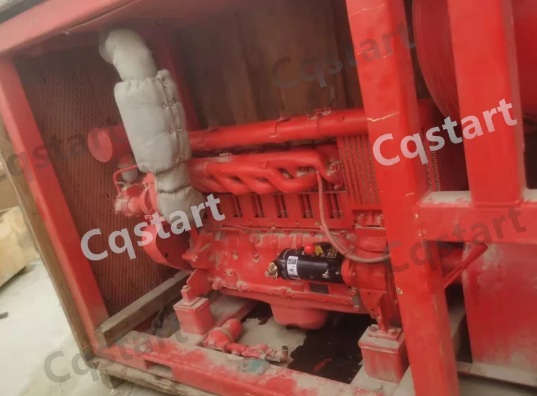
Even the right equipment needs consistent care. Mine maintenance teams should inspect seals and gaskets regularly for dust ingress, clean accumulated particulate from starter housings and connection points, and check mechanical linkages for wear caused by constant vibration. These simple, routine checks extend the service life of starting equipment considerably in an environment that punishes neglect quickly.
Diesel engine starting failures underground are rarely just a mechanical inconvenience — they’re a symptom of an environment that pushes every component to its limits. Addressing the problem starts with recognizing that conventional electric systems weren’t designed for gassy, damp, power-isolated tunnels in the first place. For mining operators looking for a certified, non-electric alternative built for exactly these conditions, Cqstart’s ATEX-rated spring starters offer a proven starting solution engineered for reliability where it matters most.