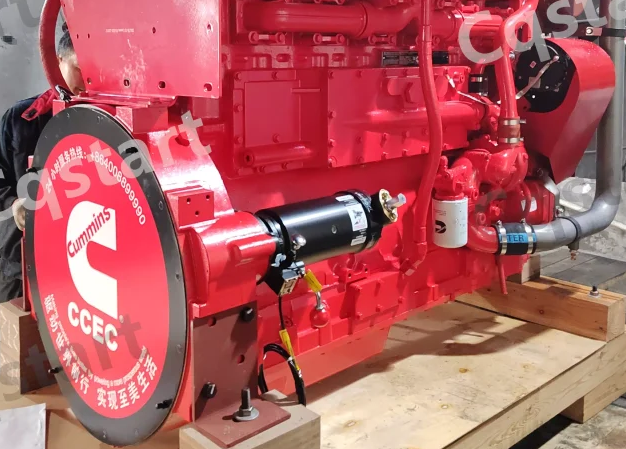
Imagine this scenario: in the freezing wilderness of winter, at a remote mining site far from the power grid, or on an offshore drilling platform, your heavy-duty diesel engine suddenly becomes completely inoperable because the starting battery is dead. If you rely on conventional electronic equipment, you may find that a portable Heavy Duty Jump Starter suffers a significant drop in performance in extremely low temperatures and may even be unable to deliver enough current to start the engine.
For industrial machinery, truck fleets, and emergency equipment that depend on diesel engines, an engine shutdown can result in significant economic losses. When looking for a reliable cold-start and emergency starting solution, Mechanical Spring Starter and Heavy-Duty Jump Starter are two common options.
So, Heavy-Duty Jump Starter vs Mechanical Spring Starter: which one is better for diesel engines?
This article takes an in-depth look at how these two starting solutions work, their advantages and limitations, and their typical applications to help you choose the most reliable starting solution for your equipment.
What Is a Mechanical Spring Starter?
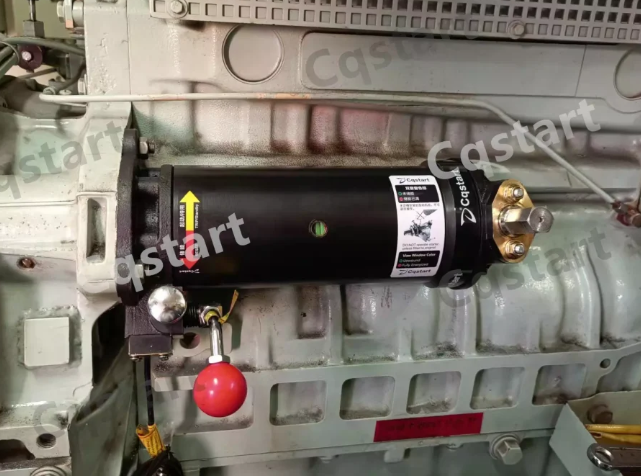
A Mechanical Spring Starter is an engine starting device based entirely on mechanical principles. It does not require an external power supply, compressed air, or hydraulic system.
It uses a high-strength internal spring to store mechanical energy. The operator simply turns the starter using a hand crank or a dedicated pre-charging mechanism, storing mechanical energy in the spring. When the release mechanism is activated, the spring rapidly releases the stored energy and generates high starting torque. Through a one-way clutch, this torque is transferred to the engine crankshaft, causing the engine to rotate and start.
Key Advantages
100% Independent of Electricity: Even if the starting battery is completely dead and the vehicle or machine has lost electrical power, the engine can still be started mechanically.
Excellent Explosion-Safety Characteristics: A purely mechanical design does not generate electrical sparks during normal operation, making it suitable for certain hazardous environments such as oil and gas fields, chemical facilities, and mining sites when properly selected and installed.
Suitable for Extreme Climates: Whether operating in extremely cold or hot and humid environments, a mechanical spring starter is not subject to the battery performance degradation associated with low temperatures.
Long Service Life and Low Maintenance: Its robust mechanical construction minimizes concerns related to electronic component aging. Routine inspection and basic lubrication may be sufficient depending on the design and manufacturer’s requirements.
What Is a Heavy-Duty Jump Starter?
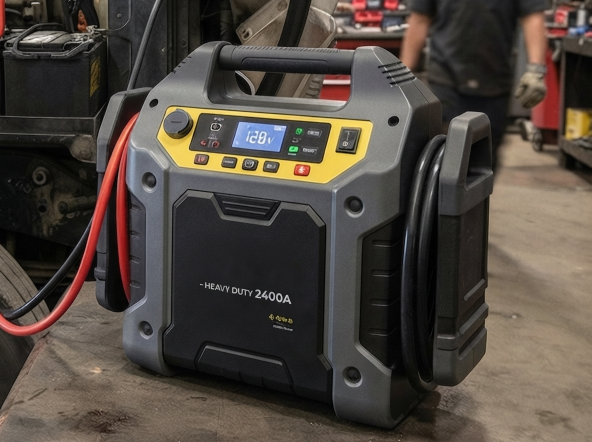
The Heavy Duty Jump Starter is a mobile electrical emergency starter that utilizes the internal battery as its source of energy in order to supply sufficient current during the starting of engines that are hard to start.
Unlike the typical automotive jump starters, Heavy Duty Jump Starters are usually intended for use on trucks, diesel, and some heavy duty equipment. Nevertheless, the actual starting performance will depend on the specifications such as battery capacity, peak current, voltage, and engine size.
How Does a Heavy-Duty Jump Starter Work?
A Heavy Duty Jump Starter generally has either high-capacity lithium-ion battery or high performance lead acid battery. The electrical system inside the unit provides high current to the starter motor of the engine for a brief duration, enabling the engine to crank and start.
Main Strengths
Ease of Usage and Convenience: Just like charging through a portable power bank, the user simply attaches the positive and negative clamps to the terminals of the battery and tries to start the engine.
Versatile Uses: Most of the lithium jump starters of today come equipped with features such as power banks, LED lights and 12V/24V output ports.
Commonly Available and Affordable: Heavy Duty Jump Starters are widely available in the market and handy in handling regular low-battery problems.
Mechanical Spring Starter vs Heavy-Duty Jump Starter: What Is the Difference?
The key difference between the Mechanical Spring Starter and the Heavy Duty Jump Starter is the nature of their starting energy.
The Heavy Duty Jump Starter is in essence a mobile source of power. The jump starter uses its battery to store electrical energy and then uses high amperage for starting the engine.
In contrast, the Mechanical Spring Starter does not have any batteries. Energy is stored in mechanical form and used when necessary for starting the engine by creating mechanical torque.
Simply put:
| Comparison | Mechanical Spring Starter | Heavy-Duty Jump Starter |
| Energy Source | Mechanical energy | Electrical energy |
| Requires a Battery | No | Yes |
| Requires Charging | No electrical charging required | Yes |
| Long-Term Storage | Generally well suited | Battery condition needs to be monitored |
| Maintenance | Relatively low | Battery maintenance required |
| Portability | Depends on system design | Generally highly portable |
| Diesel Engine Applications | Highly suitable for suitable engine designs | Suitable for certain applications |
| Remote Environments | Strong advantage | Performance depends on battery condition |
| Emergency Starting | Yes | Yes |
Therefore, there is no simple answer as to which system is absolutely better. The right choice depends on the engine type, operating environment, starting requirements, and the level of reliability required.
Mechanical Spring Starter vs Heavy-Duty Jump Starter: Pros and Cons
Understanding the advantages and limitations of Mechanical Spring Starter vs Jump Starter can help users choose the right starting system based on engine type, operating environment, maintenance requirements, and application needs.
Advantages of a Mechanical Spring Starter
1. No Battery Required
The main benefit of the Mechanical Spring Starter is that it does not use a starting battery. Mechanical energy is stored and released to start the engine. Thus, the need for a battery or an electrical source is reduced.
The above advantage of the starter is especially important in:
- Long-term standby equipment
- Remote industrial equipment
- Diesel engines without reliable electrical power
- Emergency and backup equipment
2. Low Maintenance
Since the mechanical spring starter does not depend on the charging and discharging process of the battery, it may lead to reduced maintenance problems related to battery aging, self-discharge, and continuous recharging.
In the case of diesel-powered machinery that works in intermittent operation or in standby mode, it can be useful in minimizing the overall maintenance burden.
3. Suitable for Remote Applications
In oilfields, mining operations, remote construction sites, and other areas with limited infrastructure, battery charging and replacement may not always be convenient.
A Mechanical Spring Starter does not depend on an external electrical supply, which can reduce the equipment’s dependence on electrical infrastructure and make it suitable for certain remote applications.
4. Useful for Long-Term Stored Equipment
Some backup diesel equipment may only be started once every few weeks or months. If the starting system relies entirely on a battery, operators need to monitor battery self-discharge, aging, and maintenance during long periods of storage.
A Mechanical Spring Starter can provide an independent starting method that does not depend on the condition of the starting battery, making it particularly useful for certain long-term standby applications.
5. Suitable for Diesel Engines
Mechanical Spring Starters can be used with various types of diesel-powered equipment, including:
- Diesel generators
- Fire pumps
- Industrial diesel engines
- Construction equipment
- Oilfield equipment
- Emergency equipment
For these applications, having a reliable starting system is essential to ensure that equipment can operate when needed.
Limitations of a Mechanical Spring Starter
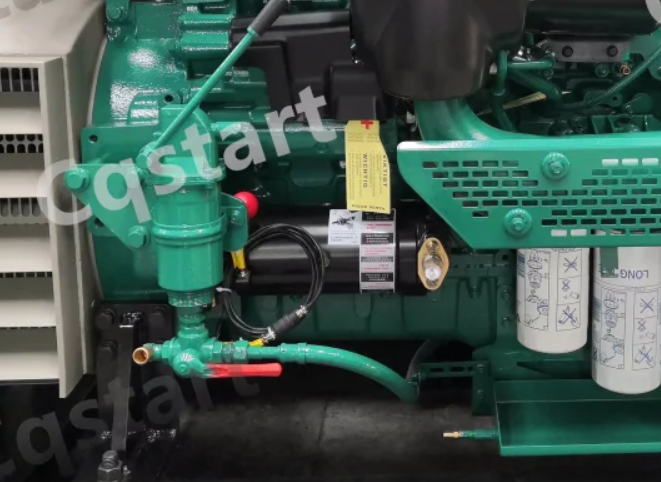
Although a Mechanical Spring Starter offers advantages such as battery independence and low maintenance requirements, several factors should be considered before selecting one.
First, the starter must be correctly matched to the engine’s specifications, including:
- Engine displacement
- Starting torque
- Mounting interface
- Engine configuration
- Required starting performance
In addition, the mechanical starter must be correctly installed and operated according to the equipment requirements. Therefore, when selecting a product, users should not compare products based only on appearance or price. They should also verify whether the starter is compatible with the target engine.
Overall, a Mechanical Spring Starter is particularly suitable for diesel engine applications where reliability, low maintenance, and long-term standby capability are important.
Advantages of a Heavy-Duty Jump Starter
A Heavy-Duty Jump Starter is a common portable emergency starting device that uses an internal battery to store electrical energy and provides starting current when a vehicle or machine has difficulty starting.
Compared with permanently installed starting systems, its biggest advantages are portability and convenience.
1. Portable and Easy to Carry
Heavy-Duty Jump Starters are generally designed as portable devices that can be stored in trucks, vehicles, or equipment and used when the starting battery becomes discharged.
For trucks, fleet vehicles, and mobile equipment, this portability can be highly practical.
2. Quick Emergency Starting
When a vehicle cannot start because of insufficient battery power, a Heavy-Duty Jump Starter can provide starting current for a short period and help the engine restart.
This makes it particularly useful for:
- Trucks
- Fleet Vehicles
- Diesel Vehicles
- Roadside Emergencies
- Temporary Starting Assistance
3. Easy to Use
A Heavy-Duty Jump Starter generally does not require permanent mechanical modifications to the engine.
As long as the device is correctly matched to the target engine and connected according to the manufacturer’s instructions, it can be used as a temporary emergency starting solution.
Limitations of a Heavy-Duty Jump Starter
The biggest limitation of a Heavy-Duty Jump Starter is that its performance depends on its internal battery.
1. Requires Battery Maintenance
A Jump Starter needs to be periodically inspected and recharged.
If it is stored for a long time without proper maintenance, it may have insufficient power when an emergency starting situation actually occurs.
2. Battery Aging
As the device ages, its internal battery may deteriorate. Its capacity and output performance may gradually decrease over time.
Therefore, users should regularly check the condition of the device when it is kept as a long-term emergency backup.
3. Environmental Conditions Matter
The performance of a heavy duty Jump Starter can be impacted by temperature, storage conditions, and battery condition.
When a product is designed to operate in very cold, very hot, or any other harsh environment, it is essential to determine its performance in such conditions prior to purchasing.
Mechanical Spring Starter vs Heavy-Duty Jump Starter: Which Applications Are Better?
Different types of equipment have different starting requirements. Therefore, when comparing Mechanical Spring Starter vs Heavy-Duty Jump Starter, it is important to consider more than starting speed or equipment cost.
Engine type, operating environment, standby duration, starting frequency, and maintenance conditions should all be considered.
Trucks
Both options can work well for trucks and heavy duty vehicles.
If portability is a key factor in an emergency start, then a Heavy Duty Jump Starter may be the better choice.
However, if the device will need to be used or maintained on standby for a long period of time, in places far from civilization, then the Mechanical Spring Starter might be a good choice.
Diesel Generators
For diesel generators, a Mechanical Spring Starter can be a valuable starting solution for suitable engine designs.
Some generator sets remain in standby mode for long periods and may only need to start during an emergency. In such situations, the starting system must remain ready and reliable.
If the equipment needs to remain in standby for extended periods, reducing dependence on battery condition can help address some of the potential starting risks associated with long-term storage and battery maintenance.
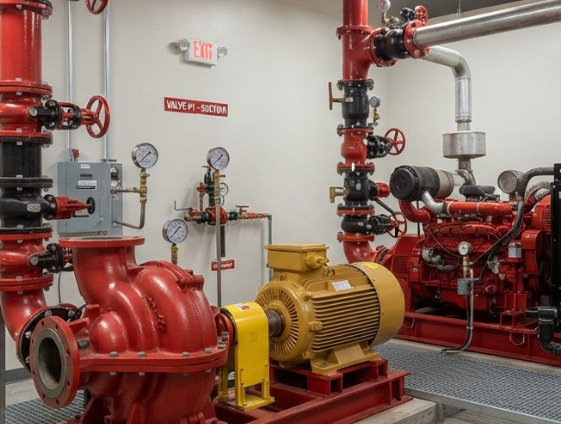
Fire Pumps
Fire pumps are typical emergency equipment. They may operate infrequently under normal conditions, but they must start reliably when required during a fire or other emergency.
For this reason, starting reliability and long-term standby capability are particularly important.
For diesel fire pumps that meet the engine manufacturer’s design and installation requirements, a Mechanical Spring Starter can serve as a mechanical starting solution that does not depend on the starting battery.
Oilfield Equipment
In oilfields and other remote industrial environments, equipment may be located far from stable power supplies and comprehensive maintenance facilities.
For these applications, reducing dependence on battery charging, maintenance, and replacement can help reduce maintenance challenges.
Therefore, a Mechanical Spring Starter can be particularly suitable for certain diesel-powered equipment that needs to remain on standby or operate in remote locations.
Industrial Diesel Engines
For industrial diesel engines, the choice of starting system should be based on the operating environment and equipment usage pattern.
If the equipment is primarily used as a daily vehicle or mobile machine, the portability of a Jump Starter may be more valuable.
In the case that the machine needs reliable starting capacity under tough conditions, at remote sites or long periods of standby, then it would be good to consider the Mechanical Spring Starter.
In general, the Jump Starter would be a more appropriate choice for temporary and portable use, whereas the Mechanical Spring Starter would fit well with industrial diesel engine applications where long period of standby is required.
How to Choose Between a Mechanical Spring Starter and a Heavy-Duty Jump Starter?
Choosing a Mechanical Spring Starter or a Heavy-Duty Jump Starter should not be based solely on product price or starting method.
Engine type, displacement, starting frequency, operating environment, and maintenance requirements should all be considered.
1. Engine Type
The first step is to identify the engine type. Different engines have different starting torque and energy requirements.
For diesel engines, especially industrial diesel engines, diesel generators, and fire pumps, users should pay close attention to the engine manufacturer’s starting-system requirements and whether the equipment needs to remain operational for long periods without relying on external power.
2. Engine Displacement
Engine displacement directly affects the requirements of the starting system. In general, larger engines require greater starting torque and energy to crank successfully.
Therefore, when selecting a Mechanical Spring Starter, the starter should be matched to the specific engine specifications, including:
- Engine displacement
- Starting torque
- Mounting interface
- Engine configuration
The selection should not be based only on the appearance or nominal specifications of the starter.
3. Starting Frequency
Engine starting frequency is another important factor.
If an engine starts frequently, its battery system can generally be monitored and maintained as part of routine operation.
However, if the equipment is a standby unit that may only start once every few weeks or months, battery self-discharge, aging, and maintenance become more important considerations.
For long-term standby equipment, a Mechanical Spring Starter can provide an alternative starting method that does not depend on battery condition.
4. Operating Environment
The operating environment can also affect the choice of starting system.
Typical applications may include:
- Oilfields
- Offshore facilities
- Mining sites
- Construction sites
- Remote industrial facilities
- Emergency equipment
In these environments, equipment may be located far from stable power supplies and maintenance facilities.
If battery charging or replacement is difficult, reducing dependence on electrical infrastructure can provide an important operational advantage.
5. Battery Availability
Finally, consider whether the equipment already has a reliable starting battery.
If the equipment has a well-maintained battery system and the user simply needs a portable emergency starting tool, a Heavy Duty Jump Starter is generally more convenient.
However, if the goal is to have an independent starting solution that does not rely on a battery, particularly for long-term standby equipment or diesel engines operating in remote environments, a Mechanical Spring Starter may be a better option.
The final selection should always be based on the actual starting requirements of the engine and the equipment manufacturer’s design and installation specifications rather than assuming that one starting method is suitable for every application.
Mechanical Spring Starter or Heavy-Duty Jump Starter: Which One Should You Choose?
In simple terms, the two solutions are designed for different needs.
If your primary requirement is portable, temporary emergency starting, and the equipment already uses a battery-based starting system, a Heavy-Duty Jump Starter is generally more convenient.
If your goal is to provide diesel engines, diesel generators, fire pumps, oilfield equipment, or industrial equipment with a mechanical starting solution that reduces dependence on batteries, a Mechanical Spring Starter may be a more suitable option.
The difference can be summarized as:
- Heavy-Duty Jump Starter = Portable Battery-Based Emergency Starting
- Mechanical Spring Starter = Battery-Independent Mechanical Starting
However, the final decision should not be based on these labels alone. Engine displacement, starting torque, mounting interface, starting frequency, and operating environment can all affect the appropriate starting solution.
Looking for a Mechanical Spring Starter?
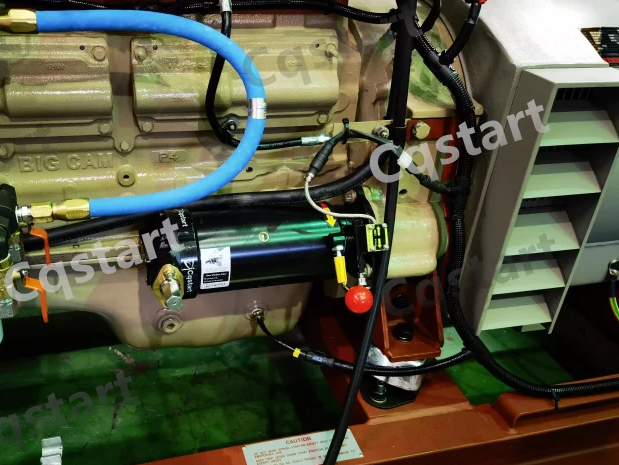
If your equipment requires a reliable Mechanical Spring Starter, it is important to select a model based on the engine model, displacement, starting torque, and mounting interface.
Cqstart Mechanical Spring Starter specializes in mechanical spring starting solutions for different types of diesel engines and industrial equipment.
For equipment that should reduce dependence on starting batteries or maintain starting capability in remote, industrial, and long-term standby environments, a Mechanical Spring Starter can provide an alternative to conventional battery-based starting systems.