
In the oil and gas industry, engine-driven equipment often operates in environments where natural gas, flammable vapors, and other potentially hazardous substances may be present. For critical equipment such as oilfield pumps, compressors, diesel generators, and other engine-driven machinery, reliable engine starting is essential for maintaining continuous operation and ensuring site safety.
Therefore, choosing an explosion proof starter for oil and gas industry should involve more than simply looking at starting power. Factors such as hazardous-area classification, equipment certification, engine specifications, operating environment, and starting-energy reliability should all be considered.
Depending on the application, common starting solutions include explosion-proof electric starters, pneumatic starters, hydraulic starters, and mechanical spring starters. Each solution has its own advantages and limitations in terms of safety, energy dependence, maintenance, and reliability.
This article explains the main types of engine starting systems used in the oil and gas industry, their operating characteristics and typical applications, and how to select the most suitable starting solution based on actual operating conditions.
What Is an Explosion Proof Starter?
An explosion proof starter generally refers to an engine starting device or starting system designed for potentially hazardous environments and engineered according to applicable safety requirements.
In oil and gas facilities, certain areas may contain concentrations of flammable gases or vapors that could form an explosive mixture. IECEx refers to these environments as explosive atmospheres, where equipment must use appropriate protection measures to reduce the risk of becoming an ignition source.
Under the U.S. classification system, hazardous areas in petroleum facilities may be classified as Class I, Division 1/2 or Zone 0/1/2. API RP 500 and API RP 505 provide guidance for the corresponding hazardous-area classification approaches used in petroleum facilities.
Therefore, when selecting a starter for oil and gas applications, it is not enough to consider starting power alone. Hazardous-area requirements and the suitability of the complete starting system must also be evaluated.
Why Do Oil and Gas Applications Need Specialized Starters?
Engine-driven equipment in the oil and gas industry often operates under more demanding conditions than equipment in conventional industrial environments.
From potentially explosive atmospheres and remote locations to limited power availability and the need for highly reliable starting, the starting system must be carefully selected and designed for the actual application.
1. Potentially Hazardous Environments
In the process of exploration and development of the petroleum product, there is a possibility of flammable gas, vapor, or mist being present to form an explosive atmosphere.
According to the IECEx, the application areas that can be classified as having equipment for explosive atmospheres include offshore oil and gas platforms, refineries, oil and gas processing facilities, FPSOs, and natural gas pipeline facilities.
Hence, the selection of starters in the petroleum and gas industries should not just be based on standards applied for general industrial devices. This is because there is need to consider the hazardous zone category, requirements of device certification, the installation place and site regulations.
2. Remote Oilfield Operations
A lot of oil and gas installations are installed in areas distant from urban and industrial centers; many of them are set up in difficult conditions. These conditions usually include remote oil fields, drilling and well locations, pipeline stations, offshore installations, and remote production facilities.
These kinds of installations can suffer from power outages, low temperatures, battery quality, or lack of maintenance.
For this reason, in addition to conventional electric starting systems, independent backup starting systems that do not rely on external electrical power may be considered to improve equipment availability and starting reliability.

3. Engine Starting Reliability
In order to start the pump, compressor, generator, and other equipment powered by diesel engine in oil and gas industries, the starter needs to deliver adequate torque and power necessary for that specific engine.
There are certain parameters that need to be considered when choosing a starter, such as engine size, starting torque, starting speed, ambient temperature, power source, and installation conditions.
One should also consider whether the starter is going to be used as the primary or backup starter since their requirements may differ from one another.
4. Emergency and Backup Starting
For certain critical oil and gas equipment, the starting system may be required not only for routine engine starting but also for emergency or backup starting.
If the primary electric starting system is affected by battery failure, power interruption, or electrical control-system problems, an independent mechanical, pneumatic, or hydraulic starting system can provide an additional means of starting the engine.
Among these options, a Mechanical Spring Starter stores mechanical energy in advance and releases that energy when engine starting is required. Because it does not depend on a conventional battery or external compressed-air supply, it can provide an independent starting option for certain industrial applications.
Types of Starters Used in Oil and Gas Applications
There is no single starter that is suitable for every oil and gas application.
Depending on the energy source and starting mechanism, common starting solutions used in the oil and gas industry include the following:
| Starter Type | Energy Source | Typical Application |
| Explosion-Proof Electric Starter | Electrical power / battery | Diesel engines and industrial equipment |
| Pneumatic Starter | Compressed air | Heavy-duty engines and industrial equipment |
| Hydraulic Starter | Hydraulic energy | Heavy-duty or specialized equipment |
| Mechanical Spring Starter | Stored mechanical energy | Independent or backup engine starting |
The final starter selection should always be based on the engine specifications, application requirements, hazardous-area classification, and site conditions.
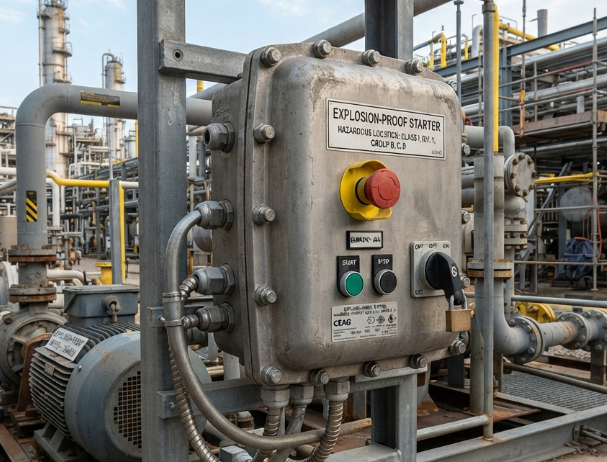
Explosion-Proof Electric Starters
Electric starters use an electric motor to rotate the engine crankshaft and are one of the most common engine starting methods for diesel engines.
In conventional industrial environments, electric starting systems are widely used. Nevertheless, where an electric motor starter has been fixed to a hazardous location in the oil and gas production plant, it has to comply with the pertinent safety standards.
API RP 500 covers the classification of hazardous locations for electrical installations in petroleum plants as Class I, Divisions 1 & 2, while API RP 505 classifies Class I, Zone 0, Zone 1 & Zone 2 locations.
In this regard, when choosing an explosion-proof electric motor starter, one should not only pay attention to its name but also consider the following points:
- Applicable hazardous-area classification
- Certification or approval
- Voltage and starting current
- Engine compatibility
- Installation requirements
- Local regulations
The final selection should ensure that the starter’s design and certification are appropriate for the actual installation area and project requirements.
Pneumatic Starters
Pneumatic starters use compressed air to store and release energy and drive the engine during the starting process.
Because pneumatic starting does not depend on a conventional battery-powered electric motor, pneumatic starters are widely used for certain heavy-duty diesel engines and industrial equipment.
For oil and gas equipment that already has a reliable compressed-air system, pneumatic starting can be an effective starting solution.
However, its performance depends heavily on the available air supply. Therefore, the selection process should consider:
- Compressed air source
- Required air pressure
- Air storage capacity
- Piping and control system
- Engine starting requirements
In other words, selecting a pneumatic starter is not simply a matter of choosing the starter itself. The complete compressed-air system must also be capable of providing sufficient starting energy when the engine needs to start.
Hydraulic Starters
The hydraulic starters start the engine using hydraulic energy and are generally employed for large diesel engines, heavy machinery, or industrial applications where an alternate source of energy is needed to start the engine.
In a hydraulic starting system, the hydraulic accumulator is employed for storing energy in advance. When starting is required, the stored hydraulic energy is released rapidly to provide the starting torque required to rotate the engine.
Compared with electric starting, hydraulic systems can reduce dependence on battery systems. However, they may also involve more complex system configurations and installation requirements.
When selecting a hydraulic starting system, important factors include:
- Hydraulic pressure
- Hydraulic accumulator capacity
- Starting torque
- Engine requirements
- Hydraulic circuit configuration
For large or specialized industrial equipment, hydraulic starting can provide an alternative to conventional electric starting, particularly when an independent starting-energy source is required.
Mechanical Spring Starters
A Mechanical Spring Starter is a mechanical engine starting device that stores energy mechanically and releases it when the engine needs to be started.
The starter uses a spring mechanism to store energy in advance. When starting is required, the stored mechanical energy is released through a mechanical transmission system to rotate the engine crankshaft.
Its basic operating principle can be summarized as:
Energy Storage → Starter Engagement → Energy Release → Engine Cranking → Engine Start
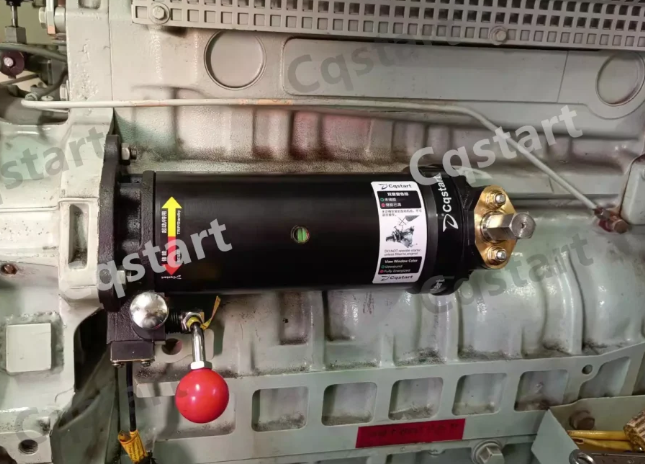
Unlike a conventional electric starter, a mechanical spring starter does not use an electric motor as the primary source of starting power. Instead, it uses previously stored mechanical energy to crank the engine.
As a result, it can be useful in applications where independent starting, backup starting, or reduced dependence on batteries is important.
A Mechanical Spring Starter can be particularly useful for equipment where starting-energy independence is required. This means that where the main electrical starting system may be influenced by battery state, power supply, or electrical system failure, the mechanical starting system will offer another backup system to start the engine.
But one thing that must not be forgotten is:
The mechanical spring starter may not automatically be termed an explosion-proof starter unless the particular equipment is certified for this purpose.
In other words, mechanical operation does not automatically mean explosion-proof certification.
If a product is intended to be installed in a specific hazardous area, its suitability should be verified based on the product’s design, certification or approval documents, and the hazardous-area classification and requirements of the project.
Cqstart Mechanical Spring Starter
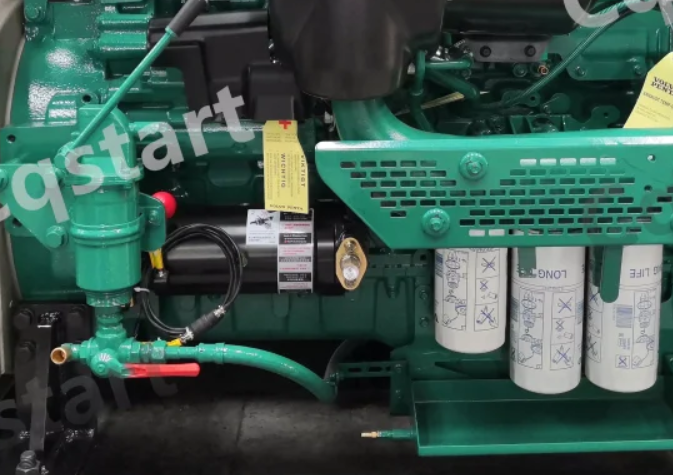
Cqstart Mechanical Spring Starter is a purely mechanical engine starting device designed for diesel engines. It uses manual operation to store energy in a disc spring and releases the stored energy when starting is required, driving the engine flywheel to crank the engine.
It does not require a battery, electric motor, compressed air, or hydraulic system, making it suitable as an independent or backup starting solution for certain diesel engine applications.
For Oil & Gas industry ATEX applications, the Cqstart Spring Starter can be considered for diesel engine starting in oilfields, offshore platforms, and other potentially hazardous environments, subject to the specific product certification and project requirements.
Its purely mechanical, non-electric starting design reduces dependence on conventional electric starting systems and may be suitable for applications where starting independence and reliability are important.
Cqstart offers multiple models designed to accommodate diesel engines ranging from less than 2 L to approximately 50 L displacement, with standard SAE interfaces and customized mounting solutions available.
Applications of Explosion Proof Starters in the Oil and Gas Industry
Depending on the engine type, equipment function, and operating environment, engine starting systems can be used in a wide range of oil and gas applications.
The appropriate starting method should be selected according to the hazardous-area classification, engine requirements, available energy source, and project specifications.
Oilfield Equipment
Starters can be used for various diesel engine-driven oilfield equipment, including field service equipment, power units, and auxiliary machinery.
For remote oilfield operations, particular attention should be paid to starting-energy reliability, equipment availability, and ease of maintenance.
Well Service Equipment
Starting systems can be used for well service equipment that requires frequent or reliable engine starting.
The selected starter should provide sufficient starting torque and be compatible with the engine and actual operating conditions.
Diesel Generators
Starting systems are widely used for diesel generator sets that provide primary or backup power for oil and gas facilities.
For critical generator sets, an independent or backup starting system can be considered to improve starting reliability and equipment availability.
Pumps
Starters can be used for diesel engine-driven pumps used in oil and gas transportation, pressure boosting, and other auxiliary applications.
The appropriate starting system should be selected according to the engine starting requirements and the available energy sources at the site.
Gas Compressors
Starting systems can be used for diesel engine-driven gas compressors.
Because compressors may require significant starting torque, factors such as starter torque, engine compatibility, starting energy, and operating environment are particularly important during the selection process.
Remote Production Equipment
Starting systems can be applied to remote production facilities, well sites, and other production equipment where electrical power availability may be limited.
In these applications, independent or backup starting capability can provide significant practical value.
Offshore Equipment
Starters can also be used for offshore platforms, vessels, and other offshore oil and gas equipment.
Since offshore sites demand higher levels of specifications in terms of space, corrosion, safety, certification, and reliability of equipment, the initial system should be chosen based on the environmental parameters, hazardous area class, and certification criteria of the project.

How to Choose an Explosion Proof Starter for Oil and Gas Industry Applications?
For oil and gas equipment buyers, selecting the right starter should involve more than looking at the product name or engine horsepower.
A proper evaluation should consider engine specifications, starting torque, energy source, starting purpose, hazardous-area classification, and operating environment.
The following steps can help narrow down the most suitable starter.
1. Confirm the Engine Model
First, confirm the basic engine specifications, including:
- Engine manufacturer
- Engine model
- Displacement
- Rated power
- Existing starting system
Engine type is the main factor to consider when choosing starters since varying types of engines can have different torque demands, mounting types, and starting capabilities.
When requesting an offer or price quote, the exact engine type can aid in the determination process of selecting the right starter.
2. Determine Required Starting Torque
Starting torque is one of the most important parameters when selecting a Mechanical Spring Starter.
The starter must provide sufficient mechanical energy and torque to overcome the internal resistance of the engine during the starting process and bring the crankshaft up to the required starting speed.
Therefore, a starter should not be selected based only on:
- Engine horsepower
- Instead, the actual:
- Required Starting Torque
- should also be evaluated.
This is particularly important for large diesel engines and equipment operating in low-temperature environments.
3. Identify the Available Energy Source
The next step is to determine what type of starting energy is available at the site, such as:
- Electrical power
- Battery
- Compressed air
- Hydraulic power
- Mechanical energy
If the site has a stable electrical supply and reliable batteries, a conventional electric starter may be a convenient solution.
For equipment with limited electrical power or applications where dependence on a single energy source should be reduced, pneumatic, hydraulic, or mechanical starting systems may be worth evaluating.
4. Determine Primary or Backup Starting
Before selecting a starter, an important question should be answered:
Is the starter the primary starting system or a backup starting system?
In case the purpose of the Mechanical Spring Starter is to use it as a main starter, its starting performance, operation mode, and compatibility with the engine need to be thoroughly checked.
In case the mechanical spring starter is to serve as a supplementary starter, there are other aspects that need to be taken into account as well.
Defining the role of the starter will help avoid choosing the wrong option due to inappropriate operating conditions.
5. Confirm Hazardous-Area Requirements
For oil and gas projects, buyers should confirm the hazardous-area classification and applicable safety requirements, including:
- Area classification
- Required protection concept
- Certification requirements
- Local regulations
- Project specifications
Both API RP 500 and API RP 505 can be considered very good sources of information in terms of hazardous area classification of petroleum facilities.
It must be noted that the fact of the Mechanical Spring Starter using mechanical operation does not automatically mean that this device is an explosion-proof one.
The eligibility of this product must be checked according to the documents, hazardous area classification, and other project-related criteria.
6. Consider the Operating Environment
Finally, the actual installation and operating environment should be evaluated, including:
- Ambient temperature
- Humidity
- Corrosive atmosphere
- Dust
- Offshore conditions
- Installation accessibility
In the case of remote oil fields, drilling locations and offshore structures, all these will have a direct impact on the installation, maintenance, and performance of the starter.
Hence, while choosing an explosion proof starter for oil and gas applications, the above parameters along with the engine specifications should be considered together instead of considering only starter specifications.
Conclusion
For the oil and gas industry, selecting an explosion proof starter for oil and gas industry applications is not simply a matter of finding a starter labeled “explosion proof.”
Several criteria should be considered in selecting a starter, among which are the type of engine, the source of starting energy, hazardous area classification, certification needs, operational environment, and backup starting needs.
There are various types of starters, each having its own strengths and appropriate uses.
A suitable application of a starter for the independent starting of equipment driven by diesel engines would be the Mechanical Spring Starter.
If you are looking for a reliable Mechanical Spring Starter for oil and gas industry applications, contact Cqstart to discuss your engine specifications and starting requirements.